5/30/2013

40+ Reasons Why We Read


Frustrated, I once asked a classroom of reluctant readers why it was important that they be able to read.  The answers I got back were demoralizing: "So we can set up our flat screen TVs," "So people don't think we're dumb," and (saddest of all) "because our teachers make us."

I floundered about for a few moments, trying to find the words to express an idea that seemed so obvious to me.  How do even begin to explain trees to someone who has never seen a forest?  Fresh air to someone who has lived their whole lives in a hospital?  How do you convince people who think they know everything that there's a whole world of things they don't know they don't know?

I wish I'd had this list at hand that day.  Maybe I could have changed a few minds.  At the very least, showering them with 40+ reasons ought to at least have earned me the benefit of a doubt.

  1. To experience different places.  Because books are the cheapest vacation you'll find. Want to know what it's like to explore the molten lava fields of Hawaii? Run with wildebeast across the African Sarangheti? Discover the glittering tombs of ancient Egyptian pharoahs?  Climb Everest? Sail the world?  Barter for magic lamps at a Turkish market? All these vacations and more are to be had in the pages of books.
  2. To experience different times.  Until someone figures out this whole parallel universe thing, books are the closest thing to time travel we have. 
    • To experience the past.  The best way to understand history is to vicariously experience history.  Both fiction (historical tales of adventure, romance, or mystery) and non-fiction (histories, diaries) possess the power to make the past come alive.  And you know what they say: those that don't understand history are doomed to repeat it.  Truer words were never spoken.  
    • To experience the present/to stay informed.  Books, newspapers, and periodicals help us keep track of what we need to know about the world around us.  (Because even 500 channels of television can't offer the depth of reportage you get in a single issue of The Washington Post.)
    • To experience the future & explore different futures. There's a reason scientists read science fiction (just because it's a stereotype doesn't mean it's not true): because these works of fiction and non-fiction help us imagine a variety of future worlds and anticipate the challenges that we may eventually face. Think Isaac Asimov speculating about articificial intelligence in I Robot; Michael Crichton exploring the science of genetics in Jurassic Park; Ray Bradbury contemplating the complexities of time travel in "The Sound of Thunder" (the story that introduced us to "the butterfly effect").  Books are like parallel universes, helping us explore the potential - and peril - of the decisions we make now.
  3. To live other lives.  There's a quote plucked from a story by George R.R. Martin: "A reader lives a thousand lives before he dies .... The man who never reads lives only one."  And life is too short to live only once.
    • To hobnob with interesting people.   Want to know how the other half lives? Biographies and autobiographies give us intimate access to the lives of politicians, writers, explorers, and celebrities, all without having to buy a camera or risk being arrested for stalking.
    • To vicariously live other lives.  Reading provide us the opportunity to experience lives wildly different than our own. Because don't we all want to party with Gatsby, sail with Hornblower, and/or hang with Anne of Green Gables?
    • To see the world through new eyes.  Literature gives us the opportunity not just to walk in another man's shoes (as Atticus Finch advocates) but to actually crawl into their minds and experience the world as they experience it. The experience is sometimes fascinating, sometimes disconcerting, but always illuminating.
  4. To learn.  Books are the most patient of teachers, letting us choose what we want to learn, who we wish to teach us, and the rate at which we wish to proceed; best of all, there's never a test at the end.  In the words of the late, great Ray Bradbury: "I spent three days a week for 10 years educating myself in the public library, and it's better than college. People should educate themselves - you can get a complete education for no money. At the end of 10 years, I had read every book in the library and I'd written a thousand stories."
    • To learn more about familiar things.  Call them interests, hobbies, passions, or obsessions; eventually, inevitably, we stumble upon something (usually more than a few somethings) that fascinates us, whether it be World War II, celebrities, cooking, gardening, religion, or sports.  Reading allows us to indulge and inform our obsessions - however functional or dysfunctional.
    • To learn about unfamiliar things.  And then there are the subjects that may not rise to the level of interests, but that for various reasons we must master: how to set up a Bluetooth device, how to calm a crying baby, the side effects of chemotherapy.
    • To satisfy our curiosity. Because life is full of questions, and books contain the answers.
    • To help us understand how much we don't know.  Perhaps the most supreme irony of reading widely is that it dispells ignorance while simultaneously forcing us to acknowledge just how much we don't know. 
  5. To think.
    • To give us the words we need to form our ideas.  Our brains have difficulty comprehending ideas for which we have insufficient language.  The classic example is that Europeans tend to think of snow as ... well, snow.  Whereas the Inuit Indians have 40 different names for snow, which enables them to communicate differences in type and texture that we simply don't perceive.  The more you read, the better equipped you are with mental vocabulary necessary to perceive the world around you.
    • To make us think deeply.  One can navigate through life without thinking deeply (as many reality shows have proven), but what a terrible waste of potential.  Our brains are wired to be able to process enormously complex, abstract, non-literal information, and reading is one avenue that forces us to employ that ability.  Or have we already forgotten Jessica Simpson's infamous display of shallow cognition: "What exactly is 'Chicken of the Sea'? Is it chicken that lives in the sea?"  
    • To make us think critically.  Reading forces us to question, interpret, connect, generalize, analyze, evaluate, and draw conclusions - skills required to lead a full and useful life in this complex world.  
    • To make us see familiar things in new ways.   Because just when you think you know everything you need to know about a topic, a magazine article, treatise or book comes along and makes you realize that you've just been feeling around the tip of the iceberg, without suspecting that 90% of it has been hiding under water. 
    • To build background knowledge.  Brain scientists will tell you that the way our brains learn is by 'linking' new information to information already stored in our memories,  creating 'schemas' - bodies of knowledge.   Think of it like investing: the more money you have, the more you can earn.  Except in this case, the more you already know, the more you are can learn.  Reading is by far the most efficient (not to mention pleasurable) way to build background knowledge.
    • To flex our imagination & improve our creativity.  Professional authors will tell you that the single most important thing they do is READ.  Reading forces us to venture out beyond the bounds of our known world and stimulates us to employ our creativity to fill in the shadowy areas.
  6. To grow.
    • To learn important life lessons.  As children, we are all innocent; gradually, life undertakes our education in such important subjects as love, happiness, and loss.  But life isn't school: sometimes it omits lessons, while other lessons it teaches us over and over (and over) again.  Reading is one way we capture and pass on the lessons necessary to survive adversity and pursue our happiness.  
    • To identify and explore our passions.  Passion is a fabulously fickle thing!  In some people, it is inspired by love, in others, by art or music; in some by religion, in others by math, nature, sports, food, technology, animals, cars ... even, if you believe Orville Reddenbacher, making perfect popcorn.  One can live without passion, but what kind of life is that?  Those who read widely vastly increase the odds of discovering their passion. 
    • To shape our beliefs.  We can believe what we're told to believe, which has proven problematical in the past (think Nazi Germany); or, we can evaluate the world for ourselves and then shape our own beliefs.  Reading is the door through which we access the world of ideas. 
    • To form our characters.  The world is full of role models, but they can't all be your favorite teacher in elementary school or live next door.  Reading allows us to measure the content of our character against others, to weigh our strengths/deficits, and to model our own characters accordingly.  Reading helps us take the measure of our limits ... and our possibilities.
  7. To impress.
    • To gain respect.  In European society, people who are widely read tend to be objects of respect, while those who are poorly read tend to be treated lightly.  Don't believe me? Start dropping Shakespeare quotes and Goethe references into your daily conversations at work and see if your colleagues don't start taking you more seriously.
    • To gain power over others.   Those who understand complex systems - whether they be technical/ scientific, social/cultural, philosophical, political, or financial - also understand how to manipulate those systems.  Was not our recent economic collapse caused by people exploiting their comprehension of legal and financial systems to their own ends?  What resource do these ambitious folk turn to to build the requisite depth of knowledge?  Books, naturally.
    • To avoid being taken advantage of by others.  Because the only way to keep those ambitious folks mentioned above from taking advantage of you, is to know as much about systems as they do.  
  8. To improve.
    • To gain new abilities.  If you want to learn more about a subject that isn't required in high school or offered in college, where are you going to turn?  Books, magazines, textbooks, and manuals.
    • To build vocabulary.  Research has shown that the vocabulary we use in daily conversation is a small subset of the vocabulary we employ when writing.  Therefore, if you want to build your vocabulary, it's much more efficient to read than to converse.
    • To improve our communications skills.   Just because you have a mouth and a tongue doesn't mean you know how to communicate effectively.  True story: a family member of mine had to turn down two brilliant scientists for a senior position because they lacked the vocabulary and skill to effectively communicate their ideas.   The #1 way to build writing (and oral communication) skills?  Reading and studying the work of effective writers.
  9. To feel.
    • To experience deep emotions.  Let's face it - most of us aren't destined to live lives of grand passion and adventure.  But literature allows us to experience every imaginable extreme of emotion: elation, despair, pride, fear, courage, passion, rage, vengence, hatred ... and, yes, even true love. 
    • To experience unfamiliar emotions.  Thanks to books, we don't have to actually venture forth on a whaling ship to understand the gnawing bitterness of revenge; we don't have to stab ourselves to death at the tomb of our deceased beloved to experience the tragedy of doomed love; and we don't have to have to go through life with a scarlet A sewn over our hearts to experience the frustration and humiliation of Hester Prynne. 
  10. To empathize.
    • To understand the viewpoints of others.  Vulcan mind-melding aside, reading is one of the most powerful tools we possess to help us "meld" with other minds and experience the world as others experience it.
    • To develop empathy/tolerance towards others.  Only once we understand how others think and feel, we can begin to develop empathy/tolerance towards those who think differently than ourselves.
  11. To cope
    • To escape from reality.  Television has to some extent taken over this function, but when it comes to choice, even 500 channels can't hold a candle to a library full of reading material.  Absorbing yourself in a book is a splendid way to forget your cares, at least for the space of a chapter or two.
    • To be inspired/to hope.  Stories about other people overcoming difficulties and/or working to achieve their dreams possess the ability to inspire us to work towards achieving our own dreams.  
    • To know that we are not alone.  I'd explain, but author James Baldwin does so much more passionately than I ever could:  “You think your pain and your heartbreak are unprecedented in the history of the world, but then you read. It was books that taught me that the things that tormented me most were the very things that connected me with all the people who were alive, or who had ever been alive.”
  12. To connect us to our pasts, our communities, and our world.
    • To understand how we are connected to myth/legend/religion.  Scholars tell us that myths/legends endure because they tell us who we are and explain our role in the world. (Long before science we had titans; long before Ginger vs. Mary Anne, we had Artemis vs. Aphrodite.)   Fittingly, they are among the first stories ever set in print, where they remain to this day, still telling us who we are, still explaining our role in the world.
    • To recapture our childhood.  Time machines may one day be able to take us back in time, but books have the power actually to slough away the years of our lives until we are children again.  Rereading books that you first read as a child is particularly potent magic.
    • To explore great themes.  Stories identified as "classics" are classics for a reason: they identify and explore the great universal themes - love, hate, desire, fear - in ways that are uniquely empathetic, utilizing language that is uniquely approachable.  Like myths, they help us understand who we are; more to the point, they help us identify the paths that are open to us so that we can choose which to follow. 
    • To explore great ideas.  Every generation is blessed with its own scientists, philosophers, and visionaries, but we must turn to books to access the great ideas of past generations.
    • To share a common experience with strangers.  I recently read a quote that went something like this: "Based on the contents of your library, I can tell we're going to be great friends."  Books not only tell us who we are (Oscar Wilde once said "It is what you read when you don't have to that determines what you will be when you can't help it"), but they connect us with others who share our values and passions.
  13. To enjoy.
    • To enjoy a good story, well told.  Because, hey, we're human, which means we love a good story: how else were we going to while away all those long winter nights spent huddling in caves?  In the ensuing thousands of years we may have left the campfire behind, but our delight in a good story well told - especially if the story involves one of our favorite themes: good triumphant over evil, or love triumphant over obstacles - remains wholly unspoiled.  (For those of you thinking, "If I want a good story, I'll go see a movie!" you may wish to consider that many of the most stirring movies started as books.)
    • To delight in the music of words.  Speaking of human evolution, scientists conjecture that our brains are hardwired to identify patterns of sound; indeed, it is this ability to identify patterns of sound that has enabled us to develop spoken language.  Today, this primal love of vocal patterns expresses itself in our universal appreciation for music and poetry (especially poetry with rhyme and meter).  So go read a poem and get in touch with your inner caveman!

5/19/2013

Book Look: Book By Book, by Michael Dirda


You've heard the aphorism: "Based solely on the contents of your library, I knew we were going to be the best of friends"? Michael Dirda's a Pulitzer Prize winning Book Critic who I've never met except through his frequent contributions to the Washington Post's Book World, but based on this short memoir, we'd definitely hit it off.

Reading this felt like hanging out with a group of old college friends, exchanging ideas and anecdotes about life, religion, art, and literature. Not in a wine and cheese way, but in a beer and chips way, with everyone interrupting each other, quotes from famous books/authors offered as supporting evidence, raised voices, lots of gesticulating, and plenty of anecdotes and digressions. ("They made us read Mary Wollencraft in college - ugh!"; "I went from Nancy Drew straight to Agatha Christie, but my next stop definitely wasn't Crime & Punishment!";"Where's Poe? How can you compile a list of the greatest horror stories without a single Poe?")

The book is a collection of reflective essays, quotes, and lists, and is definitely best read with a pencil at hand, because half the fun is interacting with the text: agreeing, disagreeing, making connections, marking off books already read and books to add to your reading list, etc. Only alert I'll issue to potential readers is that the author does presume a good grounding in European/American humanities. If you've attended a decent US/European liberal arts college or are an autodidact, however, you should be fine.

If you're ever in Virginia, Michael Dirda, my college buddies and will have a beer standing by with your name on it!

5/06/2013

35+ Ways to Promote Reading in Schools

The middle school where I teach draw students from neighborhoods where literacy is not necessarily a priority - at least not as high a priority as finding enough money to pay rent, avoiding drugs and gangs, eating at least one meal a day, and trying to stay out of trouble.  For these students, reading logs are a farce, and offering them a pizza if they read 20 books is ridiculous.  Much, much, much more is required to instill in these students an intrinsic (rather than extrinsic) motivation to read. 

The good news is that all humans have an inate love of storytelling.  Once kids start reading, they will almost inevitably get hooked.  The bad news is that with so many other challenges facing them -  challenges which often include poor foundational literacy skills, poor cultural literacy, poor early education, learning disabilities, and literacy-poor home environments - convincing students that reading is worth the effort can be a hard sell.  It takes more than one good English teacher, more than one free book ... I believe that it takes a whole school, from the custodians on up, with wrap-around literacy emphasis, to make this happen. 

The following list is stuffed with every suggestion I've researched, implemented or contemplated to help motivate literacy and reading in at-risk populations (though I'm sure they'd work with readers from every socio-economic background).  Because we need to stop thinking about reading as the problem and start thinking about reading as the solution. 
  1. Provide access to books
    1. Stock your library with books at a variety of reading levels, making sure that books at lower reading levels have cover art and content that are appropriate for the students' grade level.  (No student wants to be seen reading a "baby book".)
    2. Make sure you offer a variety of sizes and styles of reading material: long books, short books, books with pictures, books without pictures, large print, small print ....  Students look for books that fit not merely their interests, but also certain physical preferences. 
    3. Have books available in the front office, the lunch room, the clinic, the hallways, the principal's office ... everywhere!  Establish a system that makes checking them out either painless or (if possible) unnecessary.
    4. Stock a wide selection of "easy to read" versions of classic literature. Kids who have read and enjoyed The Hound of the Baskervilles (or The Prince and the Pauper, or Dracula) in easy-to-read or comic book version will be more likely to attempt the original version, and to persevere through difficulties. (Moreover, students gain pride and self-confidence from the knowledge that they've read a "classic".)
  2. Let kids read what they want to read! 
    1. If a student wants to read material that's too "easy" for them, let them.  The experience will help them build confidence; in time, it's likely they'll crave something more filling
    2. If a student wants to read material that's too "difficult" for them, don't discourage them!  Do, however, help them out by previewing the story* (and key vocabulary if appropriate) so they have an idea of what to expect. (*Give them plot summaries, or encourage them to read reviews by other readers.)
    3. Don't force students to read books that are "good" for them.  There will be plenty of time for that later.
    4. If students don't want to read books, let them read magazines ... graphic novels ... comic books ... whatever!  Over time, it's often possible to leverage a student hooked on Sports Illustrated for Kids to books about sports.
  3. Expose students to a wide variety of books
    1. Open classes with a short, highly engaging read-alouds from books at the students' reading level - just enough to whet their appetites.  I love stopping in the middle of a dramatic moment ... drives the students crazy, but don't they cue up afterwards for copies of the book!
    2. In your classroom, sort at least some books by genre, as reluctant readers are often more willing to take a chance on a new book if they're comfortable with the genre.  Meanwhile, devise a system to encourage or help students expand beyond their preferred genres.
    3. Devote a bulletin board to genres.  List 4-5 high-interest books representing the genre.  (Resist the urge to include only "worthy" books - readability and entertainment value are imperative in building interest and trust!) 
    4. Create an "if you liked ____, then try ______" bulletin board or wall. Provide pre-printed cards students can fill out & thumbtacs onto the board with their recommendations.
  4. Make reading interactive
    1. Have students maintain lists of their favorite books.  Create opportunities for them to talk about their favorite books with classmates.  One idea: match students who list the same books and have them work on a project together.  Or, match students with dissimilar books and challenge them to identify as many similarities as possible!
    2. Create a book review blog or wiki where student can post book reviews and/or comment on the reviews of others.
    3. Engage students in conversation about the books they are reading.  Your interest in the book with validate theirs.  Ask intelligent, open-ended questions that will require them to think about what they've read - especially questions that require them to relate the books to their own lives
    4. Use your school's morning announcements as a chance to air "book trailers."  Many publishers of children's books provide "book trailers" online that are especially designed to build interest in their titles.  If appropriate, you may wish to intermingle these with reviews created by the students themselves, perhaps using simple tools like Windows Movie Maker.
    5. Sponsor reading groups for wide variety of abilities and interests. Squish them into your school day: during lunch, before/after school.  These book groups don't have to be led by teachers ... in fact, students may find them even more enjoyable if they are led by beloved custodians, lunch ladies, secretaries, or members of the community.  The idea isn't to teach, but to engage the students in lively discussion and model enthusiasm.  
    6. Book reviews are fine, but often not an activity that appeals to struggling readers, as the same students are often struggling writers as well.  Instead, encourage students to create projects or games related to their books.  My students enjoy creating games because then they get to play them with their friends, who in turn develop enthusiasm for the stories ... talk about a win-win!
    7. Find ways to recognize and reinforce reluctant readers (without embarassing them).
  5. Teach the things that good readers do
    1. Model for students how you interact with text by reading aloud and stopping frequently to share with them your own questions/predictions/opinions/reactions.
    2. Teach students how to visualize text
    3. Teach students how to properly preview a text - how to read the back cover, how to draw conclusions from the title and picture, how to use the information on the inside flap, etc.
    4. Teach students how to search for books in the library - don't just assume they already know how!
  6. Make reading authentic
    1. Teaching reading not just as a skill but as cultural literacy! Show excerpts from The Simpsons, Disney movies, and other shows/movies that reference classic literature.
    2. Teach reading not just as a skill but as a content area. Talk about how authors use characters, conflict, and plot to create themes that relate to real life.
    3. Sponsor "book movie" afternoons, where kids get to watch the movie versions of famous books. Make sure to have many copies of the book available that afternoon so studnets can leave with them while enthusiasm is fresh
    4. Have students read aloud to students younger than themselves.
    5. Encourage students to post their book reviews on popular websites such as Good Reads.
  7. Make reading ubiquitous
    1. Post "pro-literacy" (quotes about the benefits of reading) all around the school.
    2. Make sure students are reading in all their classes, not just English. To the extent possible, incorporate book groups and literature circles in all your subject areas.
    3. Encourage students to read independently throughout the day - when waiting for class to begin, when they finish their work early, during lunch ....
  8. Make reading glamorous
    1. Treat authors like celebrities. Discuss them. Do book reports about them. Participate in online discussions with them. Visit them when they arrive in town for book tours.
    2. Treat book openings like movie openings. Count down the days until sequels to popular books are released. Have book release parties.
  9. Provide reading role models
    1. Have teachers and staff post info on what they are reading on posters next to their doors. Encourage them to discuss their books with students.
    2. Let students see you reading on your off-time. Talk about how you are looking forward to reading when you get off work.
    3. Ask celebrities to recommend their favorite books. Maintain lists.

4/22/2013

30+ All-Purpose Quotes from Princess Bride


As any Princess Bride fan will tell you, few movies have yielded so many quotes that are useful in so many contexts.   Believe me, a true fan can work at least one of the following into just about any conversation.

  1. When I was your age, television was called books.
  2. Probably some local fisherman, out for a pleasure cruise, at night, in eel-infested waters...
  3. My name is Inigo Montoya. You killed my father. Prepare to die.
  4. You keep using that word. I do not think it means what you think it means.
  5. There's not a lot of money in revenge
  6. This is true love - you think this happens every day?
  7. Thank you; I've worked hard to become so
  8. My way's not very sportsman-like.
  9. You rush a miracle man, you get rotten miracles.
  10. Sonny, true love is the greatest thing, in the world-except for a nice MLT - mutton, lettuce and tomato sandwich, where the mutton is nice and lean and the tomato is ripe
  11. You fell victim to one of the classic blunders - The most famous of which is "never get involved in a land war in Asia" - but only slightly less well-known is this: "Never go against a Sicilian when death is on the line"!
  12. You *are* the brute squad
  13. There will be blood tonight!
  14. Good night.... Good work. Sleep well. I'll most likely kill you in the morning.
  15. I spent the last few years building up an immunity to iocane powder.
  16. You mean, you'll put down your rock and I'll put down my sword, and we'll try and kill each other like civilized people?
  17. We are men of action; lies do not become us
  18. If we only had a wheelbarrow, now that would be something.
  19. Mawiage. Mawiage is wot bwings us togeder tooday. Mawiage, that bwessed awangment, that dweam wifin a dweam...
  20. Life is pain .... Anyone who says differently is selling something.
  21. Rodents Of Unusual Size? I don't think they exist.
  22. Please understand I hold you in the highest respect.
  23. Rest well and dream of large women.
  24. The Pit of Despair!
  25. Do you hear that, Fezzik? That is the sound of ultimate suffering.
  26. You warthog-faced buffoon.
  27. Murdered by pirates is good.
  28. I'm not a witch, I'm your wife
  29. Have fun storming the castle!
  30. Is this a kissing book?
  31. Inconcievable!
  32. As you wish.

4/19/2013

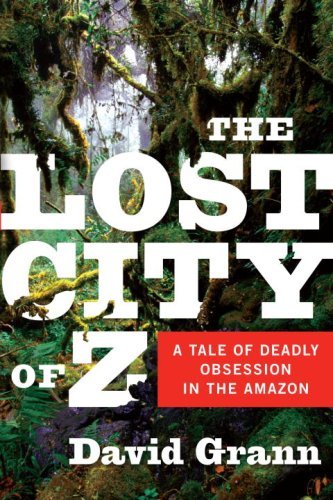
Book Look: The Lost City of Z, by David Grann


The 100+ year long quest to find the fabled “Lost City of Z” proves a handy frame for this larger story of the Glorious Era of Victorian Exploration: a time when men armed with little more than 60-pound packs, rudimentary navigation equipment, and iron wills pitted themselves against vast deserts, towering mountains, frigid arctic expanses, and – in the case of Colonel Percy Fawcett – the lush and pitiless Amazonian jungle.

I loved pretty much everything about this book. I loved learning more about these driven (some would say obsessed) explorers, motivated by little more than a desire to prove their courage and earn – if they were fortunate enough to survive – the admiration of their Royal Geographical Society peers. I loved learning more about the fascinating life of Colonel Fawcett, which intersected with such notables as Roosevelt, Darwin, Lawrence, Haggard, and Doyle. I loved learning more about the history of Amazon region, from the conquistadors who were among the first to penetrate those deadly woods in search of “El Dorado” through the rubber robber-barons whose ruthlessness very nearly exceeded the cruelty of those who had come before. I loved learning more about the role of yellow journalism in promulgating exploration and transforming explorers into international celebrities. And if I didn’t quite love the overarching story – in which the author, David Grann, follows in Fawcett’s footsteps in search of Z, at least the author never lets his own narrative distract from the book’s other pleasures.

Lest you be fooled by the first person narration, however, make no mistake: the real protagonist of this tale is the Amazon itself. The author does a terrific – some would say terrifying – job of making the teeming wilderness come alive: the exotic wildlife, the pitiless insects, the grotesque diseases, the cunning (sometimes perilous) natives, swollen rivers teeming with piranha, towering trees teeming with life, the harrowing juxtaposition of abundance and death.

My only regret? Wish I hadn’t left this sitting on my shelf so long before finally picking it up.

(P.S. Any book clubs out there? Pair this with Anne Patchett’s State of Wonder and avail yourselves of an ideal opportunity to contrast fact and fiction.)

4/02/2013

I'm Bored! 300+ Activities to Keep Your Kids Busy

The next time your child whines "I'm bored!", suggest one of these 3000+ time-tested activities for kids of all ages.  Don't worry - I've catagorized the list so it doesn't seem so formidably long!

  1. Science fun
    1. do experiments with a chemistry set
    2. drop menthos into soda and see what happens!
    3. do a science experiment (do plants grow better with music? which boils faster, plain water or water with salt? inquiring minds want to know!)
    4. Invent something
    5. Create a Rube Goldberg contraption
    6. Study things through a magnifying glass or microscope
    7. Create a weather station
    8. Launch rockets
    9. Identify clouds
    10. hunt for fossils
    11. Build towers with uncooked spaghetti & marshmallows – how high can you go?
    12. Create tin foil boats & see how many pennies they’ll hold before they sink
  2. Nature
    1. Start an aquarium (fish, turtles, frogs, tadpoles)
    2. Buy a pet (hamster, fish, etc.)
    3. Make a terrarium
    4. Plant a flower (or butterfly) garden
    5. Plant a vegetable garden
    6. Plant an herb garden
    7. Plant a cactus garden
    8. Start an ant farm
    9. Press leaves or flowers
    10. Catch bugs/butterflies/caterpillars/tadpoles
    11. Set up a birdfeeder
    12. Go birdwatching
    13. Create a nature album
    14. Climb a tree
    15. Pick fruit/berries
    16. Feed squirrels/deer/ducks
    17. Find edible plants in your neighborhood
    18. Find poisonous plants in your neighborhood
    19. Identify the trees in your yard/neighborhood
  3. Indoor fun
    1. Start a collection
    2. Try a new hairstyle
    3. Give yourself a mani/pedi
    4. Create shadow puppets
    5. Learn to tie different types of knots
    6. Indoor campoutPlan a movie marathon (pick a theme!  scary movies, favorite movies, animal movies, etc.)
    7. Dressup (you, your pet, a stuffed animal, etc.)
    8. Take a long bubble bath.  Make yourself a bubble beard.  Play with tub toys.
    9. Learn a magic trick
  4. Indoor/outdoor
    1. Scavenger hunt
    2. Build a fort
    3. Race RC cars
  5. Outdoor fun (around the neighborhood)
    1. Roller skating (on street or at a skating rink)
    2. Play a street game: tag, hopschotch, 4-square, kick the can, jumprope, hide & seek, freeze tag, red rover/red rover, red light/green light
    3. Rollerskating/rollerblading
    4. Jog
    5. Compete in a marathon
    6. Visit a playground
    7. Draw on the street with chalk
    8. Fly a kite
    9. Ride your bike
    10. skateboarding
    11. Create an Olympiad with events you make up
    12. Tennis/badminton/volleyball
    13. Basketball/shoot hoops
    14. learn how to make trick basketball shots
    15. Baseball/softball/kickball/catch
    16. Learn how to score a baseball game
    17. Blow bubbles
    18. Frisbee
    19. croquet
    20. Horseback riding
    21. Hunt for 4-leaf clovers
    22. Relay races (egg races, sack races, etc.)
    23. Golf/miniature golf
    24. Build sandcastles in sand box
    25. Fly RC airplane
    26. Search for buried treasure with a metal detector
    27. See how far you can dig before you hit water
  6. Out & about
    1. Go bowling (or, create a bowling game at home using soda bottles & a ball)
    2. See a movie
    3. camping
    4. fishing
    5. go out for ice cream
    6. visit a museum
    7. visit a library
    8. visit a zoo/pet-a-pet farm/aquarium
    9. attend a sporting event (baseball, football, soccer, etc.)
    10. go on a ghost tour
    11. skate park
    12. visit an archeological site
    13. go to a county/state fair
    14. pan for gold
    15. visit a drive-in movie
    16. visit a battlefield or other historic site
  7. After dark
    1. Collect fireflies
    2. Identify constellations
    3. Look at the moon and planets through a telescope
    4. Play flashlight freeze tag or ghosts in the graveyard (directions are surely posted online somewhere!)
    5. play with glowsticks (attach them to balloons and watch them fly away; throw them in swimming pools and swim amidst them)
    6. watch for shooting stars and satellites
    7. bite into wintergreen lifesavers and watch for sparks
  8. Getting wet
    1. Have a water gun/water balloon fight
    2. Go swimming at a local pool or lake
    3. Go wading in a local stream or river
    4. Bodysurfing
    5. Innertubing
    6. Break out the kiddie pool
    7. Run through a sprinkler
    8. Boating/canoeing, rafting, paddleboating, sailing
    9. Race boats (bark, toy, cardboard) in a stream
    10. Jump in a fountain
    11. Wash a car
    12. Wash a pet
    13. Play in the rain
  9. Reading and writing
    1. Read a book
    2. Read a magazine
    3. Read all the books written by your favorite author
    4. Listen to an audiobook
    5. Write a story/book
    6. Write a play
    7. Write a poem (try haiku, an “about me” poem, or a limerick)
    8. Memorize a poem
    9. Write a letter to a friend or relative
    10. Write an article for the local newspaper
    11. Read aloud to someone (a sibling, a friend, a pet)
    12. Start a journal/diary
    13. start your own book of "Top 10 lists" - your 10 favorite movies, songs, athletes, celebrities, foods, restaurants, colors ....
    14. Hold a spelling (or geography) bee
    15. Establish a family or neighborhood newsletter
    16. Make a list of weird words in the dictionary
    17. interview an older relative and write their biography
    18. write your own biography! Don't just include what you've already done ... write about all the things you will do the rest of your life
    19. write your name in the flyleaf of all your books
  10. Online
    1. Submit book reviews to Amazon.com
    2. Create an audiobook
    3. Start a blog
    4. Design a webpage
    5. Visit the kids page of your favorite government agencies: U.S. Geological Survey, etc.
    6. Visit the kids page of your favorite museums: Smithsonian Museums, etc.
    7. Visit the kids page of your favorite organizations: National Wildlife Federation, etc.
  11. Put on a show
    1. Put on a talent show
    2. Put on a magic show
    3. Put on a concert (singing or instrumental)
    4. Put on a dance recital
    5. Put on a comedy show (standup or sketch comedy)
    6. Stage a play (turn a favorite story/book into a play or write your own)
    7. Invent a circus act
    8. Put on a puppet show
    9. Film a commercial (serious or spoof)
    10. Film a movie (serious or spoof)
    11. Create a music video for your favorite song
    12. Put on a parade
  12. Arts & Music
    1. Learn to play an instrument (piano, guitar, harmonica, spoons)
    2. Invent a musical instrument
    3. Write a song
    4. Start a band
    5. Create a playlist of your favorite songs
    6. Choreograph a dance
    7. go online and learn all the latest dances
  13. Crafting (Create crafts for yourself or to give as gifts)
    1. Sewing (clothes, beanbags, pillows, etc.)
    2. Crochet, knit, cross-stich, embroider, latch-hook a rug
    3. Paper crafts
      1. Origami
      2. Create wrapping paper  (ink stamps are a great way to create a repeating design)
      3. Create paper dolls/puppets (create your own paper doll or cut out a full-length picture of a celebrity from a magazine)
      4. Create and race paper airplanes
      5. Tissue paper flowers
    4. Scrapbooking
      1. Create a scrapbook
      2. Create birthday/holiday cards
      3. Decorate gift bags
    5. flower arranging
    6. Drawing
      1. Create a comic book
      2. Illustrate a book
      3. Trace pictures
      4. Thumbprint drawings
    7. Make bookmarks (to use yourself or give as gifts)
    8. Take photographs (serious or silly)
      1. Go on a photo safari – how many bugs/birds/flowers/animals can you spot?
      2. Create a theme photo album (family, nature, animals, LOLcats, etc.)
      3. learn to use photoshop and turn ordinary photos into fun!
    9. Sculpt (create a flower pot out of clay, animals out of playdough, crazy hats out of tin foil ....)
    10. Woodcarving/whittling
    11. Woodworking (birdhouses, picture frames, jewelry boxes, catapults, etc.)
    12. Paper mache
    13. Dreamcatcher
    14. Picture frames
    15. Soap/candles
    16. Create luminaries and put them outside
    17. Create silhouettes
    18. Painting/finger painting
    19. Collage
    20. Fabric paints (decorate teeshirts, pillowcases, canvas bags, visors, etc.)
    21. Mobile
    22. Jewelry
    23. Create pinewood derby cars and race them
    24. Tye-die (teeshirts, bags, whatever!)
    25. check out a book from the library and practice calligraphy
  14. Creative, other
    1. Design a miniature golf course (a “dream course” or something you could actually set up in your back yard)
    2. Draw a map of your house, neighborhood, or community
    3. Create a blueprint of your dream house
    4. Create balloon animals
    5. Invent riddles/jokes
    6. Create a calendar
    7. Turn spare boxes into a fort, spaceship, grocery store, tunnel, etc.
    8. invent a superhero.  Give him a name, a costume, powers, and a backstory
  15. Cooking & Eating
    1. Bake/decorate cookies
    2. Bake/decorate cupcakes
    3. Bake/decorate cake
    4. Make homemade ice cream
    5. Invent weird smoothies (or milkshakes)
    6. Bake a pie
    7. Cook a meal
    8. Invent a recipe
    9. Cook a historical meal
    10. Cook a meal from another culture
    11. Make popsicles out of juice
    12. Learn how to eat with chopsticks
    13. Make a centerpiece for the dining room table
    14. Make placemats
    15. Invent your own trail mix
    16. Fix something on the outdoor grill
    17. Cook something in the fireplace (hot dogs, s’mores!)
    18. Cook something over a campfire
    19. Have a picnic
  16. Toys
    1. Create things with building toys (play charades using legos!
    2. Create a maze out of dominoes and them topple them
    3. Play with hula hoops
  17. Games
    1. Play board games
    2. Have a checkers, chess, or video game tournament
    3. Invent a board game
    4. Charades
    5. Tableaus (like charades, but you dress as a famous painting or scene from a book or history & people have to guess who you are
    6. Play an old-fashioned game (marbles, dominoes, jacks, thumb wrestling, arm wrestling, rock/paper/scissors, i-Spy, clapping games, string games, jumprope games, “make me laugh”, staring contest, truth or dare, simon says, mother may I, musical chairs, duck duck goose, tic tac toe, dots, hot potato, 20 questions, blind man’s bluff, etc.)
  18. Puzzles
    1. Jigsaw puzzleDo puzzles (word searches, crosswords, soduku, mazes)
    2. Create a puzzle
    3. Create a treasure hunt
  19. Cards
    1. Play a card game
    2. Play an old-fashioned card game (war, snap, crazy 8s, old maid)
    3. Build a house of cards
    4. Play the memory game
    5. Invent a card game
  20. Mysterious/Supernatural
    1. Hold a séance (maybe using your Ouija board!)
    2. Learn how to tell fortunes (palm reading, tarot cards)
    3. Tell ghost stories (stories you've already heard, or take turns making up your own)
    4. Solve 2-minute mysteries
    5. Make up a secret code
    6. Write with invisible ink
    7. Learn how to lift fingerprints
    8. Learn morse code
  21. Things to do with friends
    1. Have a sleepover
    2. Start a club
    3. Have an ice cream party
    4. Plan a theme party
    5. Create a casino
    6. Create a carnival
    7. have a bike decorating contest
  22. Things to do with/for the family
    1. Organize a family movie night
    2. Organize a family game night
    3. Create a family tree
    4. Create a family first aid kit
    5. create a family evacuation plan
    6. prepare a family emergency care kit
    7. Clip coupons
    8. wrap your coins and take them to the bank to exchange for bills
  23. Home improvement
    1. Paint your mailbox
    2. Decorate a house number sign
    3. Redecorate your room
    4. Organize something (closet, books, toy chest, etc.)
    5. Design your “dream bedroom”
  24. Community Service
    1. Volunteer at the library
    2. Pick up litter from the side of a road
    3. Pull weeds in your neighborhood
    4. Collect food/clothes for charity
    5. Do something nice for a neighbor
    6. Read a story to a younger child
  25. Make money
    1. Sell lemonade
    2. Babysit (children, pets, plants)
    3. Rake leaves
    4. Sell crafts you’ve made
    5. Organize a garage sale
    6. Open a savings account
  26. Seasonal
    1. Decorate your house for whatever holiday is coming up next
    2. Decorate a gingerbread house to celebrate a holiday other than Christmas (Easter Bunny house! Leprauchon house! Haunted house!)
    3. Make a haunted house
    4. Play with sparklers/fireworks
    5. Make a big leaf pile and jump in it
    6. Blow the fuzz off of dandelions
    7. Carve pumpkins/other vegetables
    8. cut out paper snowflakes (hang in window or from mobile)
    9. Bobbing for apples
    10. brainstorm awesome Halloween costume ideas
    11. Christmas in July - bake cookies, sing Christmas carols, decorate a tree
    12. Plan/execute the best April Fools Day Prank ever
  27. International
    1. Learn how to count in a foreign language
    2. Learn pig Latin
    3. Learn to write in Egyptian heiroglyphics
  28. Silly
    1. Throw your pet a party
    2. Have a silly string fight
    3. Paint your face
    4. Have tongue twister races
    5. Break a world’s record
    6. Create the world’s longest construction paper chain
    7. Create a tin-can-and-string telephone
    8. Bury a time capsule
    9. Learn how to juggle
    10. Try to last a whole day without talking to anyone
    11. Put messages in bottles and throw them into the ocean
    12. use chalk to write a word in HUGE letters on your street; then check Google Earth to see if it shows up on a satellite photo of your area