7/28/2023

Are You a Democrat, a Republican, or a MAGA Republican?


Are you a Democrat, a Republican, or a MAGA Republican? Enjoy this convenient guide that clarifies the subtle differences! 

DEMOCRAT

REPUBLICAN

MAGA REPUBLICAN

Some rights are so essential, the federal government needs to protect access to them

Rights not specifically granted to the federal government in the U.S. Constitution should be left to states to decide

In general, no government has the right to tell people what they can and can't do. (So keep your hands off our gas stoves!)

Republicans are misguided

Democrats are misguided

Democrats engage in child sex trafficking and harvest babies for food

Illegal immigration is  unfortunate, but in general immigrants don’t pose a threat to the U.S.

Illegal immigration is a threat to U.S. security

The vast majority of illegal immigrants are either terrorists, criminals, disease carriers, here to steal our jobs, or here to live a life of luxury sponging off our social services. They deserve to be caged like the animals that they are.

Unbridled capitalism creates social injustice; regulations and unions are necessary to protect citizens from capitalism’s excesses

Financial markets operate best when freed of unnecessary regulation; most market systems work better if privatized.

Unbridled capitalism is what makes American great; if people are stupid enough to allow themselves to be exploited, that’s on them

Spending whatever is necessary to protect U.S. citizens is more important than fiscal responsibility

Federal expenditures should be moderate and fiscally responsible

The federal government should be fiscally responsible but also fund all the social services that directly benefit us.

“Traditional family values” perpetuate racial, economic, and gender injustice; basic humanism should be the moral code of all Americans

Traditional family values should be the fixed moral code of all Americans

If traditional family values perpetuate racial, economic, and gender injustice, then that's   because God wants things to stay that way.

If you increase taxes on the rich, the poor will benefit

If you reduce taxes on the rich, the poor will benefit

One day we’re going to be rich, because that’s the American Way; when we make it, we don’t want the government taking our money

America is the greatest country in the world, but we also have flaws we need to address

America is the greatest country in the world, and anyone who says otherwise is woke

America is the greatest country in the world, and anyone who says otherwise is a traitor

The best way to win wars is to avoid them

The best way to win wars is to maintain the largest, most lethal military force in the world

The best way to win wars is to nuke our enemies into oblivion

The U.S. government has an obligation to protect those who can’t protect themselves

People should pull themselves up by their bootstraps; social safety nets are morally corrupting

Social Darwinism, baby – only the strongest deserve to survive.

Human life begins at birth

Human life begins at conception

Nature intended women to be baby incubators & caregivers; any roles or rights that might interfere with this function should be terminated

The most effective way to address crime is via a combination of prevention, punishment, and rehabilitation

The most effective way to address crime is punishment

The only safe criminal is a jailed criminal – or, better yet, a dead criminal.

Our nation's energy needs should be weighed against potential environmental impacts

Our nation's energy needs should be weighed against potential economic impacts

As the superior race here on Earth, it’s our right to do whatever the hell we want with the natural resources we harvest.

Climate change is an existential threat

Climate change isn’t the threat that some make it out to be

Climate change is fake

The right to bear arms and to use them to defend oneself is conditional.  

The right to bear arms and to use them to defend oneself is unconditional.

The right to bear arms and to use them for pretty much any purpose, however reckless or irrational, is unconditional.

Health care is a human right, and therefore should be guaranteed by the federal government.

Individual should bear the responsibility of securing their own health care from private providers, ensuring that people who can’t afford health care don’t sponge off those who can.

Health care is nice, but if people have to die in order to protect our country from becoming a socialist state, then so be it.

Freedom of religion means that no one should be allowed to impose their religious beliefs on others

Freedom of religion means that no one should be allowed to impose their religious beliefs on others - except Christians, because the founding fathers intended the U.S. to be a Christian nation

Freedom of religion means that Christians should feel free to discriminate against all religions that aren’t Christian  

Marriage is a union between two people who love each other, regardless of gender

Marriage is a union between a man and a woman

Marriage is a union between a man and a woman in which the woman is subservient to the man’s will

With respect to international affairs, the U.S. needs to weigh its own interests against the need to guarantee essential human rights around the world

With respect to international affairs, the U.S.’s priority should always be to protect its own interests

America should take care of Americans, and leave the rest of the world the hell alone

The U.S. voting system is resilient to fraud; the ultimate objective should be to encourage everyone to participate in the process

The U.S. voting system is vulnerable to fraud; the ultimate objective should be to allow people who want to vote to do so, within reason

The U.S. voting systems is hopelessly corrupted, as proven by the fact that the our candidates keep losing. The ultimate objective is to ensure that our candidates win by whatever means necessary.


6/18/2023

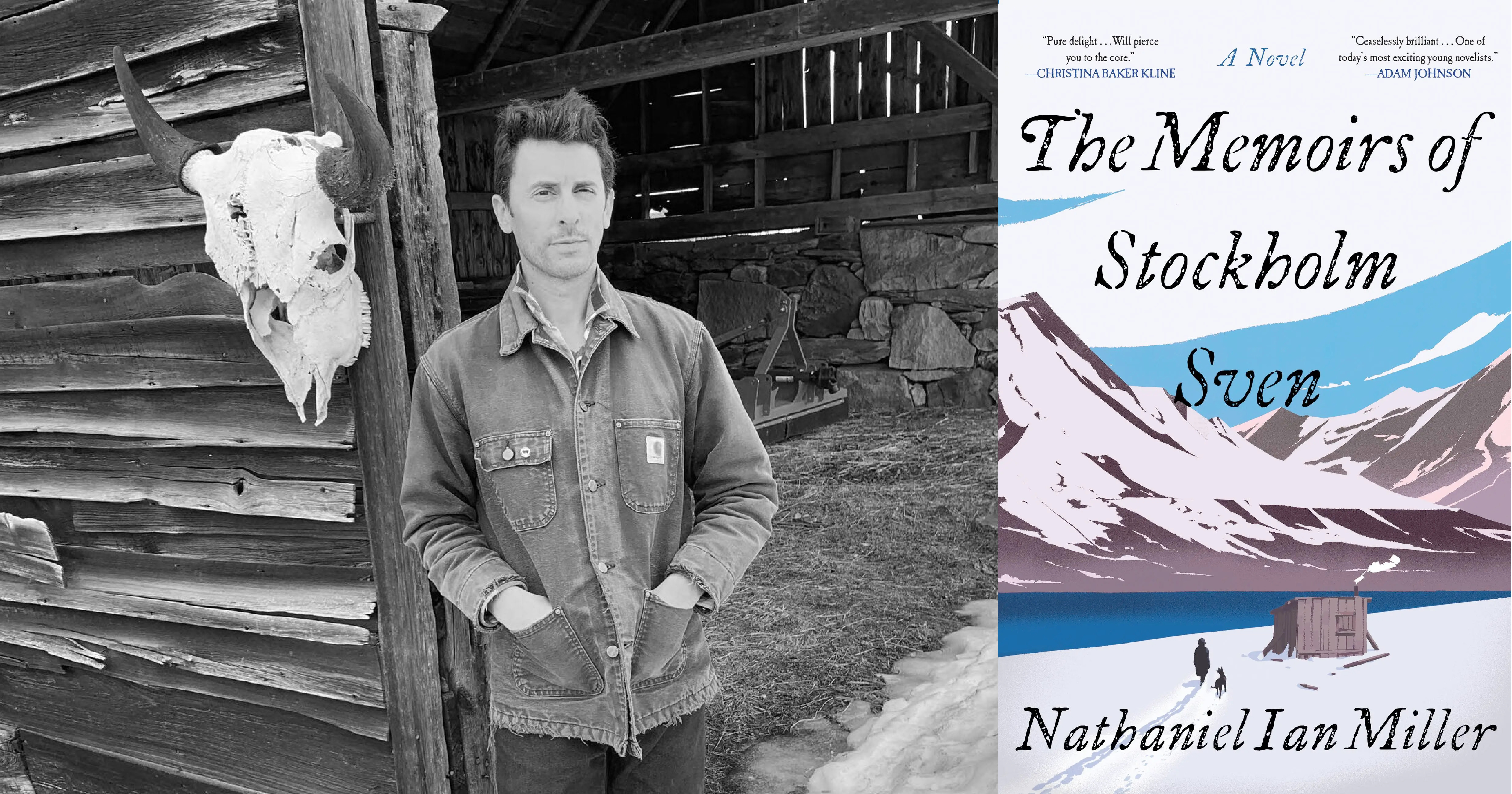
Book Look: The Memoirs of Stockholm Sven, by Nathaniel Ian Miller


 Who among us hasn’t at one time - typically as a child - dreamt of running off to the woods (or the mountains, or the sea) in search of solitude and adventure, a la My Side of the Mountain or Redburn? In this tale, the protagonist is Sven the Swede, an educated but misanthropic young man, raised by disinterested parents for a life destined to involve hard work in the company of people he disdains. Raised on tales of arctic exploration, he fixates on the idea that a life in the arctic will provide him the solitude and spiritual solace that he craves. But of course it’s not as easy as that, because as tempting as it may sometimes seem, one can’t actually run away from life because life follows you wherever you go.

Approached this with trepidation because “man vs. nature” tales aren’t my cup of tea. I couldn't care less about the miseries of frostbite, the care and feeding of sled dogs, or how to recognize different types of snow. (I had an unfortunate encounter with Jack London in my youth that left some scars.) But though there are some beautiful descriptive passages here and plenty of physical hardship, this tale was – to my great relief - focused on the interactions between humans, with the arctic standing in as a metaphor for all the forces in the world – culture, hardship, misfortune, societal expectations, introversion, resentment, frustration, lovelessness – that can isolate us from the world if we allow them to. This isn’t a tale about how to survive in the arctic – instead, it’s challenging us question any preconceived notions we might have about “what constitutes happiness?” and “what constitutes a worthy life?”

The story is filled with realistic detail and feels satisfyingly authentic, as long as you don’t think too hard. Because the argument could be made that Sven is improbably lucky in the acquaintances (human and canine) he makes along the way, each of them engagingly eccentric and unfailingly generous. But the advantage of fiction over non-fiction is that the author gets to create the story they want to tell, and this is a story worth telling. One by one, these eccentrics teach Sven how to reengage with the world on his own terms, how to trust, and ultimately how to love.

I’m grateful for the reminder that lives don't have to be "big" to be important, that it isn't the number of connections that you make in this life that matter but rather the quality of those connections, and that each of us needs to be allowed to define "happiness" in our own way.

4/22/2023

Book Look: Lessons in Chemistry, by Bonnie Garmus

This book took me by surprise! Was expecting vapid chick lit - especially given the picture of the coy female on the cover - but instead was presented with a highly original and clever satire built around the premise of a wounded, hyper-rational woman trying (and mostly failing) to navigate her way in a hostile, unjust, and irrational world.

(Feel like people who are dinging this book for being unrealistic are missing the fact that this is a satire, a genre that relies on exaggeration, hyperbole and anachronism. Can we all agree that the sentient dog and the 4yr old reading Nabakov aren't meant to be realistic?)

(It's also useful to go into this understanding that epigenetics - Elizabeth's research topic - is the study of how environment can cause changes in the way our genes work. Because that's what this story is ultimately about - how the world we grow up in and the people we interact with change us in often unexpected ways.)

Loved the character of Elizabeth - such an eclectic combination of self-assuredness and social cluelessness! Not like any other fictional characters that come to mind (with the possible exception of Sherlock Holmes). Grateful that the author resisted the urge to turn her into some sort of woke feminist warrior, presenting us instead with a heroine who is at once strong but also flawed, in a "things that can't bend are the most likely to break" way.

Loved the journey that the story takes us on, as Elizabeth - much like the recipes she presents on her cooking show - finds herself transformed by her own chemical interactions with misogynistic colleagues, jealous rivals, and clueless peers ... but also friendship, motherhood, and that rarest of all chemicals on the periodic table of human experience, True Love.

Most of all, loved that this is a deceptively devastating satire - mostly aimed at mocking the destructive injustice of gender stereotypes, but also academia, motherhood, religion, the entertainment industry, and more.

Refreshingly original, genuinely funny, and unexpectedly affecting - definitely comfortable recommending this as a worthy read.

2/06/2023

10 Foods You've Been Eating Wrong


I know there are dozens of these "Foods You've Been Eating Wrong" lists on the internet, but these are tricks we actually use in our family on a regular basis. Hope you find them as helpful as we do! 

  1. Baked potatoes. You know what's great for scraping the curved contours of a baked potato? Hint: not a fork! Spoons leave the delicious potato innards intact and also allow you to scrap the curved peel so that you can enjoy every last crumb
  2. Shredded BBQ/Sloppy Joe. Anyone who's tried to eat shredded BBQ on a bun knows that most of the meat ends up on the plate. The remedy? Use a hot dog bun instead. Keeps the BBQ nicely contained in one place.
  3. Cupcakes. Tired of getting icing on your nose? Slice the cupcake in half and invert the top half to create a cupcake sandwich - frosting between two layers of delicious cake. No more icing nose! 
  4. Salads. Salads are annoying. The lettuce leaves tend to be inconveniently sized and shaped.  Forks can only stab 1-2 ingredients at a time, so you never get to enjoy the blend created by all the flavors.  And exactly how are you supposed to eat the croutons - do you try to stab them with your fork or balance them atop a forkful of other ingredients? End the madness by chopping all the ingredients into bits, then toss the lot with some salad dressing and eat the finished product with a spoon.
  5. Popcorn. Pour your popcorn into a big beverage cup and tip it into your mouth as if you're drinking. No more buttery hands!  
  6. Sliced apples. Stop using bitter lemon juice to keep apple slices from browning - orange juice works just as well, and doesn't leave a bitter after-taste.
  7. Oreos.  There is no satisfying way to dunk an Oreo without getting your fingers milky. Except there is! Insert the prongs of a fork into the mysterious white pasty stuff in the middle, then use your fork to dunk the cookie all the way into the milk. So satisfying!
  8. Bacon. Who needs the mess of cooking bacon on a griddle? Who wants to waste 30mins baking it in an oven? Solution: cut raw bacon into 1" pieces, then cook the pieces in a saucepan. Stir by swirling the pan and use a lid to keep the grease from making a mess. When done, pour the bacon pieces onto paper towels to drain and enjoy your bitesized bacon bits.
  9. Tacos. Wrap the ingredients - lettuce, salsa, meat, cheese, sour cream - in a small corn tortilla, then insert the rolled tortilla in the taco shell. The tortilla adds taste and prevents mess.
  10. Lunchmeat sandwiches. Dangle your lunchmeat off the edges of a slice of bread, place your condiments in the middle, place your condiments - lettuce, tomato, cheese, etc. in the middle of the slice - then fold your lunchmeat over the condiments. Not only does this prevent your condiments from moving around, but you'll get lunchmeat in every bite - even the corners. 


12/23/2022

Christmas Light Scavenger Hunt CHALLENGE


Driving around the 'hood during the holidays is a great tradition, but can get a little repetitive. Thus the rising popularity of Christmas lights scavenger hunts on the internet. But what happens when those scavenger hunt starts to get old, because they all include the same, common items? Introducing a scavenger hunt for people who enjoy a challenge ... anyone able to check off all THESE items has earned their eggnog! 

  1. House with 10 or more inflatables
  2. House with 15 or more lighted lawn sculptures
  3. House with Christmas tree on roof
  4. House with Santa and/or sled on roof
  5. House with a word spelled out on the roof in Christmas lights
  6. The word "Believe" in any shape or form
  7. House with lights on the lawn or ground
  8. Minion inflatable or decoration
  9. Star Wars inflatable or decoration
  10. Zoo animal inflatable or decoration (can't be penguins or polar bears)
  11. Disney character NOT from Frozen inflatable or decoration
  12. Nightmare Before Christmas inflatable or decoration
  13. Superhero/Marvel Comics inflatable or decoration
  14. Inflatable or decoration taller than the house (decorated trees don't count)
  15. Leg lamp inflatable or decoration
  16. Holiday lawn flamingo(s)
  17. Nativity scene featuring cartoon characters
  18. Nativity scene that includes Santa
  19. Larger-than-life Santa that's NOT an inflatable
  20. Glowing plastic Santa
  21. Beach/surfer Santa
  22. Decorations that reference a sport or sports team
  23. Animated/moving inflatable or decoration
  24. Decorated camper, RV or car
  25. Decorated garage door
  26. Lighted tunnel or series or archways
  27. House with lights that are falling off (or strand of lights that has stopped working)
  28. Mismatched icicle lights
  29. House with candles AND wreaths in every window
  30. House with 10 or more wreaths
  31. House with faux snow (snow machine or flocking)
  32. House decorated in just one color that's NOT gold or silver/white
  33. Animated 2D wire-frame decoration (ex: reindeer jumping into air)
  34. Something flying or moving through the air on a cable
  35. 10 consecutive decorated houses in a row

8/23/2022

30+ Reasons Teachers Feel Disrespected


Wondering why teachers are leaving the profession like rats abandoning a sinking ship? The answer can be summed up in one word: DISRESPECT.  Teachers have always endured a modicum of disrespect, but the separate sources of disrespect have exponentially multiplied over the past few years. Here are just a few of the reasons teachers aren't feeling a whole lot of love just now ....

  1. Our pay is not commensurate with other professionals who are expected to acquire an equivalent amount of education. In addition to a college degree in the content area we intend to teach, most districts require that we obtain a teaching degree. In most other fields a masters degree earns you more money; in teaching, however, it's seen as a prerequisite for accepting even the lowest paid positions. Try explaining that to your college loan company.
  2. Our pay often fails to provide a living wage. It's hard to feel respected when people don't seem to care that we can't actually live on what we're paid
  3. Our pay raises are at the whim of local governments.  Unlike other careers, where raises are generally consistent, teachers live in a constant state of uncertainty. Often, our salaries are "frozen" for years at a time, or even slashed. Oh, and forget the concept of "reward for effort." There is absolutely zero link between job performance and renumeration - no matter how hard we work, no matter how brilliant we are, our renumeration will be based solely on our years of service.  
  4. Being expected to either pay for the supplies we need out of our own pocket or to do without. Are nurses required to buy PJs for their patients? Are waiters expected to supply their customers' tableware? Why are teachers expected to buy pencils, erasers, notebooks, etc. so that their students can participate in learning? 
  5. Politicians using teachers to score points by accusing us of all manner of improprieties: liberal agendas, grooming, godlessness. I get that one of the cheapest ways to win votes is to make voters afraid of something and then promising to fix it, but teachers are tired of being the bogeymen in this scenario. 
  6. Politicians and school boards treating us as engines of indoctrination. Teachers have ethics, standards, and measures of professionalism, one of the most important of which is that we teach actual truth. Teach "alternative facts" at home if you must, but stop demanding (at the risk of firing) that teachers engage in this sort of indoctrination.
  7. Politicians feeling free to trade our actual lives for a few votes. Nothing makes a teacher feel valued like being told that their lives are worth less than someone's political career. 
  8. Politicians who think that education can be run like a commercial venture, disregarding the fact that no commercial venture on earth is required to entirely disregard the quality of their raw materials while simultaneously guaranteeing the quality of 100% of the product
  9. Politicians who compare charter schools to public schools, pretending that this is an apples to apples comparison in spite of the proven disparities in hours spent per student, parent engagement, and student ability/motivation
  10. Citizens who claim they value education, but then consistently vote against school bonds or taxes that would fund education
  11. Students who, having learned their social skills from social media trolls during Covid, feel empowered to treat their teachers with profound disrespect
  12. Working conditions that range from uncomfortable (broken windows that let in heat/cold) to dangerous (mold)
  13. Virtually no protection from abuse (cursing, physical harm, stalking) at the hand of students or parents
  14. Reformers (especially eccentric tech billionaires) who believe that they understand education better than thousands of actual professional educators
  15. Reformers who believe that there's a "one size fits all" approach that will work for all students, disregarding the frankly obvious fact that no two kids learn the same way
  16. Reformers who think that standardized tests are accurate measures of student ability
  17. School administrators who force us to adopt their "educational fad of the year" (often tied to the latest educational best-seller), regardless of the whether data exists to prove that the method is in any way superior to practices currently in place.
  18. School administrators who that micro-manage their staff. Too many administrators seem to assume that their job is to tell teachers how to do their job rather than facilitate the ability of teachers to do their job. Teachers deserve to be treated as the competent professionals that they are, not junior sales associates. 
  19. School administrators who continue to saddle teachers with new responsibilities (address learning loss, transition to blended learning, teach SEL, do more data analysis, etc.) while failing to relieve us of the burden of existing responsibilities. Teachers are resilient, but all humans have limits. You simply cannot keep piling bricks on a horse and expect it to keep moving forward (much less at a gallop). 
  20. School administrators who refuse our requests for days off because they can't find subs. I'm not just talking about vacations here ... I'm talking about teachers being denied the leave they need to receive critical care, teachers who have been denied leave for important family events (like graduations), teachers who have been asked to provide sub plans *while in labor.*  Politicians playing with our lives is bad enough; admins refusing to let us live our lives, a whole different level of disrespect.
  21. School administrators who expect us to constantly do more with less ... like spending more time building relationships with students while simultaneously increasing our class sizes, or requiring that we use new technology while taking away the professional development days we need to learn how to use new apps.
  22. Members of the general public who treat teachers like we're getting paid to do nothing over the summer. The vast majority of us are on contracts that pay us for exactly the number of days that we work and no more. Moreover, we often spend our summers engaged in entirely un-renumerated school-related work, like redesigning lesson plans or engaging in professional development
  23. Members of the general public that treat teachers' unions as if their purpose for being is to promote political agendas instead of ensuring that teachers are treated fairly. Apparently teaching being the one career where teachers - lousy, lazy, coddled bums that they are - deserve all the exploitation they get?
  24. Parents who treat us as free daycare, unwilling to support their students' education in any way. At least pretend to take your child's future as seriously as we do.
  25. Helicopter parents who treat us like idiots or assume we have some sort grudge against their students.  We especially appreciate the incivility of parents who send daily emails that rob us of our planning time, who expect us to provide their students with free one-on-one tutoring, or who expect us to respond to their communiques evenings & weekends.
  26. Parents with unrealistic expectations: who expect us to "cure" their childrens' learning disabilities, teach them manners, oversee their social lives, or ensure that their child receives a degree even if they were absent 70% of instructional periods. 
  27. A general underappreciation for the actual number of hours that teachers work in the course of a week. You're tired after your 40 day workweek? Try 10hr days + another 8hrs of grading or admin work over the weekend ... ~60hrs per week. And those hours don't come out of TV time - most teachers have to carve them out of "hide": time that they could have been spending with their own children and families.
  28. A general underappreciation for the huge amount of extra-curricular skills we are expected to teach: social skills, career skills, administration functioning, self-regulation, manners, leadership, responsibility, citizenship, resiliency ....
  29. People who genuinely think that "those who can't do, teach" or who assume that teaching requires no particular skill - that, in fact, any veteran or "Teach for America" college graduate can do it. Imagine the humiliation of being repeatedly told that the job you trained your whole life to perform could be done just as well by amateurs.
  30. People who think teachers shouldn't care about material things because our reward is the satisfaction of "making a difference in the life of a child." We're human beings, not martyrs. We may enjoy our jobs, but we're not interested in sacrificing our lives to the needs of other people's students.
  31. People who tell us we're stupid to have become teachers, and that if we're disrespected then it's no more than we deserve for being foolish enough to have chosen teaching over more lucrative careers. Not all careers are measured by financial reward.

7/29/2022

20+ Reasons that Gifted Kids Struggle to Reach Their Potential


Congratulations! Your child has been identified as gifted. You're home-free! No fights over report cards. No worries about them getting into a good college. Heck, they'll probably be able to take care of you in your old age. 
You've won the jackpot. 

Not so fast. Giftedness is the word we give to people who exist at the most extreme levels of standard deviation at the right edge of bell curve that describes human intelligence.  In other words, they are defined by the fact that they are NOT normal. And in a world that's been customized to meet the needs of normals, this can present any number of challenges.  Indeed, these challenges can be so formidable, research consistently shows that up to 50% of gifted individuals experience persistent underachievement.

Tomes have been written about each of these individually, but I've never found a source that listed all of them in one place - which is unfortunate, because most gifted individuals are going to experience a combination of these, and they can interact in unsuspected ways.  If you're the parent of a gifted individual, an adult that works with gifted individuals, or gifted yourself, I recommend that you keep this list handy.  Sometimes all that's needed to help is a bit of clarity and understanding; other times, however, struggling gifted individuals may need intercession in order to help them appropriately cope with the very real challenges that they face.   
  1. Imposter syndrome/self-doubt. One of the most common issues faced by gifted individuals is the fear that they aren't as smart as other people think they are. This is often exacerbated by constant messaging from others telling them: "This should be easy for you." Unavoidably, as soon as something *isn't* easy for them, they begin to doubt themselves. Many gifted individuals report having spent their lives in a state of constant anxiety, afraid that at any time they might be "exposed" as being less gifted than people assume them to be.
  2. Inflexible mindset. As a result of imposter syndrome, gifted individuals may exhibit an unwillingness to take risks. They would rather go for the sure 'A' than try something challenging and risk a lower grade, an outcome that (they fear) might reveal them to be "imposters." This can prevent them from taking academic, intellectual, or career risks.  
  3. Perfectionism.  In moderation, perfectionism can drive gifted individuals to explore the limits of their abilities. Taken to an unhealthy extreme, some gifted individuals may begin measuring their self-worth by external evaluations such as grades or earnings. In excess, perfectionism can cause gifted individuals deliberately to underachieve because they perceive being considered lazy or disorganized as preferable to the risk of being perceived as less than perfect by themselves and others.  
  4. Competing/conflicting cultural/racial/peer expectations. Maslow's Hierarchy of Needs reminds us that the most urgent priority in the lives of all humans, including gifted individuals, is their need to feel accepted, safe, and loved.  If a gifted individual is striving to be accepted by a group that devalues education due to cultural, racial or peer norms, then it's not uncommon for them to suppress or sabotage their giftedness in order to conform and be accepted.
  5. Stereotype Bias. Stereotype bias combines several of the factors above, and describes a situation in which a gifted individual belonging to a specific cultural/racial/peer group becomes unnerved by the idea that they are going to be seen as "representing" their peer group.  This can lead to anxiety and a desire to withdraw from scrutiny.  
  6. Lack of Role Models.  Related to the above, gifted individuals representing minority populations may struggle to envision themselves as assuming gifted roles in academia and the professional world because of the lack of same-minority role models to serve as examples, or even mentors.  Many minority STEM professionals continue to report feelings of insecurity due to the lack of existing pathways into STEM for people of their culture or ethnicity.
  7. Competing/conflicting gender expectations. In some peer groups, gender expectations can interfere with giftedness.  For instance, there may be an expectation that girls eschew academic pursuits in favor of more nurturing family roles.  Many studies suggest that, even here in the U.S., a persistent stereotype that "boys are better at math and science" continues to limit opportunities for women in STEM careers. 
  8. Competing/conflicting family expectations. In some cases, family priorities may overwhelm all other priorities, including academic achievement. For instance, a gifted individual might be expected to set aside personal aspirations in order to participate in their family's business/concern, contribute income to the family, or supervise/raise family members.   
  9. Poverty. Individuals who grow up in poverty are more likely to experience an early childhood deficient of rich background experiences and content such as attending high performing neighborhood schools, growing up with books in the house, or participating in discussion with educated, literate adults. This can create gaps in background knowledge that can make it harder for these gifted individuals to access critical thinking tasks, leading to confusion, frustration, and anxiety.
  10. Emotional overexcitability.  Gifted individuals are more likely to experience emotional overexcitability, a tendency to experience emotion in a heightened way.  This can manifest itself as extreme empathy for the plight of others, a heightened sense of right and wrong, in intolerance for injustice, a tendency to experience emotional extremes, and misplaced guilt/remorse. For such individuals, a single nightly world news broadcast or commercial about neglected animals can be enough to trigger extreme anxiety. 
  11. Psychomotor overexcitability. Gifted individuals can display extreme psychomotor symptoms, including compulsive/impulsive behaviours, extreme competitiveness, and overactivity.  These individuals can become frustrated when these natural psychomotor extremes are misidentified as ADHD or immaturity and inappropriately accommodated - or even punished.
  12. Sensual overexcitability.  Gifted individuals can have heightened reactions to sensory stimuli such as music, art, literature, or natural beauty.  They may overreact to sensory inputs they find annoying, or crave sensory stimuli that provide comfort or pleasure. These behaviours can create confusion, anxiety, and frustration.  
  13. Intellectual overexcitability.  Gifted individuals can exhibit a tendency to engage in intellectual debate and confrontation, which can trigger disputes and create an impression of combativeness. 
  14. Imaginational overexcitability. Gifted individuals often possess rich and complex imaginations, which can manifest as excessive daydreaming or extreme immersion in fantasy worlds - worlds that they have been exposed to through fiction or games, or that they have invented on their own. These obsessions with fantasy worlds can be a blessing (as when they provide a common interest upon which to base friendships) or a burden (as when their obsession with fantasy distracts them from other pursuits, or is perceived by peers as "odd").
  15. Asynchronous development. While it is not uncommon for gifted children to exhibit levels of maturity beyond their years, this is *not* always the case. It is also fairly common for gifted children to develop asynchronously - to acquire critical developmental skills at an unequal rate, possibly even at a slower rate than age peers. Areas that may develop asynchronously include social/emotional skills, language & communication, cognitive skills, and fine/gross motor skills. This can cause intense frustration in adult guardians/teachers who are expecting a uniformly heightened level of development, but even more so in gifted students who may, for instance, read 6 years above grade level but still burst into tears at their inability to tie their own shoelaces.  (FYI, studies show that the slowest skill to develop is often written communication.)
  16. Precocious reading.  One extremely common attribute of gifted children is a love of reading, with their choice of reading material often outstripping their chronological age. Their strong reading skills may make these texts accessible, but unfortunately does not guarantee that they will possess the emotional maturity to deal with the issues that may arise in these texts. They may find themselves unable to deal with the intense emotions aroused by such disturbing themes as injustice, violence, and dystopian futures.
  17. Introversion. Studies indicate that the majority of gifted individuals are introverts. This can make it harder for them to engage with peers and may lead to feelings of isolation and depression.
  18. Trouble Making Friends.  A combination of several factors can make it difficult for gifted individuals to establish a supportive circle of friends, to include introversion, asynchronously developing social skills, "odd" overexcitabilities, and the statistical lack of cognitive peers. Obviously individuals with very different cognitive levels can establish long and lasting friendships, but studies suggest that gifted individuals derive important social and emotional benefits from being able to interact with others at their cognitive level, which can be difficult to accommodate. 
  19. Co-morbid conditions. Studies show that extreme intelligence often occurs in conjunction with other mental "abnormalities," such as OCD, depression, autism, and bipolar disorder.  A challenge in accurately diagnosing the existence of these co-morbid conditions is that gifted individuals are often clever enough to accommodate the most obvious symptoms so that they are not immediately obvious. Another challenge is that these conditions may appear as "shadows" that influence rather than override behaviour. However, the impact of these co-morbid conditions can cause confusion, frustration, anxiety, and lead to the adoption of maladaptive coping strategies such as self-medication. 
  20. Multipotentiality.  This is another one of those benefits with a dark side: while it's great that gifted individuals often excel in multiple fields (academics, sports, arts, leadership, etc.), this can be a burden for these individuals when it comes to figuring out which of their areas of expertise to pursue. Anxiety and frustration can mount as different stakeholders (parents, coaches, directors, mentors) urge their imperatives on individuals who do not have enough hours in the day to gratify everyone ... much less themselves.
  21. Managing adult expectations.  Gifted children self report that parents are their #1 source of support ... but also their #1 source of stress! Pressure to meet the (often unrealistically) high expectations of parents can lead to anxiety, frustration, anger, and depression. This can become particularly problematical when a parents' expectations for their child are a mismatch with the child's interests and passions - for instance, a child whose passion is art but whose parents are demanding that they take a pre-law course load. It can be tempting for adults to treat gifted children as "little adults," without making allowances for the fact their children are experiencing the same distractions, hormones, and inconsistencies as their age peers.
  22. Lack of challenging content. Another huge source of stress for gifted children is having to endure lessons that provide no intellectual challenge.  After a while, gifted students repeatedly forced to sit through undemanding classes will conclude (rightly) that school has little of value to offer them, and their boredom and frustration may lead them into trouble.  
  23. Lack of challenging collaborators.  While it may be tempting for teachers to pair more capable students with less capable students in hopes that the former will somehow "set a good example" and "pull up" their less capable colleagues, the actual result (studies show) is that gifted students end up doing most of the work and learn nothing. Unless they are consistently paired with peers working at approximately the same cognitive level as themselves, the outcome can be similar to that described above.
  24. Maladaptive coping strategies. This challenge certainly isn't limited to gifted individuals: faced with anxiety, depression, anger or other frustrations, anyone might find themselves attracted to maladaptive coping strategies - tantrums/outbursts, unhealthy habits, inappropriate attention-seeking, self-medication using alcohol/drugs. However, there is a tendency for people to assume that gifted individuals are "too smart" to fall into these psychological traps, without understanding that the challenges faced by gifted individuals - to include poor self-esteem and constant external pressure to succeed - are precisely the types of stressors most likely to trigger maladaptive coping strategies. 
I hope this list proves informative and/or helpful!  Let me know in the comments if there's anything I've missed.

7/19/2022

Book Look: One Hundred Years of Solitude, by Gabriel Garcia Marquez


 If you want to keep your book group talking all night, this is the book to pick! The reason: Garcia Marquez’s classic is working on so many levels, you can exhaust one topic only to realize that you have dozens more to go. 100 Years of Solitude can be explored as a historical novel (with some particularly scathing things to say about civil war and colonialism), as a work of mythology, as an exploration of gender, as an exploration of culture/religion, as a study of human psychology, as an exploration of the human condition, as an examination of free will vs. predestination, or even as a work of lyrical poetry. The book somehow manages to incorporate not just a few themes but almost ALL of them - love, solitude, family, identity, perseverance, war, justice, the corrupting influence of power, survival, sacrifice, hubris/pride, grief, revenge, death – all rendered in a vivid, dreamlike prose style that serves to heighten the emotion of every passage, somehow rendering beauty even more beautiful, wonder even more wonderful, and tragedy even more tragic. (Seriously, prepare to laugh, to cry, and to experience all the emotions in between.)


It’s important to remember that this novel is over 50yrs old. Many works of magical realism have come since, but this must have felt like a bomb dropped on the literary establishment at the time that it was released. People smarter than me have talked about why Garcia Marquez incorporates so many elements of hyperbole, superstition and magic. He himself has said that when he was a child, the stories his parents told him were always full of magic, so it was a natural act to incorporate magic in his own tale. Whatever the intent, the magical elements work here to add mythological resonance to many of the anecdotes, elevating them from narrative sketches to mythical tales (most of them with useful morals if you look for them). In this way, for instance, the story of Remedios the Beauty’s ascension into heaven becomes a myth about the perils of achieving perfection; the tale of the insomnia plague becomes a myth about perils of loneliness; and the tale of four devastating years of non-stop rain proceeding the brutal murder of 3000 innocent plantation workers become a myth about the corrupting/rotting influence of violence and greed.

One of Garcia Marquez’s major themes is that, so long as humans are too foolish to learn from our mistakes, we will just keep continuing to make them. (Which explains how “prophets” like Melquiades can exist – in order to appear as if they are telling the future, all they have to do is tell the past.) I bring this up because one thing your book group might explore is the parallels between incidents that are portrayed in this 50yr old book vs. incidents occurring in our world today, including culture wars between liberals and conservatives, the corruption of political leaders, plagues, sexual trafficking, and the militarization of scientific discoveries. Which raises the question: to what extent is 100 Years of Solitude a Melquiades-like fortelling of our own story? (How meta is that?!)

Just a few tips if you haven’t read this yet. The first being, give yourself time! This is NOT a book to be rushed through. Garcia Marquez plays tricks with time, with perspective, and even with reality - sometimes all three at once – often within a single paragraph or anecdote. Read all the words, and give your imagination time to not just comprehend but appreciate the effect of his masterful storytelling. Second, it may help to know a little about Columbian history, especially the early history of the country through the 1000 Days War ... so keep your phone standing by to look up the historical references. Third, give yourself permission to lose track of the names. The Buendias clan has a habit of recycling names (I think there were at least 3 Jose Arcadios? And over 20 Aurelianos?) but this artifice supports the overarching theme that humans tend to make the same mistakes over and over again, so in the end it doesn’t matter what fate befalls each, because the fates are collective and cumulative rather than individual. Fourth – especially if you’re female – try to allow yourself to loath the bits about female exploitation without letting your loathing color your whole experience. Looking beyond specific incidents of indignity, the women in this novel actually tend to be the stronger and more fully realized characters than the men. At the outset of the novel, for instance, Ursula may seem like a stereotypical “nagging housewife” from any old tale, but by the end of the novel she’s revealed to be the force that consolidates and perpetuates the Buendias clan. And I dare you not to cheer for Pilar Ternera, the local whore who, with all her immorality, proves herself again and again to possess more wisdom than any other character.

I’d envy those of you reading this for the first time, but it turns out I don’t have to, because this is the type of novel that one can re-read over and over again without ever running out of new understandings and discoveries. An extraordinary work of fiction, well-deserving of its spot on every list of “100 Top Works of Fiction.”

4/19/2022

The Death of Public Education

It will start in one of the Southern states. One of those states that always comes in near the bottom of all those well-publicized, all-important lists of educational effectiveness: the annual “Student Performance on Standardized Tests” list, the “Percent of High School Students Who Graduate” list, the “Money Spent Per Student” list.

One of those states that has a history of struggling to keep teachers because the job conditions are onerous (huge classes, no support services, hours of unpaid extra duties, unsafe classrooms), because they aren’t being paid a living wage (also in no way commensurate with the level of education required), and because the teachers have grown tired of being used as political punching bags (like being forced to teach, unvaccinated and unmasked, during a pandemic).

One of those states that barely skirts past mandatory federa
l guidelines by engaging in such manipulations as lowering the difficulty of standardizing tests, inflating grades, and exploiting loopholes that allow them to avoid testing struggling students – especially English language learners and students with special needs.

One of those states that, frankly, would be okay with a less populated citizenry, because uneducated voters are easier to manipulate, which comes in handy when you need to persuade people that building roads through long-established minority neighborhoods is necessary, that brown tapwater that smells of sulfur is nothing to worry about, or that there’s nothing wrong with a governor accepting huge donations from companies that are later awarded sole source contracts for big state-funded initiatives.

One of those states that teachers are abandoning not in a steady stream, but in a tsunami-like wave.

Which, ironically, will provide the state with the cover they need to announce that they are moving to a four day school week, because in times of emergency one has to take drastic measures, and no one wants to cut electives like music, art, and health, but when you get right down to it, schools have gotten too involved in social issues anyway – like teaching that evolution is real, that climate change is happening, and that U.S. history contains fairly significant incidents of social injustice – so, really, it’s a mark of political and moral leadership to be reigning in the excesses of public education by limiting it to readin’, writin’, and ‘rithmatic, right?

Which will last for a while until, facing increasingly serious teacher retention issues, the state announces that they will be moving some more rural students onto virtual learning, because in times of emergency one has to take drastic measures, and no one wants to single out kids who live in underserved rural areas but, hey, those districts are already safely gerrymandered and with all the money that the state saves on efficiencies – shutting down schools, selling school buses, reducing free meal programs – it’s really a mark of smart governing to be reclaiming this money and directing it towards more urgent issues, like giving tax breaks to chemical and petroleum companies with reprehensible environmental records so that they’ll provide the kind of low-paying jobs perfect for people who never finished high school.  It’s a win-win!

Which will last for a while until, now facing whole-scale failure on every possible measure (standardized test scores, high school graduation rate, students mental health, teacher retention, etc.), the state announces that they will be moving everyone to charter schools, because in times of emergency one has to take drastic measures and what better way to fix broken schools than to turn them over to businessmen who know how to get things done better than a bunch of radicalized teachers, union-controlled school boards, and godless curriculum experts?  Sure, no one wants to give up on public schools, but given that private schools have so much more leeway to hire cheap (albeit wholly unqualified) teachers, omit content that may offend local citizens, ban books, openly teach religion, adopt factually dubious textbooks, fudge test scores, circumvent federal laws protecting the rights of students with special needs, and refuse outright to educate anyone with dubious citizenship status  – then, really, isn’t this the “big government, keep your hands off my children!” leadership that the citizens have been asking for all along?  

Which will last for a while until other states - states that have heretofore been watching from the sidelines – announce that they too will moving everyone to charter schools, because in times of emergency one has to take drastic measures and what could be bolder than copying what other states have already done? Sure, no one wants to be seen as racing to the bottom, but given that other states have already embraced the model and getting rid of public schools frees up a lot of money to fight court cases brought by outraged stakeholders, then, really, isn’t it time to embrace the idea that the way we deliver public education needs to change to meet the needs of a new century?

Sure, there will be complaints. Complaints from liberals concerned that charter schools undermine the purpose of education, which is to ensure an informed and considered electorate. Complaints from minorities claiming that charter school entrance policies effectively restore segregation, discretely sorting students in ways that abet and reinforce racial homogeneity. Complaints from the families of students with special needs claiming that charter schools either (1) refuse to admit their students or (2) refuse to provide them a fair and appropriate education. However, the Supreme Court is now stacked with justices prepared to address these complaints by overturning misguided past rulings and asserting that the federal government really has no role to play in how states choose to provide education, that racially segregated schools can be equal (if parents rather than laws are doing the selecting), and that special needs students shouldn’t have to be tested (if states don't think it's necessary).  After all, hasn't the Supreme Court has already decided that racism has been extinguished, that judicial precedent is immaterial, and that the federal government should get out the business of protecting individual rights?

But just think of the benefits! No more parents complaining about teacher indoctrination, because parents will have the power to pick a school that delivers exactly the level and manner of indoctrination they demand.  What with liberal charter schools for liberals and conservative charter schools for conservatives, we're eliminating the need to acknowledge (much less evaluate) opposing viewpoints ... think of the unpleasantness this will save!  Also, there will be no more bickering over school boards or school superintendents, because charter schools operate independently of virtually any oversight.  No more teacher shortages, because a certain fairly stable number of high school graduates are always going to prefer teaching over careers in fast food, and since all the curriculum is going to be scripted and/or online anyway, they don’t actually have to know anything. No more worrying about troubling educational gaps between majority and minority populations, because charter schools have proven themselves adept at manipulating data. Even students benefit, because think of the stress that will melt away when they no longer have to demonstrate any actual content mastery in order to earn As.

Best of all, the politicians finally get what they’ve wanted all along – a populace that’s ignorant of history (and therefore contentedly clueless as we repeat the errors of the past), ignorant of science (and therefore content to trust politicians to protect their health, their communities, and their planet), ignorant of math (and therefore happy to vote for regressive tax structures that profit everyone but themselves), incapable of deep reading (and therefore unable to access any lessons literature might have to teach), ignorant of human rights (and therefore complacent when those rights are gradually stripped away), and marvelously, blissfully unable to engage in critical thinking, making them delightfully easy to manipulate.  

For those of you who have gotten this far and are now wondering: what is this woman’s problem? Has she been reading too much dystopian fiction? Overdoing the doomscrolling? All I ask is that, before you judge, go back through the steps in the process I’ve laid out and tell me precisely where you think my reasoning goes astray. Tell me where the political support will come from to protect public schools, where the institutional changes will come from to keep teachers from fleeing the field, where the motivation will come from to save a system that almost everyone seems to believe is either inefficient, out-of-touch, inept, unjust, unnecessary, godless, biased, bloated, bureaucratic, or a bastion of indoctrination. Convince me, if you can, that this clumsy, cumbersome and yet profoundly noble ideal, the right to a fair and equal publicly-funded education, so conceived and so dedicated, can long endure against the rapidly advancing forces of political immorality, unconstrained capitalism, ideological extremism, and unravelling civil protections.

Please, convince me. Because God knows this isn’t the future I want – it’s barely a future I can endure contemplating - but it is the future that I have begun bracing myself for. 


3/05/2022

20+ Things You Should Be Doing Now to Prepare for Climate Change


Good news for preppers: there's finally something real to prep for. It's called climate change (CC) and it's coming for all of us. Most recent estimates (as of Feb 22) suggest the CC tipping point - the point beyond which out-of-control CC becomes inevitable because human actions will be unable to reverse natural positive feedback loops - will arrive in the next 10-15yrs.  While organizations like the U.N. work as hard as they can to wrest remediation pledges from members countries; while outfits like Project Drawdown work to prioritize solutions by impact & cost; and while states ramp up their "Green New Deal" planning, it's safe to say infer that we're not going to make nearly the amount of progress we need to make in order to avert some of CC's scarier consequences, to include food/water shortages, unhealthy levels of air pollution, wildfires, storms, flood, wars, mass human migration, and mass animal extinction.  

10-15yrs isn't too soon to start making the life changes you may wish to make in order to prep for the world to come. In fact, it's probably just the right horizon for decisions regarding houses, home/landscaping renovations, vehicles, investments, and family planning. Some of the recommendations herein can wait longer, but I wanted to make the list as complete as I could.

I realize this list is very (very) biased towards people who possess houses, HVAC, discretionary income. I wish this were otherwise, but there's growing awareness of the fact that CC - like many other environmental issues - tends to be accompanied by gross social injustice.  As CC impacts ramp up, people who can afford to take remediation measures will take them; those who can't afford to prepare will simply be forced to make due. However, there are measures here that require little/no investment, and so should be accessible to folks at every social and economic level. If I could recommend just one of the following measures, it would be #21, Educate Yourself. Know what's coming so that you can make wise decisions about how to prepare within the bounds of your own circumstances.
  1. Prepare for high gas prices and gas/natural gas shortages. The sooner you stop relying on fossil fuels for your basic needs - heating, transportation - the better. Gas powered car? Propane stove or clothes dryer? Natural gas-powered HVAC? Time to start looking for replacements - energy efficient replacements, if you can get them. 
  2. Secure a Steady, Reliable Source of Energy.  It may take a while for new alternative energy grids to be able to replace the fossil fuel-dependent electrical capacity we have now. If you want to avoid brownouts on hot days, may be worth looking into whether solar power is a possibility for your home
  3. Pick a Resilient Hometown. Some states are going to take a hammering from climate change-spawned droughts, flooding, extreme storms, etc.  Make things easier on yourself by relocating to a state that's expected to handle climate change with relative resilience. A recent article I read was recommending northern and midwestern states - from Minnesota to the West, Virginia to the South, and Maine to the North. 
  4. Prepare for Rising Sea Levels. If you own property on or near tidal waters (ocean, tidal rivers), you may not have as much time as you think. The problem isn't that CC-inflated sea levels are going to inundate properties all at once - even the most dire predictions hover around 1-3M over the next 100 years. But once the federal government figures out that sea level rises are a fait accompli and stop issuing guaranteed flood insurance, you'll be lucky to find anyone to buy your property at any price. 
  5. Prepare for Flooding. CC is expected to increase the frequency and intensity of rain events, leaving to devastating flooding. If you own property in a flood plain, or that has been known to flood in extreme rain events, start your flood planning now. If your risk is relatively low, it may be enough to "harden" your property to survive a major flooding event. Some ideas: re-grade your property to facilitate runoff, lay in rain gardens to store extra water, create stone walls or berms. If your risk of flooding is high, however, you may want to get out now, before the federal government stops issuing guaranteed flood insurance.  
  6. Prepare for Wildfires. CC is expected to cause droughts that will - already are - increasing both the frequency and intensity of wildfires. Again, think about whether it makes sense to "harden" your property against wildfires by clearing brush, installing fire-resistant landscaping, or replacing your roof/building materials with fire resistant alternatives. If you live in an area that's already prone to fires, however, you may want to relocate now, while buyers optimistic enough (or clueless enough) to purchase your property still exist.
  7. Prepare for Storms. CC is expecting to both (1) increase the frequency and intensity of hurricanes, tornadic storms, and other malevolent weather events and (2) introduce catastrophic weather events into areas where such incidents have, heretofore, been relatively rare. Safety precautions that have worked so far (emergency warning systems, shutters, wind-resistant architecture and bug-out kits) may not be a match for a future in which Category 6 hurricanes become the norm, storms park themselves over cities for days at a time, tornadic storm systems create destruction zones 20miles wide, and record-low pressures generate winds faster than those ever seen before. 
  8. Prepare for the Heat. The human body's heat tolerance at 100% humidity is about 95oF (50% humidity, about 109oF, 0% humidity, about 130oF). Above that, your body won’t be able to lose heat efficiently enough to maintain its core temperature and brain and organ damage ensue. As parts of the world get hotter and/or wetter, that's a lot of people one broken air conditioner away from death by heat stroke. So go fix those windows, insulate that house, install that attic fan - maybe ceiling fans too. And have a plan for what to do if the power goes out on a dangerously hot day.
  9. Prepare for Higher Food Prices & Food Shortages. For a variety of reasons, CC is expected to reduce food production, so take what measures you can now to prepare against higher food prices and increased food scarcity. Hoarding may be a little extreme (at least this far out), but raising chickens or establishing garden/greenhouse may be worthwhile. 
  10. Secure Your Coffee Supply.  Making coffee it's own category because (1) it's an essential resource for some, and (2) coffee supplies are uniquely imperiled by climate change due to extreme weather changes expected in the world's most productive coffee-growing regions. Stored appropriately, coffee beans don't take up a lot of space and can remain fresh for years. 
  11. Top Off Your Wine Collection. CC is expected to devastate many legendary grape-growing regions. The good news is that warming regions of the world should be able to replace any lost quantity, but how do you replace the quality of regions like the Rhone Valley and Champaign?
  12. Buy a Fake Christmas Tree. Warming temps are expected to increase populations of tree-destroying diseases and pests. If Christmas is something your family does, consider swallowing your revulsion and buying now, before prices for the fake ones go through the roof. Santa Claus will understand
  13. Prepare for Water Scarcity.  While CC is expected to bring too much rain to some places, it's expected to drastically reduce rain in others. Areas that are already suffering drought and/or overdrawing their aquafers are going to be especially at risk.  Jobs that rely on water - agriculture, dairies, mills, oil/gas, beverage industry - may also be threatened.  Some actions you may want to take: diversify your job options as necessary, purchase low-water appliances, invest in drought-resistant landscaping, and lay in rain barrels to capture what rain you get (especially if you need a secure supply for watering a garden).
  14. Prepare for the Impact of CC on Sports & Recreation. It's not just about the death of winter sports we're talking about here.  It's also about temps too hot to permit outdoor sports like golf, youth/adult sports leagues, and running/marathons, and air pollution so dangerous, outdoor sports pose a potential danger to respiratory health that dwarf any potential health gains. If your sports/recreation regimen includes outdoors activities, make sure not to squander the time you have left! And start thinking about alternatives that could replace these staples down the road. 
  15. Prepare for the Impact of CC on Health.  The last UN report on CC listed over a dozen ways in which CC is likely to impact health. So before you make any decisions about relocating the family or self-insuring yourself for health, consider the impact that declining air quality may have on respiratory issues such as asthma and allergies; the increased risk of heat-related illness (especially in areas where air conditioning is unavailable); the resurgence of insect-borne diseases in warm, moist climates; and the growing evidence linking CC with complications related to pregnancy, cardiac health, and mental health.
  16. Consider the Impact of CC on Vacation Planning. By the time you get around to going where you want to go, where you want to go may not be there any more! Some destinations you may wish to prioritize over the next decade, before they disappear: 
    1. Cities imperiled by sea level rise (ex: New Orleans, Key West, North Carolina's Outer Banks,Venice)
    2. Cultural landmarks imperiled by extreme weather or sea level rise (Easter Island, Greek Islands, Tyre, Ephesus)
    3. Cold-weather destinations imperiled by glacial and sea ice melting (ex: Glacier National Park, Greenland, Alaskan cruises, Antarctica)
    4. Forest/rainforest destinations imperiled by by heat/wildfires (ex: Amazon rainforest, Redwoods National Park)
    5. Diving/snorkling excursions imperiled by ocean acidification and coral reef death (ex: Great Barrier Reef)
  17. Prepare for Higher Prices for Everything. Observing the impact of Covid on our economy has reminded folks of the consequences of too much money chasing too few resources: supply chain hiccups, shortages, and inflation. Now imagine that the countries producing most of our goods - India, China - are coping with extreme food/water shortages, mass migration, extreme political corruption, and regional/world wars. (Why? At least a dozen reasons, but let's lead with the fact that when the Himalayan glaciers melt, the Ganges, Indus, Mekong, Yangtze and Yellow Rivers - which collectively provide water for billions of people - will run dry. That alone will create chaos.) Some measures you may want to consider: buying houses, cars, and durable goods (furniture, appliances) sooner rather than later; shopping smarter (really look for those deals); and developing the habit of living more sustainably (ex: shop at thrift stores, recycle fashion, join local groups committed to reuse)
  18. Secure Your Savings.  If you're lucky enough to have money salted away in savings or retirement accounts, worth thinking about how that money is invested.  Are your prepared to survive long-term global downturns in corporate profitability and government spending? Are the companies you've invested in set to remain sustainable? This may be the time to start "greening" your portfolio by investing in the techs that are going to be required in a post CC world
  19. Prepare for the Impact of Climate Migration. As food/water resources shift, as heat/wildfires make areas uninhabitable, and as wars over scarce resources erupt worldwide, pundits predict historically unprecedented numbers of immigrants seeking a new life. The impacts of climate migration will vary hugely based on where you live, but may be worth considering. If you are in an area likely to be flooded with migrants, what can you do now to secure the needs of your family while growing your community's social safety net so that you can provide for those who are on their way?
  20. Contemplate Your Family Planning.  If you're starting to think about how many children you're going to plan on bringing into the world, it may be worth considering the world into which you may be bringing them. A world in which wars over scarce resources may be the norm rather than an aberration. A world in which climate migrants may be fleeing from border to border, begging for entry. A world in which gaps between rich and poor may be exacerbated by the scarcity of critical resources (food, water, shelter). It may be worth factoring into your planning the extent to which you will be able to protect and support children in a world where everything - from food to clothes to daycare - will be much more expensive, where housing and jobs may be harder to find, where political instability may be more pervasive, and where your country's military forces may find themselves engaged in more conflicts than ever before.
  21. Educate Yourself.  People have been lying about CC for a long time now, and it's logical to expect the lies to ramp up as CC increasingly impact our lives.  Energy companies anxious to convince us that their coal is "clean," that natural gas "isn't really a fossil fuel," that fracking/pipelines "are a great way to secure our energy needs against foreign manipulation." Companies eager to convince us that carbon neutral is the same thing as carbon positive or to assure us that they're "planting enough trees" to offset the harm. Politicians anxious to convince us that candidates who support green initiatives are "secretly trying to impose a socialist agenda," "intent on driving up tax/gas/oil prices" or "destroying the U.S economy." Find unbiased sources and educate yourself about CC realities and myths so that you know when you're being lied to, and so that you can make educated, rational choices (vs. emotional, ineffective choices) about how to utilize the resources we have (tax dollars, tech) to most efficiently and effectively address the coming crisis.
  22. Prepare to be Part of the Solution. Fixing climate change is going to be like trying to build a beach in the middle of a hurricane - while countries may have the resources to bring in the cranes & heavy equipment that will be needed to get the job started, it's going to take trillions of grains of sand - trillions of individual acts of conservation and sustainability - to make the beach happen. So start thinking now about what you can do help get that beach firmly established, before the storm hits.
The author is a scientist and teacher who has worked as a researcher/analyst for Potomac Institute for Policy Studies, a DC-based think thank, and is a member of the Leadership Corps of Climate Reality, the climate awareness organization founded by former Vice President Al Gore.

3/03/2022

20 Guaranteed Ways to Get Yourself Murdered in an Agatha Christie Novel

  1. Agree to attend a house party (or tour group) at the invitation of someone completely unknown to you
  2. Agree to witness an elderly person's controversial new will
  3. Attempt to blackmail the real murderer
  4. Announce in a room crowded with suspects that you've just figured out who did it, but you're going to wait until tomorrow to tell the police what you know
  5. Announce in a room crowded with suspects that you actually weren't in your room at the time of the murder; instead, you were out wandering the halls, passages, or garden
  6. Announce in a room crowded with suspects that you possess psychic powers capable of identifying the killer
  7. Host a house party at which all the guests are people who have a reason to hate you
  8. Possess an inconveniently accurate memory about past events, especially anything to do with past murders, past marriages, or the birth of twins
  9. Agree to switch cloaks, costumes, hats, bedrooms, or train compartments with another person
  10. Agree to participate in a "joke" to be played on someone else
  11. Spend your ample down-time looking out the window of your house
  12. Agree to let someone else pick the mushrooms for dinner (or, naively prepare mushrooms left anonymously in your kitchen)
  13. Accept the offer of a rendezvous in the garden, at night, alone, because an anonymous note asked you to be there
  14. Agree to invitations that involve intimate weekend hunting meets, masquerade parties, or strolls along the edges of perilous cliffs
  15. Reveal yourself to be the long lost relative - uncle, nephew, child - of anyone wealthy who already possesses several expectant heirs
  16. Become involved in a love affair in which your lover requires you to conceal your affection, your true name, or your relationship to someone who is very wealthy
  17. Become involved in a love triangle when you're the only one of the three possessing a fortune
  18. Have a past history of abusing or harming children in some way
  19. Laugh off warnings that "your life may be in danger" delivered by dapper men with Belgian accents
  20. Live in the same village as Ms. Marple

3/02/2022

15 Ways to Avoid Becoming the Victim in a True Crime Drama

  1. Craigslist. Just don't
  2. Tinder. Ditto
  3. 100% of guys who boast about being the FBI, CIA, or Special Forces are lying. 
  4. If they claim they're wealthy but they're still living with their parents, they are lying and you should be ashamed for being so gullible
  5. If they tell you all the people they dated before you were crazy, consider that the common denominator is who they dated before they each went nutty
  6. If they cheated with you, they'll cheat on you
  7. If they start talking about life insurance on or before the honeymoon, BIG red flag.
  8. If the love of your life is over-possessive, jealous, or controlling, you might as well leave a provision in your will  specifying who you want to play you in the podcast they're eventually going to make about your murder.  
  9. Psychopaths enjoy church on Sunday too. 
  10. By the time someone jokes about wanting to kill you, they're already planning how
  11. No one ever looks up "how to hire a hit man" on the internet because they were simply curious 
  12. When they ask you to accompany them on a weekend hunting trip, a hike up the side of a steep mountain, or a romantic midnight boat ride, just say no
  13. Always. insist. on. meeting. your. ex. in. a. public. place.
  14. Let the other wife/husband - the one they didn't tell you about - take them, with your blessing. Hell, throw in a wedding present just to be sure there are no hard feelings
  15. Stop using "they seemed normal" as your baseline criteria for trusting people

3/01/2022

Book Look: The Vapors, A Southern Family, the New York Mob, and the Rise and Fall of Hot Springs, by David Hill


Not sure why I enjoyed this quirky little book so much, but I did!


Was it the opportunity to travel back through time to revel in the nostalgic mid-century dazzle of cocktail dresses and fedora hats, Friday dances and varsity football, hard-living Hollywood stars, boxing matches, resorts, race meets, fur coats, and spectacular MCM architecture?

Or was it the vicarious thrill of peeking into the internal operations of mid-century mobsters, sans most of the horror? (You can think of Hot Springs as a sort of “Chicago Light”: all the mobsters, none of the Tommy-gun massacres.)

Maybe it's the way better-known historical events and milestones lace their way into the narrative – the role of Jimmy Hoffa’s Teamsters in laundering mob money, the birth of the amphetamine crisis, the Cuban revolution, Robert Kennedy’s anti-mob vignette, Hollywood scandals, the Little Rock Nine, Bill Clinton, and more?

Am I the only one who had no idea how close Hot Springs, Arkansas came to usurping Las Vegas's crown as America’s gambling destination?

The author cleverly parallels the story of the rise and fall of Hot Springs with the rise and fall of his grandmother Hazel, providing an opportunity for him to tell his tale not just from the point of view of the “big shots” whose names we recognize, but also from the point of view of the innocent citizens of Hot Springs whose lives were irrevocably intwined in the towns’ booms and busts. By the time the Baptists finally manage to shut down gambling in Hot Springs in the 1960, some Hot Springs residents will have emerged as winners, some will have been fortunate enough to emerge unscathed, but others – like Hazel – will have lost themselves in the whorl of alcoholism, drug addiction, petty cons, and lost dreams.

Does it matter what kept me turning the pages? All I can say is that I tore through this in a weekend and have already recommended it to several friends. Informative and fun!