This is always how I imagined Nancy Drew and Ned Nickerson would look on their honeymoon.
10/10/2011
10/05/2011
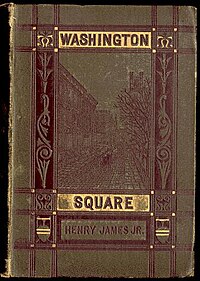
Book Look: Washington Square, Henry James
This is a surprisingly ambiguous story with a deceptively simple plot. Set in 1900s New York, the story tells the tale of Catherine Sloper, the rather plain, rather dull daughter of a wealthy, domineering father who becomes the target of a charming gold-digger of a suitor. Will she marry him over the objections of her father? See how simple that is? But this is Henry James, after all, so the plot extends - like the proverbial iceberg - several layers below the surface.
Catherine isn't a terribly sympathetic heroine - her dullness, her lack of intelligence, and her refusal to stick up for herself will almost certainly grate with self-actualized women of the 20th century. However, she's much more sympathetic than the uniformly unpleasant cast of characters with whom she interacts in this tale, all of whom see her as little more than a tool to be manipulated for their own purposes. Her aunt uses her as the means by which to fulfill her own melodramatic fantasies of secret trysts and the tragedy of doomed love. Her lover sees her as the path to ready fortune and a life of indolence and ease. Even her own father demonstrates heartbreakingly few signs of genuine affection, viewing his daughter alternatively as an interesting scientific experiment ("how will she react if I apply *this* stressor?") and as a ready affirmation of his own cleverness. The fundamental principle of sarcasm is making the wielder feel superior by belittling another, and in this tale Dr. Sloper wields sarcasm with the same brutal precision he brings to his surgeries.
This is no pat morality tale, however, in which the wicked are punished and virtue is rewarded. Nor is it a thematically simplistic novel, characterized by a resolution in which the main characters change or grow in wisdom. The world isn't as simple as that, and James does us the favor of positing that we know this as well as he does - and that, therefore, we can cope with an ending that is both morally and thematically ambiguous. The novel raises many provoking questions, some of which include: to what extent is a parent justified in preventing their children from making their own mistakes? At what point does principled defiance become merely obstinacy ... or, worse, cruelty? To what extent do we (knowingly and unknowingly) meddle in the affairs of others to achieve our own ends? Can harm and humiliation caused by the betrayal of others be mitigated by a steadfast refusal never to betray oneself? And is this steadfast determination never to betray one's own principles an acceptable substitute for living a life devoid of happiness?
In other words, despite the relative simplicity of plot, this definitely isn't the kind of book you take with you to the beach. However, the novel's moral complexity makes it a worthy read and probably great fodder for book club discussions.
Catherine isn't a terribly sympathetic heroine - her dullness, her lack of intelligence, and her refusal to stick up for herself will almost certainly grate with self-actualized women of the 20th century. However, she's much more sympathetic than the uniformly unpleasant cast of characters with whom she interacts in this tale, all of whom see her as little more than a tool to be manipulated for their own purposes. Her aunt uses her as the means by which to fulfill her own melodramatic fantasies of secret trysts and the tragedy of doomed love. Her lover sees her as the path to ready fortune and a life of indolence and ease. Even her own father demonstrates heartbreakingly few signs of genuine affection, viewing his daughter alternatively as an interesting scientific experiment ("how will she react if I apply *this* stressor?") and as a ready affirmation of his own cleverness. The fundamental principle of sarcasm is making the wielder feel superior by belittling another, and in this tale Dr. Sloper wields sarcasm with the same brutal precision he brings to his surgeries.
This is no pat morality tale, however, in which the wicked are punished and virtue is rewarded. Nor is it a thematically simplistic novel, characterized by a resolution in which the main characters change or grow in wisdom. The world isn't as simple as that, and James does us the favor of positing that we know this as well as he does - and that, therefore, we can cope with an ending that is both morally and thematically ambiguous. The novel raises many provoking questions, some of which include: to what extent is a parent justified in preventing their children from making their own mistakes? At what point does principled defiance become merely obstinacy ... or, worse, cruelty? To what extent do we (knowingly and unknowingly) meddle in the affairs of others to achieve our own ends? Can harm and humiliation caused by the betrayal of others be mitigated by a steadfast refusal never to betray oneself? And is this steadfast determination never to betray one's own principles an acceptable substitute for living a life devoid of happiness?
In other words, despite the relative simplicity of plot, this definitely isn't the kind of book you take with you to the beach. However, the novel's moral complexity makes it a worthy read and probably great fodder for book club discussions.
10/01/2011
Halloween Horror-ible Film Festival
Since we don't happen to have a movie theater in our house, we set up a make-shift movie studio in our biggest room by attaching a DVD-playing laptop to a desktop projector (iPod speakers to amplify the sound) and projecting the picture onto a huge sheet. Bet it would be even more fun to project it onto one of those blow-up outdoor movie screens you can rent these days!
Without further ado, here's a list of suitable movies (with food accompaniment) to inspire your event. May I respectfully suggest choosing one from each category?
Genuine attempts at horror that went terribly, terribly wrong:
- Plan 9 From Outer Space. "Future Events such as these will impact your future!" intones the narrator ... and it just gets better from there! Watch as scenes mysteriously alternate between daylight and nighttime; enjoy as aliens arrive in spaceships that clearly dangle from strings (their cockpit just as clearly constructed from chairs turned backwards and a shower curtain); wonder at cardboard gravestones that sway everytime someone walks by them; ponder the fear inspired by zombies that move at a rate slower than geologic time. Best of all, admire the way that the director, undetered by the death of his film's star, substitutes his dentist (why not his barber? we'll never know) by the clever contrivance of having the guy hold a cape over his face everytime he appears in a scene. So bad and yet so good! [For hors devours, serve devilled egg zombie eyes]
- Attack of the Killer Tomatoes. "That's not blood, that's ... tomato juice!" Rarely has a more improbable line been spoken in movie history. By the way, the movie really is about mutant killer tomatoes, and was filmed in the 1970s as a parody of B horror movies in general. My favorite scene is when a school of tomatoes attack a swimmer, a la Jaws. Wait - it's when our heroes, intent upon saving the world, infiltrate the bad guys disguised as giant killer tomatoes. No, wait - it's when the tomato rises out of the trash compactor and kills the woman. Drat! I just can't decide - the whole movie is just so memorable! [For hors devours, serve - what else? - hamburger sliders and french fries with ketchup!]
- Army of Darkness. An intentional send-up of both the horror and action/fantasy genres that succeeds brilliantly at both. The movie stars legendary B-actor Bruce Campbell as a mild-mannered S-Mart clerk who is transported back in time to a medieval kingdom where, in the process of fighting an army of the dead and retrieving a magic book, he becomes a bad-ass action hero. The plot is wholly preposterous, the genre references outrageously campy, the dialog clever and hilarious, but it's the delightfully cheesy special effects that will leave you cheering and wanting more! [For hors devours, serve thigh bones made out of meringue]
- Godzilla vs. King Kong. Because what could possibly be better than watching a monster destroy Tokyo? Answer: watching TWO monsters destroy Tokyo! Guaranteed to stimulate howls of disbelief and lots of thoroughly enjoyable heckling. [For hors devours, serve sushi and bananas]
- Abbott & Costello Meet Frankenstein. Actually, this is a monster trifecta, in which Dracula (played by Bela Lugosi) is trying to resurrect Frankenstein's monster using Costello's brain, but the Wolfman (played by Lon Chaney) is trying to stop them. It's worth noting that Quentin Tarantino loves this movie and cites it as one of the great examples of a mixed genre film. However, I don't feel that this prevents me from adding to to my list of really awful horror movies. [Fors hors devours, serve anything that can be skewered with a wooden stake (toothpick or bamboo stick)]
9/28/2011
Top 50 Comfort Foods
There's probably an official definition of "comfort food" out there somewhere, but I know what "comfort food" means to me: dishes I turn to when I'm feeling nostalgic, stressed, or blue. The dishes below have the power to sooth, to reassure, and to transport me back to favorite times and places in my life. Reflecting the fact that I'm a product of the midwest, this list definitely has a midwestern bias: heavy on the butter and beef, light on seafood. Would love to hear what foods others turn to in times of need.
- Apple Pie
- Bacon
- Baked Beans
- Beef Stew
- Bisquits and Gravy
- BLT Sandwich
- Brisket Pot Roast
- Brownies
- Buttered Toast
- Cereal
- Chicken & Dumplings
- Chicken & Rice
- Chicken Pot Pie
- Chicken Soup
- Chili
- Chocolate
- Chocolate Cake
- Chocolate Chip Cookies
- Corn on the Cob
- Cornbread
- Fried Chicken
- Gelatin/Jello
- Green Bean Casserole
- Grilled Cheese Sandwich (especially with Tomato Soup!)
- Hamburgers
- Hot Dogs
- Hot Chocolate
- Ice Cream
- Lasagna
- Macaroni & Cheese
- Mashed Potatoes
- Meatloaf
- Milk
- Milkshakes
- Oatmeal
- Pancakes
- Peach Cobbler
- Peanut Butter & Jelly Sandwich.
- Perogies.
- Pizza.
- Popcorn
- Potato Salad
- Pudding
- Pumpkin Pie
- S'Mores
- Shepherd's Pie
- Spaghetti
- Tuna Casserole
- Turkey & Gravy
- Vegetable Soup (with crackers, of course!)
9/13/2011
Book Look: Devil in the White City, Erik Larson
The text on the back cover of Devil in the White City makes two promises: 1) to educate the reader about the legendary 1893 Chicago World's Fair, with particular emphasis on the role played by the fair's brilliant architect, Daniel Burnham, and 2) to shed new light on the murderous rampage of one of the country's most infamous serial killers, who at one point in his career availed himself of the fair to lure attractive female victims to their doom.
In fact, the book delivers both more and less. Erik Larson's meticulous historical scholarship and his scrupulous resolve to report only substantiated fact is both this work's strength and its downfall.
For instance, if you're looking for drama and titillating detail, you may find yourself disappointed. This is non-fiction, Larson reminds you at every turn, which means he can only report what has been entered into the historical record. And since our elusive murder, Dr. Holmes, was not a particularly trustworthy or forthcoming villain, the tale necessarily omits those mainstays of sensational true crime reporting - witness accounts, motive, and intent - that play a key role in generating empathy, suspense, and horror. By the end of the book you'll know all about the victims, the timelines, the crime scenes (including Holmes' infamous "house of horrors") and the investigation that led to his eventual arrest, but you'll gain little new insight into either the devils that drove the fiendish Dr. Holmes to commit his crimes, or the faults/flaws that predisposed his victims to fall prey to his machinations.
If, however, you're looking for an author who knows how to use research to deftly evoke a period and mood, you'll eat up this wonderfully detailed account of the U.S. at a unique and riveting moment in history. Through the eyes of Daniel Burham, the Chicago Fair's architect, Larson explores not just the physical construction of one of the most magnificent Worlds' Fairs in history, but also the social and cultural construct of a major U.S. city at the turn of the century. He skillfully paints the U.S. in general (and Chicago in particular) as a land of astonishing superlatives and extremes, in which towering skyscrapers coexisted alongside stinking slaughterhouses; in which men of enormous wealth coexisted with impoverished, exploited laborers; in which men possessed the vision to raise in a wonder from dust, but lacked the ability to alleviate the pain of a crippling toothache; in which people gaped at wonders such as Buffalo Bill's Wild West Show, cannibals, belly dancers, and the world's first ferris wheel, while simultaneously taking for granted the wonders - elevators, skyscrapers, social progressiveness - popping up all around them every day; and in which men required only cleverness and vision to achieve great deeds and fame ... or, alternatively, to achieve appalling deeds and infamy.
I, for one, thoroughly enjoyed the tale. Though not without some flaws (too many menus, too much time devoted to Harrison's assassination, *way* too much Olmstead!), I felt Devil in the White City delivered on the promises of its back cover, and then some.
9/09/2011
100+ Things that Women Are Expected to Know How To Do
Among the skills post-ERA women are expected to master: how to succeed at a career, advocate for ourselves, assume an equal role in courting/dating, and perform all those traditional "men" jobs.
However, we're also expected to continue to perform all those traditional female roles: mother, home-maker, family logistician, community volunteer.
Finally, there's that unwritten, unacknowledged list of things attributes foisted on women by cultural expectation and practical necessity: feign interest when others insist on sharing long anecdotes about their children/pets/health, forge compromise out of chaos, sit next to the uncle no one likes every Thanksgiving. (Yes, I'm being tongue-in-cheek. Sort of.)
Put all these responsibilities together and suddenly it makes a Darwinian sort of sense that women mature more quickly than men: look at all this stuff we're expected to have mastered by the time we're ready to venture out into the world ...!
Career & Community
- Manage a company and/or perform all necessary administrative functions
- Manage a community organization as efficiently as a company - but without any resources
- Accurately communicate strengths & achievements without embarassment
- Learn to network (correllary: know how to inconspicuously educate men as to the difference between networking and flirting)
- Speak confidentally in public
- Negotiate a salary or raise
- Serve as unofficial office social secretary (remembering and overseeing celebration of birthdays, weddings, etc.)
- Carve time out of the same 12 hour day our male colleagues are working to run family errands
- Proactively apply baked goods towards soothing frayed nerves
- Whip up casseroles for use as house-warming gifts, pot-luck events, and wakes
- Remember family names and relationships
- Maintain contact with family members (especially the ones no one really likes)
- Preserve, protect, and pass on family traditions
- Purchase and dispatch birthday/holiday cards and gifts so that they arrive by/before the specified date
- Gently deliver bad news
- Provide precisely the right words of comfort to those in need of comfort
- Protect those in need of protection
- Write thank you/consolence notes that sound personal and sincere
- Identify and purchase gifts that are simultaneously appropriate, thoughtful, unique, and affordable
- Plan and host a wide variety of social events (dinner parties, birthday parties, holiday parties)
- Plan and organize a wide variety of family events (vacations, garage sales)
- Comfortably venture out in public places (restaurants, movie theaters) without an escort
- Ask a man out (as a date or friend)
- Remain polite even in the face of really bad pickup lines
- Hold our own in a basic conversation about sports (without expectation that men will be able to hold up their own in basic conversation about topics we're interested in)
- Feign interest in boring conversations
- Flirt without sending "signals" that could possibly be misinterpreted by even the densest, most sexist male
- Dance without embarassing ourselves (backwards, and in high heels!)
- Be prepared to assume bridesmaids duties at any time
- Change men without them knowing they're being changed
- Facilitate compromise (without anyone realizing they've compromised)
- Form and defend our own political opinions
- Say "no" in a convincing way
- Demand an explanation
- Identify and end toxic relationships
- Hurt someone's feelings when necessary
- Advocate for our own needs
- Learn to take criticism gracefully (but not passively)
- Delegate
- Handle stress/anxiety effectively
- Politely but noncommittally thank people* for unsolicited advice we have no intention of following (mothers-in-law, work colleagues, friends, strangers)
- Manage complex family schedules and logistical challenges that would daunt UPS
- Dispense allowances in accordance with a complicated formula incorporating age, number of children, number and difficulty of chores, etc.
- Possess sufficient medical knowledge to determine whether symptoms are minor or require a doctor's care
- Ensure children receive vaccinations and checkups (also, coordinate checkups required for enrollment in school, sports, and camp)
- Exorcise monsters hiding in closets and under beds
- Repair wounded stuffed animals
- Kiss boo boos and make them better
- Determine right/wrong in chidlhood disputes we haven't actually witnessed
- Interrupt even the most delicate tasks long enough to "watch this!"
- Still unruly kids - and adults - with a single "mom look"
- Maintain calm when faced with critical teachers, unrealistic coaches, and parents of "perfect children" intent upon telling us what we're doing wrong (or perhaps just telling us what they are doing right)
- Maintain a clean and tidy environment (house should appear magazine photographer-ready at all times, but without the staff)
- Make ordinary household repairs
- Kill bugs/catch mice
- Responsibly manage finances/investments
- Prepare taxes
- Know how to buy a car/house
- Prepare basic meals
- Whip up a meal out of whatever's in the refrigerator, no matter how eclectic or meager the ingredients available
- Know how to determine whether produce is fresh
- Instinctively sense when meat/food has gone bad
- Know how to set a table
- Choose the right wine to accompany a meal
- Perform basic wiring tasks (ex: setting up a stereo or computer)
- Follow directions well enough to assemble basic furniture
- Hang pictures on the wall so that they are lined up and straight
- Change a vacuum bag
- Fix a toilet
- Ensure that the house never runs out of essentials (because the woman always gets blamed when there's no toilet paper)
- Maintain a lawn (including mowing)
- Perform basic clothing repair (affix buttons, sew a hem)
- Properly care for common textiles (clothes, curtains, etc.)
- Remove a variety of stains
- Comfortably operate automatic and manual transmission vehicles
- Perform basic car maintenance
- Drive safely over long distances and in a variety of weather conditions
- Parallel park
- Jump start a car
- Flirt our way out of a traffic tickets
- Look sexy while traveling in a convertible, even if our hair is flying in our mouths and bugs are bounching off our cheeks
- Know how to choose clothes in styles and colors that best suit us
- Find and purchase expensive clothes at miraculously reduced prices (real women never pay full price!)
- Make inexpensive clothing look expensive
- Apply makeup cunningly enough to conceal exhaustion, stress, and/or age
- Perform basic first aid
- Drink responsibly
- Tan without burning
- Defend ourselves against a variety of threats
- Prepare and enjoy food without gaining weight
- Carve time out for exercise somwhere in between the 99 other things we do
- Take control in times of distress
- Demonstrate basic survival skills (building a fire, etc.)
- Tie a few basic knots: square knot, slip knot
- Apply makeup without a mirror
- Find the best deal
- Wrap a gift
- Hail a taxi
- Calculate the appropriate tip
- Hold a baby properly
- Entertain any child - even those not our own - for at least 10 minutes
- Locate items misplaced by others
- Be prepared with a supply of carefully worded phrases to offer in socially awkward situations (ugly babies, ill-advised engagements, unwarrented promotions, clothes that do make someone look fat)
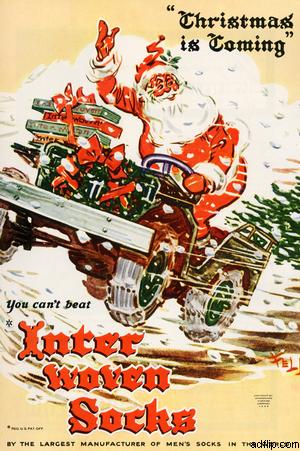
30 Signs That Christmas is Coming
- Halloween costumes 90% off
- Sales on turkey end; sales on ham begin
- Tree lots mysteriously appear overnight
- Token "happy" stories begin to appear on evening news
- 500% increase in Chia-Pet and Snuggie commercials
- Improbable products pitching themselves as "the perfect holiday gift"!
- Noticeable increase in weight loss commercials
- Families in matching outfits massed outside of photo studios
- Children behaving suspiciously well
- Huge increase in number of catalogs arriving by mail
- Restaurant items suddenly available in peppermint flavor
- Green and red bagels
- Run on gelled fruit at grocery store
- Scary balloon inflatables appearing in front yards
- Co-workers disappearing for suspiciously-long lunch breaks
- Normally tasteful people attired in tacky sweaters
- Local weathermen start obsessing about snow
- Painfully earnest Christmas specials
- It's a Wonderful Life begins airing 24/7
- Legitimate radio stations playing songs by the Chipmunks
- Mailbox full of brightly-colored envelopes with handwritten addresses and jaunty Christmas stamps
- Mailmen and newspaper delivery boys make point of greeting you cheerily
- Painful holiday puns (aka "Santacular Sale!")
- No parking spots
- People wearing antlers
- People singing in public without embarassment
- 10,000 calendars to choose from
- Civic organizations selling wreaths
- "Santa Tracker" appears on NORAD website
- Jews looking disgruntled and/or resentful
- Camels all rented out
- Huge increase in sales of cookies and milk
9/08/2011
A Thousand Words: Book House
I am definitely moving to this neighborhood when I retire.
SOURCE: http://www.stumbleupon.com/su/2oI3Vj/fc02.deviantart.net/fs20/f/2007/272/d/1/Little_House_on_the_Bookshelf_by_akasycophill.jpg
8/26/2011
Inventions Waiting to be Invented
Doesn't everyone maintain a mental list of things they'd invent, if only they possessed the necessary time/skills/resources? The difference is that I've accepted that I'm never going to possess the necessary time/skills/resources to invent any of the things on my list. So here it is, the things I'd invent if I could, presented in hopes that someone will invent these things for me so that I can then buy them!
- Sunglasses with built-in earbuds. What two things can't fashionable people do without? Answer: Designer sunglasses and iPods. (I'm omitting adopted children and little dogs for the moment.) Can you imagine the convenience of combining the two? The technology isn't there yet to deliver low cost, high quality wireless sound, but once it is, would love to see someone imbed earbuds in the tips of sunglasses. Want to listen to your music? Put your sunglasses on. Want to take them out? Simply remove your glasses. How easy - and how suave - would that be? And imagine the profit to be made ... bet you could charge $100s for the combo, which would probably only cost $10-20 to manufacture.
- Sunglass LCD Displays. Speaking of sunglasses-based utilities, wouldn't it be nice if those wireless phone earbuds (like Bluetooth) could be equipped with a laser projection device capable of projecting info about incoming calls onto the inside lens of your glasses/sunglasses? That way you could use your Bluetooth without having to sacrifice the ability to screen incoming calls.
- Pop-up visual barriers to conceal traffic accidents. This one would be a great boon for the public good. You don't have to live in a major metro area for long before realizing the major cause of traffic slowdowns isn't accidents - it's people slowing down to LOOK at the accidents. We humans are unapologetic voyeurs when it comes to death and mayhem. So here's a simple fix: why not equip police/fire response units with big screens that can be erected to conceal the accident from passing traffic? I'm picturing pop-up screen that fold into a small space but automatically "pop open" - a la those screens that people use on their car windsheilds to keep their cars cool - to create a barrier. Yes, keeping the screen steady in the event of wind poses a technical challenge, but have to believe the company that invents a useable, storable solution would instantly receive contracts from every municipality in the U.S., who would quickly realize how much cheaper the screens are than building new overpasses, lanes, or roads!
- Car Cooling Fans. Speaking of those screens that people use to keep their cars cool while sitting in the sun ... why are we still using screens to try to keep our cars cool while sitting in the sun? How hard would it be for the car companies to invent some sort of battery-powered fan that could be triggered by an iPhone app & ensure that your car has cooled by the time you step into it?
- Better beach chair. Every summer as I lug the equivalent of a 50lb manpack down to the beach with me just so I can enjoy a few mod cons along with sunshine and the sound of surf, I swear that one day I'm going to invent a "better beach chair" that will incorporate much of what I carry into a single, portable unit. What I mean, of course, is that I don't understand why someone ELSE hasn't invented the chair I want, so that I can buy one. In my imagination, a "better beach chair" incorporates the following features:
- retractable canopy for instant shade
- portable fan - to generate a bit of a breeze in the event of a really hot day
- small, retractable table
- small cooler capable of holding 3-4 sodas & snacks - preferably under the seat of the chair so that if cool air escapes, it escapes up through the seat
- drink holder
- book holder
- waterproof, sandproof, lockable storage for electronics: cameras, ipod, watch, money
- imbedded music speakers
- pillow/headrest
- portable - ideally carried via backpack-type straps
8/11/2011
Don't Blame Teachers! Factors That Influence Student Learning (Hint: Teacher Quality is NOT #1!)
You don't have to be a teacher, parent or politician to be cognizant of the latest trend in educational reform: the "accepted wisdom" that if a student isn't learning, there's a teacher somewhere that deserves the blame. Documentaries appear to prove that anyone can learn if only a certain formula of best practices + high expectation is followed. Movies turn the idea of "bad teachers" into a comic device. (I admit, I laughed.) No Child Left Behind, with its emphasis on supposed "research based practices," encodes the idea that there's a magic formula of theory + market-based incentives that can result in 100% student achievement by the year 2012. (This one makes me laugh too, but for different reasons.)
I'm a teacher, yes, but no idealog or militant. I accept that - absolutely - teacher quality plays a huge role in promoting student learning. But I despair at the political/social/moral forces that have caused us, as a nation, to willfully overlook the inconvenient truth that on a comprehensive list of factors that predict/influence student learning, teacher expertise ranks somewhere around #11. Don't believe me? Here are 10 factors, each beyond the ability of teachers to influence, that have a huge impact on a student's ability to academically thrive.
- Home Environment. A teacher has a student 7 hrs. a day. But the other 17 hrs. of the day (plus the 5yrs before they start school + weekends + summer vacations) they are at home with family members, being shaped and influenced in ways that absolutely impact their learning. In homes where children are surrounded by books, immersed in conversation/literature that encourages intellectual curiosity, and raised by family members who model achievement, children are inherently molded into learners. Indeed, data proves that kids of parents who went to college are far more likely to go to college. But what about the millions of students who grow up in homes devoid of books? Where critical thinking skills are rarely modelled? Where there is no tradition of educational achievement? No matter how brilliant a teacher's lesson plan, it can't compensate for these deficiencies.
- Poverty. If public schools are free, then why is poverty an issue? Frankly, kids who live in poverty have many more pressing things to worry about than academic achievement. Like whether they're going to eat that day. Like where they're going to sleep that night. (If they're going to sleep at all: sleeping on the floor of an overcrowded apartment doesn't lend itself to deep, satisfying slumber.) Like finding a part-time job to help bring in money for the family. Like rushing home every day to care for their younger siblings while mom/dad work a second (or third) job. All of this hugely impacts a child's ability to concentrate at school and complete homework at home. Nor is that all. Students raised in poverty have higher levels of absenteeism, are more likely to have gaps in their educational history due to frequent moves, are less likely have access to adequate medical care, are more likely to have disabilities that impact learning*, and are more likely to experience one or more of the other deficits on this list ... all of which negatively correlate with academic performance. (*I get tired of skeptics shouting: "Poverty doesn't make kids disabled!" Of course it doesn't - but if the family is poor, it's often because the parent(s) didn't finish high school, which is often due to one or more disabilities that impacted their ability to learn, making it statistically much more likely that their children will inherit disabilities that impact their learning.)
- Social & Cultural Factors. Max-Neef's classic hierarchy of fundamental human needs goes like this: subsistence, protection, affection, understanding, participation, leisure, creation, identity and freedom. Social factors such as family instability (divorce, frequent moves), absent parents, insalubrious neighborhoods (gangs, crime, bullying, substance abuse), and neglect (physical, psychological or emotional) undermine almost every single one of these needs, making it extraordinarily unrealistic for students in these situations to focus on academics. All the worse if one of the cultural issues our students are battling is a pervasive "street bias" against succeeding in school.
- Effort/Internal Motivation/Persistence/Resiliency. When was the last time you read a biography of a teenage slacker who ended up as a titan of science, politics, or industry? Not saying this doesn't happen, but far more common are stories of individuals who possessed from an early age the drive, courage, and resilience to succeed in spite of any/all odds stacked against them. Much has been written about the so-called "Entitlement Generation" - children born after ~1970 who believe that achievement is granted rather than earned. Whether or not you agree, the fact remains that students must at some point take responsibility for their own learning. When led to water, they must be willing to drink - which, this generation, means choosing academics over the myriad other distractions competing for their attention: video games, cellphones, social networks, etc. Because no amount of external motivation [encouragement, active learning, best practices, etc.] will ever compensate for the absence of internal motivation when it comes to student learning.
- Cognition/Aptitude. It's a shame the real world isn't more like Garrison Keillor's Lake Woebegon, where "all the women are strong, all the men are good looking, and all the children are above average." In actual fact, human intelligence is represented by a bell curve, meaning that about 80% of us possess so-called "normal" intelligence, while a smaller percent possess higher than average intelligence and approximately the same percentage possess lower than average intelligence. Many folks in this latter percentage will live full and fulfilling lives. However, what they won't be able to do, ever, is to demonstrate the higher-level critical thinking skills (making inferences, drawing conclusions, generalizing, etc.) required to master our standard public school curriculum. Which is why the NCLB goal of 100% achievement by 2012 makes me laugh; apparently our legislators weren't paying attention in school when they should have been learning about bell curves!
- Learning/Emotional Disabilities. Even kids with normal cognition may possess physical and emotional disabilities that significantly impact their ability to learn. Learning disabilities impair such critical functions as short/long term memory, phonological discrimination (the ability to discriminate the sounds that make up words), auditory processing, visual processing, and gross/fine motor skills. Just try learning multi-step equations in math when you can't process what your teacher is saying and you have a working memory the size of a pea. And then there are the raft of wrenching emotional disabilities that can impact students as young as kindergarten: depression, bipolar disorders, anxiety, defiance disorders, schizophrenia ... It's hard to fault a student for failing to place a premium on their education when pretty much all their energy is expended on trying to make it through the another day.
- Physical/Neurological Disabilities. And let us not forget the raft of physical and neurological disabilities that impact student learning as well. In my short teaching career I've encountered hundreds of students with attention disorders, dozens of students with autism spectrum disorders, and a host of students with other neurological challenges (epilepsy, fetal alcohol syndrome, Tourette's Syndrome, Prater-Wiley Syndrome) that impair focus, attendance, and cognitive ability. While federal/state laws do a good job of assuring that the more obvious physical challenges - physical impairments, blindness, hearing loss - are accommodated, the negative effects of health impairments such as chronic ear infections, toothaches, migraines, asthma, diabetes, and vision/hearing deficits are often overlooked.
- Second Language Learners. As the demographic composition of the U.S. continues to shift, more students than ever are entering the U.S. school system with a limited grasp of English. This problem is exacerbated by the number of immigrants coming from countries where they may have received little or no education in their native language. (Why is this important? Because it means they have no foundation in number sense or phonics, skills essential for mastering basic math and English.) Children are often able to achieve a grasp of "social language" rather quickly, but this masks the fact that mastery of "academic language" takes much longer (4-7) years, and mastery of written language takes longer still (5-10 years) ... and these processes may take even longer if students are returning to households where English is never spoken, further limiting their opportunities to practice the language. While they may possess the cognitive ability to master the curriculum, these students will not be able to fully access the necessary instruction until they are first able to master the language in which the instruction is delivered.
- Literacy/Cultural Literacy. You don't hear this one addressed as often as the others, but ask any teacher about major factors impeding the learning of students from families that come from other cultures, speak other languages, or grow up in deprived circumstances, and they'll tell you that their lack of adequate vocabulary and cultural literacy are critical deficits. Why does vocab matter? Studies have shown that the number of words a person understands correlates with their ability to comprehend meaning. Think of it this way - there's a big difference between "he shouted" and "he railed" ... but a kid who doesn't understand the word 'railed' isn't going to perceive that and so will miss out on critical implied meaning. Why does cultural literacy matter? Don't want to bore anyone with neurological research, so take me on faith when I say that the way our brains store new information is to "hook it" to existing information, aka "schemas." As might be expected, a dearth of existing schemas makes it that much more difficult to learn and retain new information. Don't believe me? Just try teaching The Watsons Go to Birmingham (a middle school literary staple) to students who have no knowledge of the Civil Rights movement, the Ku Klux Klan, Jim Crow laws, the proximity of Mississippi relative to Michigan, comic books, record players, southern dialect, or the fact that if it's cold enough, your tongue will stick to frost on a car. These kids have an enormous learning curve to tackle before they can even begin to access the curriculum.
- Learning Environment. Here we are down at #10, and only just beginning to touch on what you might call "school factors," one of the most important being the conditions in which students learn. No matter how skilled the teacher, their effectiveness can be undermined by dozens of physical factors including (but not limited to) over-enrolled classes, poor school discipline, filthy/unsafe classroom conditions, inadequate heating/air conditioning, inadequate time, inadequate resources, excessive administrative requirements, misguided "reform" initiatives, and inadequate administrative support.
- Teacher Expertise. That's right. Number #11. Because no matter how much training, expertise and passion teachers bring to the classroom, they aren't the ones drawing their students into conversation over the dinner table, can't singlehandedly rescue their families from poverty, can't fix the rotten families/neighborhoods they live in, can't fill their bedrooms with books, can't deliver lessons in their home language, can't medicate them for headaches, can't make their disabilities go away, and can't teach IQ ... though most of us try to anyway.
I'm willing to grant that there are bad teachers out there, and that the efforts of unions to protect these teachers from being fired make me wince. I'm willing to acknowledge that there exist research-based practices that can and do improve student learning, when implemented in sensible ways. I'm willing to cheerfully attend trainings, to participate in professional mentoring opportunities, and to have my teaching practices consistently monitored and evaluated by professionals in my field to ensure that I am teaching as effectively as humanly possible.
What I'm not willing to grant is that when a student fails, there is inevitably - somewhere - a teacher to blame. And until society is willing to acknowledge the 2-ton gorilla in the room - that pretending #1-10 don't exist doesn't actually make them go away - all teacher-bashing is going to do is to perpetuate illogical expectations and scare qualified, driven teachers out of the profession.
8/09/2011
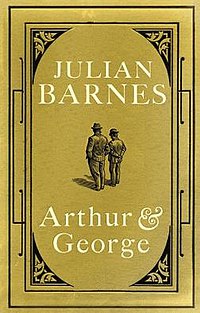
Book Look: Arthur & George, Julian Barnes
I enjoyed this book on a variety of levels: as a historic recreation of an obscure but interesting historical incident; as a biography of Sir Arthur Conan Doyle, the legendary author/creator of Sherlock Holmes; but also a thoughtful exploration of an enduring literary mystery: how Doyle, a man so dedicated to logic and scientific reasoning, could, in later years, have become infatuated with so infamous a pseudo-science as spiritualism.
As a historic novel/recreation, this is a worthy and highly readable effort. Barnes evokes, with seeming effortlessness, a sure and convincing sense of period: not just the "props" - the clothes , the manners - but the ways in which Victorians viewed the world, their role in the world, and themselves. Barnes is especially strong when recounting the role that circumstance, prejudice, ignorance and pride play in ensnaring Eydalji. These chapters - full of mounting suspense and menace - are among the best in the book and made me miss more than one meal. Moreover, Barnes uses the vehicle of the murder mystery as a chance to explore larger themes such as prejudice (conscious and unconscious), human resiliency, and the evolution of the English justice system.
The story also works as an incomplete but intriguing bio of Sir Arthur Conan Doyle, exploring the role that his absentee artist father, his Scottish mother, and his "traditional" British upbringing shaped him into the man that he became, a simultaneous embodiment of the past (ex: his chivalric but rather clueless attitude towards women), the present (ex: he was an avid sportsman, numbered among his acquaintances most of the notable men of the period, and even dabbled in politics), and the future (ex: his Sherlock Holmes stories famously foreshadowed the use of forensic evidence to solve crimes). But make no mistake: this is no homage. Barnes' Doyle may be clever, accomplished, and driven by a sense of honor, but he is also crippled by intellectual vanity.
However, I believe Barnes' primary goal (and greatest achievement) is his exploration of how a man as rational as Doyle - not just the creator of Sherlock Holmes, but a trained medical doctor - can have developed so deep and (seemingly) irrational a fascination with spiritualism. How could the man who gave birth to Sherlock Holmes believe in ectoplasm, telepathy, mesmerism, ouija boards, spirit writing, and (perhaps most famously) fairies? Barnes' depicts Doyle as a man so tormented by rational doubts about organized religion, he finds himself seduced by spiritualism and its promise of providing scientifically verifiable evidence of an afterlife. Alas, however, Doyle's intellectual vanity prevents him not only from identifying the real culprit behind the crimes of which Eydalji is accused, but also prevents him from being able to rationally debunk the spiritualists who successfully manipulate him into believing what he wishes to believe.
Which eventually leads the reader back to the major theme of this story: that people will find a way to believe what they want to believe, no matter how irrational the conclusion. The way a normally "just" justice system came to believe Eydalji guilty of murder. The way Doyle convinces himself that he can love two women without compromising his honor. The way humans continue to believe that the spirits of their beloved dead still walk among us, just waiting for us to find a way to communicate with them.
8/05/2011
Great Literary Feuds
Was recently discussing with a friend the famous Hemingway/Faulkner feud. What elevates literary feuds over your ordinary Hatfield vs. McCoy type disputes, we agreed, is the quality of the epigrams. Really, does it get much better than: "Concerning no subject would he be deterred by the minor accident of complete ignorance from penning a definitive opinion" - Roger Scruton's homage to George Bernard Shaw?
The upshot of this conversation was a decision to research other famous literary feuds. Turns out there's not really any one good source, so decided to pull together my researches into this one blog post. I've cited my sources as appropriate, though sometimes I've taken the liberty of adding a snide aside. I believe Hemingway et. al. would approve.
My research revealed that - not entirely a surprise - Ernest Hemingway was a repeat offender: he also feuded with Wallace Stevens and Gertrude Stein. Nor is Hemingway the only serial feuder: turns out luminaries including Naipaul, Vidal, Rushdie and Mark Twain have also been involved in multiple disputes.
- Ernest Hemingway vs. William Faulkner. The feud is famous mostly for the epigrams it generated: First, William Faulkner, speaking of Ernest Hemingway: "He has never been known to use a word that might send a reader to the dictionary." And Hemingway’s response: "Poor Faulkner. Does he really think big emotions come from big words?" Personally, I think they both make valid points.
- Ernest Hemingway vs. Gertrude Stein. As Hemingway remembered, he and Gertrude Stein were once “just like brothers.” But a froideur grew between the two when Hemingway was disparaging about Sherwood Anderson, whom Stein felt was one of Hemingway’s greatest influences. Later, Stein published an unflattering portrait of Hemingway in The Autobiography of Alice B. Toklas. Hemingway finally took his revenge in A Moveable Feast, in which he criticized Stein’s prose for its use of “repetitions that a more conscientious and less lazy writer would have put in the waste basket.” [SOURCE: http://www.thedailybeast.com/galleries/2010/05/21/literary-feuds.html]
- Ernest Hemingway vs. Wallace Stevens. After Hemingway heard that Stevens was supposedly trash-talking about him, they got in a scuffle on the streets in Florida. Stevens broke his hand when he punched Hemingway in the jaw. Gotta love Papa for taking it to the street! [SOURCE: http://www.huffingtonpost.com/2011/02/09/famous-literary-fights_n_820022.html#s236399&title=CS_Lewis_vs]
- Norman Mailer vs. Gore Vidal. If Mailer—the violently sexist homophobe—and “exquisite” Vidal have anything in common, it is their love of a good feud. Mailer—whose past opponents include his second wife, whom he stabbed, Tom Wolfe, critic Michiko Kakutani, Truman Capote, and Germaine Greer—was enraged when Gore Vidal compared Mailer’s The Prisoner of Sex to “three days of menstrual flow” and Mailer to Charles Manson. In response, Mailer head-butted him in the green room of the Dick Cavett Show in 1971, and then told him on-air, that he “ruined” Kerouac by sleeping with him. Six years later at a Lally Weymouth soirée, he threw a drink at Vidal, and punched him. Even lying on the floor, Vidal somehow won the match: “As usual, words fail him,” he sniffed. [SOURCE: http://www.thedailybeast.com/galleries/2010/05/21/literary-feuds.html]
- Truman Capote vs. Gore Vidal. Capote and Vidal began their lifelong feud in the 1940s. Vidal bitterly resented Capote's usurping of a role he thought rightfully his - the promising young American novelist. "How can you call anyone talented who's only written one book at 23?" Vidal asked. "I've written three books, and I'm only 22!" The pair traded insults for years. Vidal called Capote ''a dumpy little lowbrow" forever peddling "a public relations campaign masquerading as a career". Capote said: "Of course, I'm always sad about Gore. Very sad that he has to breathe every day." Capote's attempt at a reconciliation in 1969 did not stop the insults; when he died, Vidal responded: "Good career move." In his memoirs, Vidal calls Capote "a pathological liar." [SOURCE: http://www.independent.co.uk/arts-entertainment/books/features/best-of-enemies-the-truth-behind-a-30year-literary-feud-440035.html]
- Mario Vargas Llosa and Gabriel GarcÃa Márquez. In what the Times of London has called "possibly the most famous literary feud of modern times," these two Latin American novelists, who were at one time close, spent more than 30 years not speaking before Vargas Llosa wrote a prologue for the 40th anniversary edition of GarcÃa Márquez's novel One Hundred Years of Solitude. The reason for the feud? Reportedly, it had to do with advice GarcÃa Márquez gave Vargas Llosa's wife -- to divorce her husband after he had taken up with another woman. [SOURCE: http://www.latimes.com/entertainment/news/arts/la-ca-hemingway-sidebar26-2009jul26,0,7106709.story]
- Herman Melville and Nathaniel Hawthorne. Melville and Hawthorne were friends for only a couple of years, from 1850, when they met, until 1852, when they stopped corresponding. As to why this was, one possible reason is Hawthorne's inability to get Melville a job with the U.S. government, which, notes the website The Life and Works of Herman Melville, left the Moby-Dick author "embarrassed and chagrined." [SOURCE: http://www.latimes.com/entertainment/news/arts/la-ca-hemingway-sidebar26-2009jul26,0,7106709.story]
- Leo Tolstoy, Fyodor Dostoevsky and Ivan Turgenev. There was no love lost among these three 19th century Russian giants, despite the fact that they had much in common, aesthetically and politically. According to a 2008 piece in Salon magazine, they spent many years sniping (Dostoevsky satirized Turgenev in his novel The Possessed) -- an enmity that came to a head in 1861 when Tolstoy challenged Turgenev to a duel. [SOURCE: http://www.latimes.com/entertainment/news/arts/la-ca-hemingway-sidebar26-2009jul26,0,7106709.story]
- Arthur Rimbaud and Paul Verlaine. The French poets met in 1871 and became lovers; within a year or so, the relationship grew fraught. In 1873, they reunited in Brussels, but it took only two days before Verlaine bought a gun and got drunk and shot Rimbaud in the wrist. Verlaine was charged with attempted murder and sentenced to a two-year prison term. [SOURCE: http://www.latimes.com/entertainment/news/arts/la-ca-hemingway-sidebar26-2009jul26,0,7106709.story]
- Jack Kerouac and Allen Ginsberg. Even in the early days of their relationship, there was an undertone of suspicion on Kerouac's part; in a 1952 letter, he wrote that Ginsberg should "leave me alone . . . & dont ever darken me again." But in the 1960s, after Kerouac rejected the counterculture that he and Ginsberg had helped create, things turned truly virulent, with the On the Road writer veering into anti-Semitism to denigrate his onetime friend. [SOURCE: http://www.latimes.com/entertainment/news/arts/la-ca-hemingway-sidebar26-2009jul26,0,7106709.story]
- Mark Twain vs. Bret Harte. In his autobiography, written four years after Harte's death, Mark Twain characterized Harte and his writing as insincere. He criticized Harte's writing style, accused Harte of borrowing money from his friends with no intent to repay, and claimed the author financially abandoned his wife and children. If you ask me, though, it doesn't really count as a feud if one of the guys is dead and so (presumably) can't defend himself. [SOURCE: http://en.wikipedia.org/wiki/Bret_Harte]
- Mark Twain vs. James Fenimore Cooper. Another more or less one-sided feud, in which Twain skewers Cooper over perceived deficits in the authors' The Deerslayer and the Pathfinder, which he outlines in an essay entitled: "Fenimore Cooper's Literary Offenses". Here's an example: "In one place in Deerslayer, and in the restricted space of two-thirds of a page, Cooper has scored 114 offences against literary art out of a possible 115. It breaks a record." Can't find any record that Cooper retaliated: perhaps he just let the sales of his books - which were HUGE - do the talking for him!
- Salman Rushdie vs. John Updike. In 2006, John Updike panned Rushdie’s novel, Shalimar the Clown, in The New Yorker, asking “Why, oh why did Salman Rushdie, in his new novel call one of his major characters Maximilian Ophuls?'' Rushdie later responded in The Guardian, “Why oh why ...? Well, why not? Somewhere in Las Vegas there's probably a male prostitute called ‘John Updike’”. He added that Updike's latest novel, Terrorist, was “beyond awful,” and that Updike should “stay in his parochial neighborhood and write about wife-swapping, because it's what he can do.” [SOURCE: http://www.thedailybeast.com/galleries/2010/05/21/literary-feuds.html]
- Salman Rushdie vs. John Le Carre. Salman Rushdie has loathed John Le Carré for years, believing that the writer had sided with his enemies following the publication of The Satanic Verses. Le Carré responded, saying: "I never joined his assailants. Nor did I [proclaim] him to be... innocent. My position was that there is no law in life... that says great religions may be insulted with impunity." Rushdie said that anyone who questioned him was an "ignorant, pompous, semi-literate unperson", and had the final word in an exchange of letters in The Guardian. "It's true I did call him a pompous ass, which I thought pretty mild in the circumstances," he said. "'Ignorant' and 'semi-literate' are dunces' caps he has skilfully fitted on his own head. I wouldn't dream of removing them." [SOURCE: http://www.independent.co.uk/arts-entertainment/books/features/best-of-enemies-the-truth-behind-a-30year-literary-feud-440035.html]
- V.S. Naipaul vs. Paul Theroux. The two writers were friends for decades, with Naipaul acting as a mentor to the younger Theroux. But they fell out in 1996 when Theroux discovered through a bookseller’s catalogue that one of his own books, which he had fondly inscribed to Naipaul and his first wife, was being offered for sale for $1,500. Naipaul told Theroux to “take it on the chin and move on”; Theroux didn’t, and went on to write a book, Sir Vidia’s Shadow, in which he described Naipul’s “elevated crankishness.” Later, Theroux denounced Naipaul’s criticisms of E.M. Forster and Keynes as “the sort of explosive abuse you get from someone whose Valium has worn off.” However, this fued may be destined for a happier ending than most: at the Hays Festival in 2011 the two authors are reported to have talked and shaken hands. [SOURCE: http://www.thedailybeast.com/galleries/2010/05/21/literary-feuds.html; http://www.telegraph.co.uk/culture/hay-festival/8545401/Hay-Festival-2011-Handshake-ends-a-famous-literary-feud.html]
- V.S. Naipaul vs. Derek Walcott. In his book, A Writer’s People, Naipaul wrote that Walcott “went stale,” and “exhausted the first flush of his talent.” Walcott then wrote “The Mongoose,” a poem about Naipaul, which begins: “I have been bitten, I must avoid infection/Or else I’ll be as dead as Naipaul’s fiction.” A later part asserts: “The plots are forced, the prose sedate and silly/The anti-hero is a prick named Willie.” [SOURCE: http://flavorwire.com/183467/10-notorious-literary-spats/4]
- Tom Wolfe vs. Norman Mailer, John Irving, and John Updike. In 1998, three writers—Mailer, Updike, and Irving—lashed out against Tom Wolfe’s 1998 novel, A Man in Full. "It's like reading a bad newspaper or a bad piece in a magazine. It makes you wince," Irving said. Norman Mailer, writing in The New York Review of Books, compared reading the Wolfe novel to making love to a 300-pound woman: “Once she gets on top it's all over. Fall in love or be asphyxiated.” In his New Yorker review, John Updike wrote that the book “still amounts to entertainment, not literature, even literature in a modest aspirant form.” Wolfe lashed out at each in turn, and collectively called his opponents “the Three Stooges.” [SOURCE: http://www.thedailybeast.com/galleries/2010/05/21/literary-feuds.html]
- Mary McCarthy vs. Lillian Hellman. The antagonism between author and critic Mary McCarthy and playwright Lillian Hellman is that rare thing—a literary duel between two female writers. In January 1980, as a guest on the Dick Cavett show on PBS, McCarthy called Hellman “a dishonest writer” and claimed that “every word she writes is a lie, including ‘and’ and ‘the.’” Hellman—a playwright known for melodrama—responded by filing a $2.25 million lawsuit against McCarthy, Cavett, and PBS. The dispute inspired Norman Mailer—an unlikely advocate of peace—to urge Hellman to drop the case. If she won, he warned, “then every American writer will have to feel that much more tongue-tied at daring to criticize another American writer without qualification.” [SOURCE: http://www.thedailybeast.com/galleries/2010/05/21/literary-feuds.html]
- Henry James vs. H.G. Wells. James, revered as the most sensitive of novelists, grew increasingly incensed by the prolific output of H.G. Wells, the ground-breaking writer of science fiction, whom he accused of valuing substance over style. In 1915, Wells published a parody of the master’s long-winded prose and exalted view of literature. A James novel was, he wrote, “like a church lit, but without a congregation to distract you, and with every light and line focused on a high altar, and on the altar, very reverently placed, intensely there, is a dead kitten, an eggshell, a bit of string…” [SOURCE: http://www.thedailybeast.com/galleries/2010/05/21/literary-feuds.html]
- Charles Dickens vs. William Thackeray. With the 1848 publication of Vanity Fair, Thackeray—previously seen as either a hack or a sentimentalist—was suddenly competition for Dickens, perceived by most as the greatest English novelist. Tension built between the two authors so that when Edmund Yates, a gossip columnist on the staff of Town Talk, attacked Thackeray in his column, Thackeray assumed the assailant was Dickens. The literary quarters of the Garrick Club soon became a war-field and—lest the controversy should blow over—Yates reprinted the correspondence between himself, Thackeray, and Dickens in his magazine for all to read. [SOURCE: http://www.thedailybeast.com/galleries/2010/05/21/literary-feuds.html]
- Sinclair Lewis vs. Theodore Dreiser. Theodore Dreiser slapped a drunken Sinclair Lewis after Lewis called him a “son of a bitch who stole three thousand words from my wife’s book” at a literary dinner. That slap, fueled not only by alcohol, but Lewis’ suspicion that Dreiser had also slept with his wife, made national headlines. [SOURCE: http://electricliterature.com/blog/tag/literary-feud/]
- Edmund Wilson vs. Vladimir Nabokov. Nabokov, author of Lolita, and the critic Edmund Wilson fell out after a quarter-century of close friendship. The dispute hinged on the translation of a phrase in Pushkin's Eugene Onegin. The pair met in 1940 in the United States, after Nabokov fled from Paris. Wilson introduced his work to American editors. In their letters they called each other Bunny and Volodya. But when the critic panned Nabokov's Onegin translation, the friendship cooled amidst a public feud. Wilson had also disliked Lolita, a fact that Wilson's biographer Lewis Dabney felt was the real origin of their feud. Nevertheless, Nabokov never badmouthed his old friend, in spite of the dispute. [SOURCE: http://www.independent.co.uk/arts-entertainment/books/features/best-of-enemies-the-truth-behind-a-30year-literary-feud-440035.html]
- C.P. Snow vs. F.R. Leavis. In the 1850s poet C.P. Snow gave a very provocative and well regarded speech known commonly now as the Two Cultures lecture. Never mind what it was about: what you want to know is that, some three years later, famous British literary critic and English educator F.R. Leavis decided to take a blast at Snow’s speech in another noted Cambridge peroration, the Richmond Lecture. In the process, Leavis generated the mid-century equivalent of a spat between Keith Olbermann and Bill O’Reilly. The sheer brutality of Leavis’s assault got everybody talking: It spent far more time denigrating Snow personally than it did dismantling his argument. And ironically, it probably only increased Snow’s fame and notoriety, which by this time placed him among Britain’s and the world’s top tier of public intellectuals. [SOURCE: http://www.scienceprogress.org/2009/04/the-science-lover-and-the-snob/]
- Albert Camus vs. Jean-Paul Sartre. Existential death match! The two had a major falling-out over existential philosophy. [SOURCE: http://www.huffingtonpost.com/2011/02/09/famous-literary-fights_n_820022.html#s236399&title=CS_Lewis_vs]
- Stephen King vs. James Patterson. After accepting a lifetime achievement award from the Canadian Booksellers Association, King said of James Patterson, “I don’t like him, I don’t respect his books because every one is the same.” Patterson later replied, “Recently Stephen King commented that he doesn’t have any respect for me. Doesn’t make too much sense — I’m a good dad, a nice husband — my only crime is I’ve sold millions of books.” [SOURCE: http://therumpus.net/2011/06/brush-up-on-your-literary-feuds/]
- Bevis Hillier vs. A.N. Wilson. The feud between rival Betjeman biographers started when Wilson reviewed the second volume of Hillier's three-volume official biography. He called it "a hopeless mish-mash", adding that Hillier wasn't really a writer. One of Hillier's rules in life is: "Who kicks me, gets kicked back." And kick he did, choosing two of Wilson's books as his non-books of the year in The Spectator. One was The Victorians - from which, Hillier pointed out, Wilson had omitted Brunel. The other was Wilson's novel My Name is Legion, which Hillier described as "flabbily plotted". Enraged, Wilson devoted two Daily Telegraph columns to Hillier, one describing him as "old, malignant and pathetic". Wilson then reviewed the third volume of Hillier's Betjeman biography, calling it "naive" and "clumsy". And so on, building to the moment last year when a letter turned up in the Wilson biography purporting to have been written by a mistress of Betjeman's. It was a hoax letter sent to Wilson by Hillier, and the clue lay in the first letter of each sentence. They spelt the message: "AN Wilson is a shit". [SOURCE: http://www.independent.co.uk/arts-entertainment/books/features/best-of-enemies-the-truth-behind-a-30year-literary-feud-440035.html]
If you enjoyed these, check out The 50 Best Author vs. Author Putdowns of All Time. Not all of these erupted into feuds, but most of them should have!
7/31/2011
Sequels to Cowboys & Aliens
- Aliens vs. the 300. Sure, the aliens win in the end, but not before we get to see a lot of alien corpses pile up in the pass of Thermopylae.
- Aliens vs. the Gods of Olympus. Ray guns vs. thunderbolts ... I'd like to see that match-up!
- Aliens vs. Ninjas. Speaking of matchups, I'm gonna have to take the ninjas in this one. What use are high tech weapons against warriors who can move invisibly, shield their body temperature from sensors, and dodge energy pulses?
- Aliens vs. the Roman Legion. I'm not sure who would win, but love the idea of the Roman Senate desperately sending forth champions to halt the alien onslaught. Boy are they going to wish they hadn't turned Russell Crowe into a gladiator.
- Aliens vs. the Barbarians. Doesn't matter which barbarians, but am voting for whatever tribe Arnold Schwartzenagger's Conan came from, in hopes all the men are as well developed.
- Aliens vs. The Knights of the Round Table. Think about it - this could be a great fit. Excalibur turns out to be the only weapon that can kill them, and the Holy Grail turns out to be a signaling device that has to be found and destroyed so the aliens can never find us again. The script practically writes itself!
- Aliens vs. Nazis. This is a win-win, because no matter who loses in the end, it's okay with us.
- Aliens vs. Vampires (or zombies). Since almost every movie being filmed these days has something to do with vampires or zombies, figure this is a natural.*
- Aliens vs. Planet of the Apes. They've figured out how to outsmart humans, but are the big monkeys ready to outsmart aliens?
- Aliens vs. Rednecks. My favorite potential sequel of all, and I'm definitely taking the rednecks. Can't imagine much more fun than 2hrs of watching aliens get run over by trucks, plowed down by trains, and picked off from behind duck blinds. And for the finale, the rednecks can lure the aliens to a trailer park just as a tornado is coming ...! ("They never saw it coming, Bubba!" "How could they? We never do!")
7/29/2011
Tonight I'm Gonna Cry Playlist: Songs That Make Me Cry
What is it about some songs that make us bawl like a baby?
- Is it regret? (Cats in the Cradle, Wasted Time, The Living Years, Yesterday)
- Death? (Amazing Grace, Tears in Heaven)
- Doomed Love? (Somewhere)
- Lost Love? (Against the Odds, Weekends in New England)
- Lost youth? (It Was a Very Good Year, 100 Years, I Loved These Days)
- The glory/horror of war? (Brothers in Arms, Some Gave All, Goodnight Saigon, Taps)
- Patriotism? (The Battle Hymn of the Republic, America)
- Songs that fill you with hope that, no matter how bad things get, there's something better Over the Rainbow? (What a Wonderful World, Imagine, Rainbow Connection).
- Sometimes, the words don't even matter - all it takes is a heart-breaking chord change or crescendo to tear at our hearts, like Samuel Barber's haunting Adajio for Strings or Jeff Buckley's wrenching versoin of Hallelujah.
- 100 Years, Five for Fighting
- Adagio for Strings, Samuel Barber
- Afterglow, Genesis
- Against All Odds, Phil Collins
- All By Myself, Eric Carmen
- All I Ask of You, Phantom of the Opera
- Allegretto, Symphony No. 7, Beethoven
- Amazing Grace, any version
- America, Ray Charles
- American Pie, Don McLean
- Angel, Sarah McLachlan
- Are You Lonesome Tonight, Elvis Presley
- At 17, Carly Simon
- Ave Maria, any version
- Auld Lang Syne, any version
- Battle Hymn of the Republic, any version
- Big John, Tennessee Ernie Ford
- Bird on the Wire, Leonard Cohen
- Blue in Green, Miles Davis
- Both Sides Now, Joni Mitchell
- The Boxer, Simon and Garfunkle
- Brandy, Looking Glass
- Bridge Over Troubled Water, Simon & Garfunkel
- Bring Him Home, from Les Miserables
- Brothers in Arms, Dire Straits
- Candle in the Wind, Elton John
- Canon in D, Pacelbel
- Cat's in the Cradle, Harry Chapin
- Crazy Love, Van Morrison
- Crying, Roy Orbison
- The Crying Game, Boy George
- The Dance, Garth Brooks
- Dang Me, Roger Miller
- Danny Boy, any version
- Dante's Prayer, Loreena McKennitt
- Days, Elvis Costello
- The Death of Falstaff, from Henry V
- Desperado, Eagles
- Don't Cry for Me Argentina, from Evita
- Don't Take the Girl, Tim McGraw
- Dream, Bob Dylan
- Dust in the Wind, Kansas
- Eleanor Rigby, Beatles
- Empty Chairs and Empty Tables, from Les Miserables
- Empty Garden, Elton John
- Evergreen, Barbra Streisand
- Everybody Hurts, REM
- Fanfare for the Common Man, Aaron Copeland
- Fields of Gold, Eva Cassidy
- Fire and Rain, James Taylor
- The First Time Ever I Saw Your Face, Roberta Flack
- Fix You, Cold Play
- Forget Her, Jeff Buckley
- The Gambler, Kenny Rogers
- Georgia on my Mind, Ray Charles
- The Ghost of Tom Joad, Bruce Springsteen
- Good Riddance, Green Day
- Goodnight Saigon, Billy Joel
- Greatest Love of All, Whitney Houston
- Growin' Up, Bruce Springsteen
- Hallelujah, Jeff Buckley (or Pentatonix)
- Hello, Adele
- Hurt, Johnny Cash
- Hushabye Mountain, from Chitty Chitty Bang Bang
- I Can't Make You Love Me, Bonnie Raitt
- I Don't Want to Miss a Thing, Aerosmith
- I Grieve, Peter Gabriel
- I Have Nothing, Whitney Houston
- I Dreamed a Dream, from Les Miserables
- I Was a Fool to Let You Go, Barry Manilow
- I Won't Let Go, Rascal Flatts
- If, Bread
- If I Die Young, The Band Perry
- If You're Reading This, Tim McGraw
- I'll Stand By You, Glee
- I'm A Fool To Want You, Carly Simon
- I'm Moving On, Rascal Flatts
- Imagine, John LennonIn Your Eyes, Peter Gabriel
- The Impossible Dream, Man of LaMancha
- In a New York Minute, Don Henley
- In a Sentimental Mood, Duke Ellington
- In the Ghetto, Elvis Presley
- In the Wee Small Hours, Carly Simon
- Iris, Goo Goo Dolls
- It Was Very Good Year, Frank Sinatra
- It's Not Easy Being Green, Ray Charles
- It's Too Late, Carole King
- I've Loved These Days, Billy Joel
- Keep Holding On, Avril Lavigne
- Landslide, Fleetwood Mac
- Last Goodbye, Jeff Buckley
- The Last Song, Elton John
- The Leader of the Band, Dan Fogleberg
- Let Her Go, Passenger
- Let It Be, Beatles
- Lilac Wine, Jeff Buckley
- The Living Years, Mike and the Mechanics
- The Long and Winding Road, Beatles
- A Long December, Counting Crows
- Lover, You Should Have Come Over, Jeff Buckley
- The Luckiest, Ben Folds
- Mad World, Michael Andrews
- Make You Feel My Love, Adele
- Memories, Barbra Streisand
- A Million Fireflies, Midway State
- Moon River, Louis Armstrong
- Mother's Pride, George Michael
- More than Words, Extreme
- Mr. Bojangles, Nitty Gritty Dirt Band
- Music of the Night, from Phantom of the Opera
- My Eyes Adored You, Frankie Valli
- My Funny Valentine, Sarah Vaughn
- My Immortal, Evanescence
- My Way, Frank Sinatra
- Nessun Dorma, Turnadot
- Nightswimming, REM
- On My Own, from Les Miserables
- One Day More, from Les Miserables
- One Hand/One Heart, from West Side Story
- One Moment in Time, Whitney Houston
- Operator, Jim Croce
- Philadelphia, Bruce Springstein
- Promentary, from Last of the Mohicans
- Proud to be An American, Lee Greenwood
- Puff the Magic Dragon, Peter, Paul and Mary
- Rainbow Connection, Kermit the Frog
- Rainy Days and Mondays, The Carpenters
- Redemption Song, Joe Strummer and Johnny Cash
- Romeo & Juliet, Dire Straits
- Say Something, Great Big World & Christina Aguilera
- Seasons in the Sun, Terry Jacks
- See You Again, Charlie Puth w/Wiz Khalifa
- Send in the Clowns, Judy Collins
- Set Fire to the Rain, Adele
- Smoke Gets in Your Eyes, Nat King Cole
- Solsbury Hill, Peter Gabriel
- Some Gave All, Billy Ray Cyrus
- Someone Like You, Adele
- Someone You Loved, Lewis Capaldi
- Sometimes When We Touch, Dan Hill
- Somewhere (A Place for Us), from West Side Story
- Somewhere Out There, Linda Rondstadt
- Somewhere Over the Rainbow, Israel Kamakawiwo'ole
- Sorry Seems to be the Hardest Word, Elton John
- Sound of Silence, Simon & Garfunkle (or Pentatonix)
- Stand By Me, BB King
- Stardust, Glen Miller
- Strange Fruit, Billie Holliday
- Streets of Philadelphia, Bruce Springsteen
- Summertime, Louis Armstrong
- Sunrise/Sunset, from Fiddler on the Roof
- Superman, Five for Fighting
- Taps, any version
- Tears in Heaven, Eric Clapton
- There's a Place For Us, from West Side Story
- These Three Words, Stevie Wonder
- This Woman's Work, Maxwell (or Kate Bush)
- Time After Time, Cyndi Lauper
- Time in a Bottle, Jim Croce
- Time to Say Goodbye, Sarah Brightman and Andrea Bocelli
- Times of Your Life, Paul Anka
- To Sir With Love, Lulu
- Tonight I'm Gonna Cry, Keith Urban
- True Colors, Cindi Lauper
- Unchained Melody, Righteous Brothers
- You Were Always on My Mind, Willie Nelson
- Walking in Memphis, Marc Cohn
- Wasted Time, Eagles
- Weekends in New England, Barry Manilow
- Weight of Lies, Avett Brothers
- We're Just Friends, Wilco
- What a Wonderful World, Louis Armstrong
- What I Did For Love, Barbra Streisand
- When I See You Again, Wiz Khalifa
- When I Was Your Man, Bruno Mars
- When Somebody Loved Me, Sara McLachlan
- When the Party's Over, Billie Eilish
- Who Wants to Live Forever, Queen
- Wildfire, Michael Martin
- The Wind, Cat Stevens
- Wishing You Were Here, Chicago
- Wreck of the Edmund Fitzgerald, Gorden Lightfoot
- Yesterday, Beatles
- You Are So Beautiful, Joe Crocker
- You Don't Know Me, Ray Charles
- You Raise Me Up, Josh Groban
Subscribe to:
Posts (Atom)