4/22/2013

30+ All-Purpose Quotes from Princess Bride


As any Princess Bride fan will tell you, few movies have yielded so many quotes that are useful in so many contexts.   Believe me, a true fan can work at least one of the following into just about any conversation.

  1. When I was your age, television was called books.
  2. Probably some local fisherman, out for a pleasure cruise, at night, in eel-infested waters...
  3. My name is Inigo Montoya. You killed my father. Prepare to die.
  4. You keep using that word. I do not think it means what you think it means.
  5. There's not a lot of money in revenge
  6. This is true love - you think this happens every day?
  7. Thank you; I've worked hard to become so
  8. My way's not very sportsman-like.
  9. You rush a miracle man, you get rotten miracles.
  10. Sonny, true love is the greatest thing, in the world-except for a nice MLT - mutton, lettuce and tomato sandwich, where the mutton is nice and lean and the tomato is ripe
  11. You fell victim to one of the classic blunders - The most famous of which is "never get involved in a land war in Asia" - but only slightly less well-known is this: "Never go against a Sicilian when death is on the line"!
  12. You *are* the brute squad
  13. There will be blood tonight!
  14. Good night.... Good work. Sleep well. I'll most likely kill you in the morning.
  15. I spent the last few years building up an immunity to iocane powder.
  16. You mean, you'll put down your rock and I'll put down my sword, and we'll try and kill each other like civilized people?
  17. We are men of action; lies do not become us
  18. If we only had a wheelbarrow, now that would be something.
  19. Mawiage. Mawiage is wot bwings us togeder tooday. Mawiage, that bwessed awangment, that dweam wifin a dweam...
  20. Life is pain .... Anyone who says differently is selling something.
  21. Rodents Of Unusual Size? I don't think they exist.
  22. Please understand I hold you in the highest respect.
  23. Rest well and dream of large women.
  24. The Pit of Despair!
  25. Do you hear that, Fezzik? That is the sound of ultimate suffering.
  26. You warthog-faced buffoon.
  27. Murdered by pirates is good.
  28. I'm not a witch, I'm your wife
  29. Have fun storming the castle!
  30. Is this a kissing book?
  31. Inconcievable!
  32. As you wish.

4/19/2013

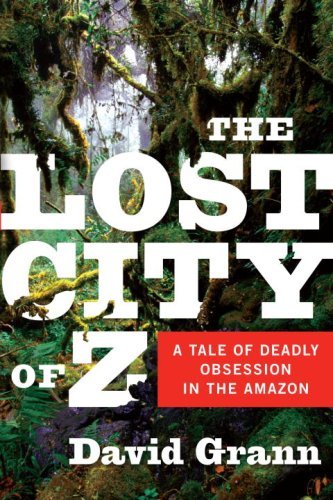
Book Look: The Lost City of Z, by David Grann


The 100+ year long quest to find the fabled “Lost City of Z” proves a handy frame for this larger story of the Glorious Era of Victorian Exploration: a time when men armed with little more than 60-pound packs, rudimentary navigation equipment, and iron wills pitted themselves against vast deserts, towering mountains, frigid arctic expanses, and – in the case of Colonel Percy Fawcett – the lush and pitiless Amazonian jungle.

I loved pretty much everything about this book. I loved learning more about these driven (some would say obsessed) explorers, motivated by little more than a desire to prove their courage and earn – if they were fortunate enough to survive – the admiration of their Royal Geographical Society peers. I loved learning more about the fascinating life of Colonel Fawcett, which intersected with such notables as Roosevelt, Darwin, Lawrence, Haggard, and Doyle. I loved learning more about the history of Amazon region, from the conquistadors who were among the first to penetrate those deadly woods in search of “El Dorado” through the rubber robber-barons whose ruthlessness very nearly exceeded the cruelty of those who had come before. I loved learning more about the role of yellow journalism in promulgating exploration and transforming explorers into international celebrities. And if I didn’t quite love the overarching story – in which the author, David Grann, follows in Fawcett’s footsteps in search of Z, at least the author never lets his own narrative distract from the book’s other pleasures.

Lest you be fooled by the first person narration, however, make no mistake: the real protagonist of this tale is the Amazon itself. The author does a terrific – some would say terrifying – job of making the teeming wilderness come alive: the exotic wildlife, the pitiless insects, the grotesque diseases, the cunning (sometimes perilous) natives, swollen rivers teeming with piranha, towering trees teeming with life, the harrowing juxtaposition of abundance and death.

My only regret? Wish I hadn’t left this sitting on my shelf so long before finally picking it up.

(P.S. Any book clubs out there? Pair this with Anne Patchett’s State of Wonder and avail yourselves of an ideal opportunity to contrast fact and fiction.)

4/02/2013

I'm Bored! 300+ Activities to Keep Your Kids Busy

The next time your child whines "I'm bored!", suggest one of these 3000+ time-tested activities for kids of all ages.  Don't worry - I've catagorized the list so it doesn't seem so formidably long!

  1. Science fun
    1. do experiments with a chemistry set
    2. drop menthos into soda and see what happens!
    3. do a science experiment (do plants grow better with music? which boils faster, plain water or water with salt? inquiring minds want to know!)
    4. Invent something
    5. Create a Rube Goldberg contraption
    6. Study things through a magnifying glass or microscope
    7. Create a weather station
    8. Launch rockets
    9. Identify clouds
    10. hunt for fossils
    11. Build towers with uncooked spaghetti & marshmallows – how high can you go?
    12. Create tin foil boats & see how many pennies they’ll hold before they sink
  2. Nature
    1. Start an aquarium (fish, turtles, frogs, tadpoles)
    2. Buy a pet (hamster, fish, etc.)
    3. Make a terrarium
    4. Plant a flower (or butterfly) garden
    5. Plant a vegetable garden
    6. Plant an herb garden
    7. Plant a cactus garden
    8. Start an ant farm
    9. Press leaves or flowers
    10. Catch bugs/butterflies/caterpillars/tadpoles
    11. Set up a birdfeeder
    12. Go birdwatching
    13. Create a nature album
    14. Climb a tree
    15. Pick fruit/berries
    16. Feed squirrels/deer/ducks
    17. Find edible plants in your neighborhood
    18. Find poisonous plants in your neighborhood
    19. Identify the trees in your yard/neighborhood
  3. Indoor fun
    1. Start a collection
    2. Try a new hairstyle
    3. Give yourself a mani/pedi
    4. Create shadow puppets
    5. Learn to tie different types of knots
    6. Indoor campoutPlan a movie marathon (pick a theme!  scary movies, favorite movies, animal movies, etc.)
    7. Dressup (you, your pet, a stuffed animal, etc.)
    8. Take a long bubble bath.  Make yourself a bubble beard.  Play with tub toys.
    9. Learn a magic trick
  4. Indoor/outdoor
    1. Scavenger hunt
    2. Build a fort
    3. Race RC cars
  5. Outdoor fun (around the neighborhood)
    1. Roller skating (on street or at a skating rink)
    2. Play a street game: tag, hopschotch, 4-square, kick the can, jumprope, hide & seek, freeze tag, red rover/red rover, red light/green light
    3. Rollerskating/rollerblading
    4. Jog
    5. Compete in a marathon
    6. Visit a playground
    7. Draw on the street with chalk
    8. Fly a kite
    9. Ride your bike
    10. skateboarding
    11. Create an Olympiad with events you make up
    12. Tennis/badminton/volleyball
    13. Basketball/shoot hoops
    14. learn how to make trick basketball shots
    15. Baseball/softball/kickball/catch
    16. Learn how to score a baseball game
    17. Blow bubbles
    18. Frisbee
    19. croquet
    20. Horseback riding
    21. Hunt for 4-leaf clovers
    22. Relay races (egg races, sack races, etc.)
    23. Golf/miniature golf
    24. Build sandcastles in sand box
    25. Fly RC airplane
    26. Search for buried treasure with a metal detector
    27. See how far you can dig before you hit water
  6. Out & about
    1. Go bowling (or, create a bowling game at home using soda bottles & a ball)
    2. See a movie
    3. camping
    4. fishing
    5. go out for ice cream
    6. visit a museum
    7. visit a library
    8. visit a zoo/pet-a-pet farm/aquarium
    9. attend a sporting event (baseball, football, soccer, etc.)
    10. go on a ghost tour
    11. skate park
    12. visit an archeological site
    13. go to a county/state fair
    14. pan for gold
    15. visit a drive-in movie
    16. visit a battlefield or other historic site
  7. After dark
    1. Collect fireflies
    2. Identify constellations
    3. Look at the moon and planets through a telescope
    4. Play flashlight freeze tag or ghosts in the graveyard (directions are surely posted online somewhere!)
    5. play with glowsticks (attach them to balloons and watch them fly away; throw them in swimming pools and swim amidst them)
    6. watch for shooting stars and satellites
    7. bite into wintergreen lifesavers and watch for sparks
  8. Getting wet
    1. Have a water gun/water balloon fight
    2. Go swimming at a local pool or lake
    3. Go wading in a local stream or river
    4. Bodysurfing
    5. Innertubing
    6. Break out the kiddie pool
    7. Run through a sprinkler
    8. Boating/canoeing, rafting, paddleboating, sailing
    9. Race boats (bark, toy, cardboard) in a stream
    10. Jump in a fountain
    11. Wash a car
    12. Wash a pet
    13. Play in the rain
  9. Reading and writing
    1. Read a book
    2. Read a magazine
    3. Read all the books written by your favorite author
    4. Listen to an audiobook
    5. Write a story/book
    6. Write a play
    7. Write a poem (try haiku, an “about me” poem, or a limerick)
    8. Memorize a poem
    9. Write a letter to a friend or relative
    10. Write an article for the local newspaper
    11. Read aloud to someone (a sibling, a friend, a pet)
    12. Start a journal/diary
    13. start your own book of "Top 10 lists" - your 10 favorite movies, songs, athletes, celebrities, foods, restaurants, colors ....
    14. Hold a spelling (or geography) bee
    15. Establish a family or neighborhood newsletter
    16. Make a list of weird words in the dictionary
    17. interview an older relative and write their biography
    18. write your own biography! Don't just include what you've already done ... write about all the things you will do the rest of your life
    19. write your name in the flyleaf of all your books
  10. Online
    1. Submit book reviews to Amazon.com
    2. Create an audiobook
    3. Start a blog
    4. Design a webpage
    5. Visit the kids page of your favorite government agencies: U.S. Geological Survey, etc.
    6. Visit the kids page of your favorite museums: Smithsonian Museums, etc.
    7. Visit the kids page of your favorite organizations: National Wildlife Federation, etc.
  11. Put on a show
    1. Put on a talent show
    2. Put on a magic show
    3. Put on a concert (singing or instrumental)
    4. Put on a dance recital
    5. Put on a comedy show (standup or sketch comedy)
    6. Stage a play (turn a favorite story/book into a play or write your own)
    7. Invent a circus act
    8. Put on a puppet show
    9. Film a commercial (serious or spoof)
    10. Film a movie (serious or spoof)
    11. Create a music video for your favorite song
    12. Put on a parade
  12. Arts & Music
    1. Learn to play an instrument (piano, guitar, harmonica, spoons)
    2. Invent a musical instrument
    3. Write a song
    4. Start a band
    5. Create a playlist of your favorite songs
    6. Choreograph a dance
    7. go online and learn all the latest dances
  13. Crafting (Create crafts for yourself or to give as gifts)
    1. Sewing (clothes, beanbags, pillows, etc.)
    2. Crochet, knit, cross-stich, embroider, latch-hook a rug
    3. Paper crafts
      1. Origami
      2. Create wrapping paper  (ink stamps are a great way to create a repeating design)
      3. Create paper dolls/puppets (create your own paper doll or cut out a full-length picture of a celebrity from a magazine)
      4. Create and race paper airplanes
      5. Tissue paper flowers
    4. Scrapbooking
      1. Create a scrapbook
      2. Create birthday/holiday cards
      3. Decorate gift bags
    5. flower arranging
    6. Drawing
      1. Create a comic book
      2. Illustrate a book
      3. Trace pictures
      4. Thumbprint drawings
    7. Make bookmarks (to use yourself or give as gifts)
    8. Take photographs (serious or silly)
      1. Go on a photo safari – how many bugs/birds/flowers/animals can you spot?
      2. Create a theme photo album (family, nature, animals, LOLcats, etc.)
      3. learn to use photoshop and turn ordinary photos into fun!
    9. Sculpt (create a flower pot out of clay, animals out of playdough, crazy hats out of tin foil ....)
    10. Woodcarving/whittling
    11. Woodworking (birdhouses, picture frames, jewelry boxes, catapults, etc.)
    12. Paper mache
    13. Dreamcatcher
    14. Picture frames
    15. Soap/candles
    16. Create luminaries and put them outside
    17. Create silhouettes
    18. Painting/finger painting
    19. Collage
    20. Fabric paints (decorate teeshirts, pillowcases, canvas bags, visors, etc.)
    21. Mobile
    22. Jewelry
    23. Create pinewood derby cars and race them
    24. Tye-die (teeshirts, bags, whatever!)
    25. check out a book from the library and practice calligraphy
  14. Creative, other
    1. Design a miniature golf course (a “dream course” or something you could actually set up in your back yard)
    2. Draw a map of your house, neighborhood, or community
    3. Create a blueprint of your dream house
    4. Create balloon animals
    5. Invent riddles/jokes
    6. Create a calendar
    7. Turn spare boxes into a fort, spaceship, grocery store, tunnel, etc.
    8. invent a superhero.  Give him a name, a costume, powers, and a backstory
  15. Cooking & Eating
    1. Bake/decorate cookies
    2. Bake/decorate cupcakes
    3. Bake/decorate cake
    4. Make homemade ice cream
    5. Invent weird smoothies (or milkshakes)
    6. Bake a pie
    7. Cook a meal
    8. Invent a recipe
    9. Cook a historical meal
    10. Cook a meal from another culture
    11. Make popsicles out of juice
    12. Learn how to eat with chopsticks
    13. Make a centerpiece for the dining room table
    14. Make placemats
    15. Invent your own trail mix
    16. Fix something on the outdoor grill
    17. Cook something in the fireplace (hot dogs, s’mores!)
    18. Cook something over a campfire
    19. Have a picnic
  16. Toys
    1. Create things with building toys (play charades using legos!
    2. Create a maze out of dominoes and them topple them
    3. Play with hula hoops
  17. Games
    1. Play board games
    2. Have a checkers, chess, or video game tournament
    3. Invent a board game
    4. Charades
    5. Tableaus (like charades, but you dress as a famous painting or scene from a book or history & people have to guess who you are
    6. Play an old-fashioned game (marbles, dominoes, jacks, thumb wrestling, arm wrestling, rock/paper/scissors, i-Spy, clapping games, string games, jumprope games, “make me laugh”, staring contest, truth or dare, simon says, mother may I, musical chairs, duck duck goose, tic tac toe, dots, hot potato, 20 questions, blind man’s bluff, etc.)
  18. Puzzles
    1. Jigsaw puzzleDo puzzles (word searches, crosswords, soduku, mazes)
    2. Create a puzzle
    3. Create a treasure hunt
  19. Cards
    1. Play a card game
    2. Play an old-fashioned card game (war, snap, crazy 8s, old maid)
    3. Build a house of cards
    4. Play the memory game
    5. Invent a card game
  20. Mysterious/Supernatural
    1. Hold a séance (maybe using your Ouija board!)
    2. Learn how to tell fortunes (palm reading, tarot cards)
    3. Tell ghost stories (stories you've already heard, or take turns making up your own)
    4. Solve 2-minute mysteries
    5. Make up a secret code
    6. Write with invisible ink
    7. Learn how to lift fingerprints
    8. Learn morse code
  21. Things to do with friends
    1. Have a sleepover
    2. Start a club
    3. Have an ice cream party
    4. Plan a theme party
    5. Create a casino
    6. Create a carnival
    7. have a bike decorating contest
  22. Things to do with/for the family
    1. Organize a family movie night
    2. Organize a family game night
    3. Create a family tree
    4. Create a family first aid kit
    5. create a family evacuation plan
    6. prepare a family emergency care kit
    7. Clip coupons
    8. wrap your coins and take them to the bank to exchange for bills
  23. Home improvement
    1. Paint your mailbox
    2. Decorate a house number sign
    3. Redecorate your room
    4. Organize something (closet, books, toy chest, etc.)
    5. Design your “dream bedroom”
  24. Community Service
    1. Volunteer at the library
    2. Pick up litter from the side of a road
    3. Pull weeds in your neighborhood
    4. Collect food/clothes for charity
    5. Do something nice for a neighbor
    6. Read a story to a younger child
  25. Make money
    1. Sell lemonade
    2. Babysit (children, pets, plants)
    3. Rake leaves
    4. Sell crafts you’ve made
    5. Organize a garage sale
    6. Open a savings account
  26. Seasonal
    1. Decorate your house for whatever holiday is coming up next
    2. Decorate a gingerbread house to celebrate a holiday other than Christmas (Easter Bunny house! Leprauchon house! Haunted house!)
    3. Make a haunted house
    4. Play with sparklers/fireworks
    5. Make a big leaf pile and jump in it
    6. Blow the fuzz off of dandelions
    7. Carve pumpkins/other vegetables
    8. cut out paper snowflakes (hang in window or from mobile)
    9. Bobbing for apples
    10. brainstorm awesome Halloween costume ideas
    11. Christmas in July - bake cookies, sing Christmas carols, decorate a tree
    12. Plan/execute the best April Fools Day Prank ever
  27. International
    1. Learn how to count in a foreign language
    2. Learn pig Latin
    3. Learn to write in Egyptian heiroglyphics
  28. Silly
    1. Throw your pet a party
    2. Have a silly string fight
    3. Paint your face
    4. Have tongue twister races
    5. Break a world’s record
    6. Create the world’s longest construction paper chain
    7. Create a tin-can-and-string telephone
    8. Bury a time capsule
    9. Learn how to juggle
    10. Try to last a whole day without talking to anyone
    11. Put messages in bottles and throw them into the ocean
    12. use chalk to write a word in HUGE letters on your street; then check Google Earth to see if it shows up on a satellite photo of your area

3/21/2013

20+ Archetypal Americans


A passing reference in a book I'm reading got me thinking about American archetypes - not brands or companies, but characters.  If you had to pick people (real or fictional) who symbolize what America represents, who would they be? Who symbolize what we think we represent? Who symbolize what others in the world think we represent? 

I started asking friends for their inputs and got some fascinating answers.  Here's the list we've come up with so far.  Apparently - if you judge by this list - we're clever but folksy, greedy but generous, dutiful but not averse to breaking rules, glamorous/powerful but down-to-earth, reckless but reliable, powerful but humble, and definitely larger than life!
  1. George Washington.  Nobly gave up the opportunity to be king because he believed in democratic ideals.  Plus he was a farmer, which is as down to earth as you can get. (No pun intended)
  2. Ben Franklin.  Intelligent, funny, folksy, an autodidact, and just a little bit naughty.
  3. Davy Crocket.  An explorer who - according to the myth - combined courage, fortitude, and woodsmanship with a lust for adventure
  4. Paul Bunyan.  Bigger than life ... literally!
  5. Abraham Lincoln/Martin Luther King Jr.  God knows our country has made a lot of spiritual missteps, but we like to believe that - when push comes to shove - we'll spawn leaders able to guide us towards the right and honorable path 
  6. General Robert E. Lee.  Yes, he ended up on the losing side of the Civil War, but hard not to respect that he placed duty and honor over his own desires.
  7. Tom Sawyer/Huckleberry Finn.  Practically our national icons, combining self-confidence with folksy charm and an endearing (or alarming, depending on your system of government) penchant for rule-breaking.
  8. Mark Twain.  Of all the folks on the list, probably best personifies what foreigners think of us - we're clever and possess a certain folksy charm, but we're also annoyingly prolific, pervasive, commercial, and self-satisfied 
  9. Thomas Edison/Steve Jobs. Ingenious, clever, and determined; plus, we like to think of ourselves as the technology leaders of the free world
  10. Franklin D. Roosevelt.  A man who made Americans proud of their ability to work hard and sacrifice for the common good.
  11. Eleanor Roosevelt.  She symbolizes intelligence, diplomacy, modesty and wit.
  12. The Hardy Boys.  They symbolize the boy-children we like to think we raise here in the U.S.: clever, multi-talented, self-sufficient and always up for adventure
  13. Jay Gatsby.  We'll throw everything away in search of our dreams.
  14. John Wayne (the characters he played in movies)/Boy Scouts.  They epitomize honor, chivalry, duty, determination, self-sacrifice, plus you can't imagine them passing an old lady without helping her cross the street
  15. Marilyn Monroe.  Could have chosen from a list of celebrities (Elizabeth Taylor and Elvis come to mind), but Marilyn represents the type: glamorous, sexy, largely invented by the media but we liked them even better when we embrace their flaws
  16. Amelia Earhart/Charles Lindbergh/Neil Armstrong.  Together, they symbolize our sense of reckless courage and our willingness to throw ourselves into danger in search of everlasting glory 
  17. General George Patton.  Highly educated, eccentric, irrascable, brilliant, courageous, and victorious in war.
  18. Aunt Bea.  She's nurturing, capable, loyal and yet quietly strong - a classic female American archetype if there ever was one.
  19. Oprah.  The epitome of the self-made man ... except, of course, that she's a woman.  She dominates entertainment the way we like to think we dominate the world: defining tastes, creating/manipulating markets, and amassing a huge personal fortune 
Who do you think needs to be added to the list?  Let me know!

3/19/2013

Book Look: People of the Book, by Geraldine Brooks


The plot is easily told: a book restorer, Hanna Heath, is asked to restore a copy of a precious ancient text, a gorgeously illuminated but mysterious Jewish Haggadah salvaged from the ashes of civil war in Sarajevo. But Hanna isn’t just a book restorer: she’s really more of a book whisperer, a literary paleontology who specializes in reconstructing the lives of ancient text by interpreting the clues left embedded in paper and ink, thread and binding, stains and marks.

Each clue that Hanna extracts from the Haggadah - a fragment of butterfly wing, missing silver clasps, a wine stain containing traces of blood, grains of sea salt, the inexplicable presence of dark-skinned woman in one of the book’s dazzling illuminations – provides Brooks an opportunity to transport us back through time to explore, through a series of "stories within the story", the timeless conflict between hatred and tolerance, between humanity and inhumanity, between despair and hope.

Each of Brooks’ deftly rendered historical vignettes reminds us of just how timeless and implacable are the forces of hate. Making a Jewish holy book the epicenter of the text is an obvious starting point for any tale of the ravages of intolerance. But as Brooks transports us back through the book’s timeline (stopping along the way in Sarajevo 1940, Vienna 1894, Venice 1609, Tarragona 1492, and Seville 1480), we see the toll that intolerance has always exacted on our humanity, a price paid not just by Jews but by Muslims and Christians as well. After every vignette, Brooks circles back to Hanna’s story which, though modern, echoes the same theme: that only through understanding and tolerance can we achieve peace – both literally and figuratively.

It’s been a while since I read a novel so wholly satisfying. Brook’s plotting is brisk and intense, her prose intelligent, her historical research impeccable. If I had to venture any criticism, it might be that Brook’s female characters tend to be cut from the same simplistic mold: strong, smart, and with a broad streak of rebellion. About all that changes is their names (Hanna, Lola, Reyna, Ruti, Isabella/Nura, al-Mura) and the nature of the peril they are facing. But I think most readers will be as willing as I was to overlook this anachronism given the novel’s sweeping historical scope, engrossing mystery, deft prose, and overarching message of compassion.

2/19/2013

Book Look: The Pyrates, by George MacDonald Fraser

Anyone who has read Fraser’s Flashman series can’t help but relish the prospect of his taking on the pirate genre. Nor does Fraser disappoint. Armed with a seemingly encyclopedic knowledge of all things piratical* – and I do mean all things: real pirate lore, Hollywood pirates, literary pirates, Disney pirates, etc. – Fraser concocts a frothy, hilarious parody of the whole pirate genre. (* By the way, “encyclopedic knowledge” isn’t a hyperbole in this case: Fraser helpfully includes an extensive bibliography at the end of the tale.)

In this version, our impossibly perfect hero, Captain Avery*, finds himself pitted against not one but seven pirates, each a burlesque of one or more familiar/beloved pirate archetypes (Captain Blood = dashing but entirely untrustworthy rogue; Firebeard = William “Blackbeard” Teach; Calico Jack= Captain Blood, Happy Dan Pew=Captain Hook, etc.) . As the action plunges from England to Tortuga, from Octopus Island to Madagascar, Fraser stitches together a tale that includes all the prerequisites of the genre – sea battles, swordfights, beautiful damsels in distress, dastardly Spanish dons, deserted islands, rum, treasure, dungeons, torture, wenches, rum, mutinies, swashing, buckling, a plentitude of pirate patois … and did I mention rum? - the satire unashamedly broad and self-aware without ever lapsing into disrespect.

(*”In short, Captain Avery was the young Errol Flynn, only more so, with a dash of Power and Redford thrown in; the answer to a maiden’s prayer, and between ourselves, rather a pain in the neck. For besides being gorgeous, he had a starred First from Oxford, could do the hundred in evens, played the guitar to admiration, helped old women across the street, kept his finger-nails clean, said his prayers, read Virgil and Aristophanes for fun, and generally made the Admirable Crichton look like an illiterate slob. However, he is vital if you are to get the customers in …” – a description that should give you an idea both of Captain Avery and Fraser’s narrative style.)

Perhaps this ground has been trodden before (Pirates of the Caribbean comes to mind), but never – to my mind - so thoroughly or with so much wit. This is one of those lampoons that, rather than making you embarrassed for enjoying the somewhat dubious source material, invites you to celebrate every beloved caricature, hyperbole and extreme. A great read anytime but perfect for the beach: arm yourself with a tankard of ale, deploy your beach chair in a shady spot, and prepare to be thoroughly entertained!

2/17/2013

10+ Ways for Parents to Reduce Stress


Looking back on my life, no time was more stressful than the child raising years.  Childrearing is inherently stressful - now add to that children with significant physical, cognitive, and social disabilities, and watch your stress increase not just proportionately, but logarithmically!

Friends/teachers/counsellors often ask us how we coped, especially during those early years; a question I used to laugh off until, for some reason, I recently decided to give the matter serious consideration. 

The outcome of those deliberations is this list, which endeavors to summarize the methods that were most effective in allowing our family not only to survive those chaotic years, but to emerge on the other side stronger, happier, and more functional than ever before.  Perhaps there's something here that will help others who find themselves in our situation?  I hope so!
  1. Keep it Real.  What's the #1 most effective way to prevent stress? Anticipate and avoid stressful situations!  Seems easy, yet I can't count the number of times my husband and I took cranky kids to the grocery store, tired kids to the restaurant, wired-up kids to the movie theater, etc.  Needless to say, we got what we deserved.  Let's get real: besides work, most of the things we do in life are optional.  With a little planning, it's often possible to avoid potentially stressful situations.  Do your grocery shopping on the way home from work or after the kids are in bed.  Skip the restaurant dinner and order carry-in.  Watch Netflix at home.  To use a sports metaphor, sometimes the best offense is a good defense.
    1. Vacation Wisely. Ironically, vacations can be one of the most stressful parts of child-rearing. Inevitably, important items are left behind, nap times are disrupted, reality doesn't live up to (unrealistic) expectation, and everyone ends up grumpy. This would seem to contradict the ostensible purpose of vacations, which are meant to provide a mental and emotional respite. With that in mind, dare to consider giving up on stereotypical vacations and create the vacation that works for your family. For us, that meant all long car trips were done at night (so kids would sleep through them), meals were often taken in the hotel room rather than at restaurants (yes, they will deliver pizza to hotel rooms!), and events were scheduled around the attention spans and naptimes of everyone in the family.
    2. Staycation. Don't wait for vacations to recharge your batteries! With a little out-of-the-box thinking, you can turn any ordinary weekend into something extraordinary. Take advantage of parks, events, and programming in your community to get everyone out of the house. Load everyone in the car and take "mystery trips" to local destinations. Or stay in the house and do something silly/extravagant: create an entire zoo out of playdough, create the world's tallest freestanding lego tower, build an obstacle course and time each other. Create a list of ideas in advance to avoid those fruitless (and aggravating) "What do you think we should do?" conversations ... because, naturally, the times when you will most need the rest and relaxation inevitably will be the times when you feel least capable of coming up with ingenious ideas.
  2. Parents Night Out.  Parenting is hard work, but shouldn't be 24/7/365.  Even the stingiest employers recognize the need for employees to have some vacation time.  Take advantage of offers from family/friends to watch your kids and catch some quality time with your spouse.  However, for this to work, you have to agree beforehand not to talk about anything stressful while you're out and about.  No discussions about money, no complaining about annoying in-laws, and - above all - no grumbling about each other.  Save those conversations for another time.  It's critical that these "nights out" be a time for the two of you to recharge your batteries, not just find new ways to drain them.
  3. Take a Break.  Nights out with your spouse are great, but it's also critical that the two of you maintain separate identities.  Yes, you're married and parents, but you are still individuals, with individual hobbies, interests, families, friends, and lives ... all of which play a huge role in reducing stress.  So figure out how you are going to incorporate "personal time" into your lives.  Usually this means taking turns watching the children so that the other spouse gets time to engage in other pursuits.  The trick, however, is to arrange this time so that it *reduces* stress rather than adds to it, so establish some reasonable rules: each spouse gets equivalent amount of "alone" time, spouse on "break" can spend personal time any way they want, unless it adds to the stress to other partner (ex: hanging out with exes, getting drunk, spending excessive money), etc. 
  4. Stay Connected with the World.  There's a tendency for young parents to turn inwards and become hyper-focused on family.  Yes, this is in some ways unavoidable and appropriate - children put a big dent in your carousing time.  But this constant inward focus can overexaggerate familial stressors.  To avoid this, make sure you broaden your daily conversation with your spouse to include topics other than family, work and children.  Watch the news with your spouse and discuss current affairs.  Read books and share them with each other.  Make bucket lists and compare them.  Whatever it takes to remind yourselves that long before children came along, you had plenty of other things to talk about. 
  5. Divide and Conquer. Family time together is great ... except when it's not!  Just because you all love each other doesn't mean it's a good idea to spend all your time together.  My husband used to call this "divide and conquer" - we'd divide up the kids between us and then head our separate ways.  Not only was it a welcome break from sibling bickering, but it gave each of us special bonding time with just 1-2 children at a time.  
  6. Share the Load.   Actual or perceived inequalities in housework and errands can be a major stressor at a time when a family's housework load not only doubles (all that laundry! all those school-related obligations!), but you and your spouse are already weakened by lack of sleep and disruption of your marital routines. But this needs to be a conversation, not a fight!  Find a time when you are both feeling reasonably pleasant, establish base rules (no whining, no accusing, no hyperbole*), and really talk about how housework and family obligations can be most fairly handled.  (*Because nothing kills a reasonable conversation like "You never do anything!")  By the way, remember that "fair" doesn't necessarily mean 50/50 - it just means that both spouses are expending approximately the same amount of personal resources over the course of a day/week.
  7. Be  Consistent.  Remember tip #1, in which we said that the best offense is a good defense?  The time you spend now establishing consistent patterns and expectations for your children will pay off for years to come.  Why?  Because the world is a big, confusing place, and children feel safest when they know that there are walls and where to find them.   It may seem like no big deal to enforce a consistent bedtime, to establish and enforce rules about sharing toys with siblings (whatever rules you feel appropriate), or to threaten a punishment and then not carry through.  But too many "exceptions" leave children confused and frustrated, leading to unnecessary battles and, inevitably, unnecessary stress.  Above all, you and your spouse need to present a united front!  Differences in child-rearing approaches are to be expected between two adults who were probably raised in very different ways, but those conversations needs to be conducted off-stage.  Because nothing's more unsettling to a child than when mom and dad have different rules - and when they're stressed, the whole family suffers.
  8. Pick your Battles.  Speaking of expectations, be realistic with your own expectations.  Don't try to do everything at once.  When faced with competing demands - little Johnny is pushing kids on the playground! and he's still sucking his thumb! and his spelling is atrocious! - prioritize the concerns, and then tackle them one or two at a time.  
  9. Keep it Simple.  As long as you're picking the battles you're going to fight with your child, pick the battles you want to fight with other aspects of your life.  Because once children start to come, you simply don't have the time or energy to sustain the lifestyle you lived BC (before children).  Let's face facts: every dinner doesn't have to be nutritionally balanced, beds don't have to be made every day,  your child does not need to participate in activities every hour of the week, and it may no longer be feasible to maintain a beauty/exercise ritual that requires 45 minutes in the morning and another 45 minutes every evening.  As before, the trick is to prioritize.  Figure out what's genuinely important to you (fixing vegan meals, keeping the sink clean, watching the news, 30mins of jogging every day) vs. what's nice to do if there's time, then let some (or most) of the latter items go. 
  10. Take Care of Yourself.   This is so obvious you wouldn't think it needs saying, except that trying to keep up with the needs of a child (or children) has a way of warping your priorities.  So here's your reminder: make sure to get enough sleep (even if that means napping), maintain some sane nutritional standards (even if that means supplementing with vitamins), and take time out of your week to exercise.  Deficits in these "big three" are guaranteed to exacerbate feelings of stress.
  11. Use Your Manners and Maintain Respect.  It's amazing how far good manners and mutual respect can take you!  My favorite example is my youngest son who, at the age of 2, discovered the word "no" and availed himself of it ... freely.  His negative attitude impacted all of us.  Until, one day, my husband and I came up with the brilliant idea of teaching him to say "no thank you."  It's remarkable what a change this made in the mood of our whole household!  Not to mention the life lesson it taught our son. 17 years later, he's still a stubborn fellow, but meticulously polite and respectful at all times, which makes all the difference.  Everyone - you, your spouse, your children - need to "use your manners" and obey the golden rule, treating others as you'd like to be treated yourself.  Because the best way to teach your child to behave respectfully towards you is to behave respectfully towards them.
  12. Laugh!  I saved this one for last, because it may the most important stress-reducing tip of all.  Being able to see the humor in your day-to-day frustrations will help you maintain your perspective.  Sometimes, however, life can be hard and laughter hard to find: when this happens, you'll need to proactively find the funny.  Rent goofy movies.  Watch comedians.  Make time to do things that make you happy.  Spend times with friends that make you laugh.  Psychologists have proven that even "forced laughter" reduces anxiety and stress.  Laughter is the ultimate coping skill.  Make it work for you now and it will be the gift that keeps on giving, as your children learn from your example how to maintain perspective towards the stressors they'll face in their own lives.

2/08/2013

A Thousand Words: Scientist Valentines

How to convince my kindergartener that these are so much cooler than the Sponge Bob Squarepants valentines he picked out at the drug store?

2/01/2013

50+ Consequences of Global Warming


As a middle school science teacher, one of my imperatives is to ensure that students understand the causes and consequences of global warming.

There are about a million articles on Global Warming, but few that discuss the huge range of observed and potential consequences. Perhaps because the consequences are so vast, articles tend to tackle only a few "parts of the elephant" at a time: one article focuses on sea level change, another on heat waves, yet another on vanishing polar bear habitat, etc.

As a result, I have now created my own list, which has come in so handy as a resource for the science class I teach that I am posting it here.

Some of these are consequences are obvious, but some of them are decidedly more surprising, subtle, or less well understood.  (For example: did you know that global warming is linked to earthquakes? navigation? civil war?) I do think it's critical that students understand the range and significance of consequences that we are already beginning to observe as a result of this phenomenon.

Loss of Icepack
  1. Habitat Loss. Loss of habitat for polar-ice edge populations such as indiginous humans (Inuit villages), penguins, seals, and polar bears is perhaps the most obvious consequence of icepack destruction. 
  2. Earthquakes/tsunamis. How will global warming lead to more earthquakes, you ask? Being extremely heavy, massive glaciers apply a considerable amount of pressure to the Earth’s surface underneath them. This anchorage decreases as the glaciers diminish, resulting in a ‘loosening’ of tectonic masses that can lead to massive earthquakes which are capable of creating deadly tsunamis.  Don't believe me?  Michigan is still experiencing earthquakes triggered by the melting of glaciers that buried that area during the last ice age.
  3. Increased Volcanic Activity. The shifting pressures brought about by the lightening of the vast ice sheets allows the Earth’s crust to ‘bounce back’ and can cause eruptions in unexpected places – like the one experienced during Iceland's Gjálp eruption, where magma reached the surface at an unusual intermediary point between two volcanoes. Potent or sustained volcanic activity can have an immense impact on human life even if the activity is centred away from dense population centres. It also has the potential to affect the planet’s climate by injecting tons of gases and solids into the atmosphere that can remain there for weeks
  4. Increase in rate of global warming. Ice caps are white and therefore reflect sunlight, much of which is reflected back into space, further cooling Earth. If the ice caps melt, the only reflector is the ocean. Darker colors absorb sunlight, further warming the Earth.  So, basically, what we're saying is that one of the impacts of global warming is faster global warming.  Ironic, isn't it?
  5. Decrease in fresh water supplies on land. Many of the world's most important rivers are fed by glaciers, and - after a few years of perilous flooding - will begin inevitably to shrink as the source of their water vanishes.  The Himalayan glaciers that feed the Ganges River, which supplies drinking and irrigation water to 500 million people, are reportedly shrinking by 40 yards (37 meters) each year, and if the Quelccaya ice cap in Peru continues to melt at its current rate, it will be gone by 2100, leaving thousands of people who rely on it for drinking water and electricity without a source of either.
  6. Exploitation of New Resources. As icepacks melt, new sources of oil and gas may be rendered exploitable, potentially igniting political/military instability and altering the global commodity markets. You have to wonder how long the Antarctica Treaty of 1961 - which states that no country may stake a claim to the territory -  is going to last if significant deposits of oil or minerals are discovered beneath the ice.
  7. Changes to navigation.  Global warming will have both positive and negative impacts on shipping.  While melting of surface ice will open new navigation routes (Russian ships are already exploiting newly opened navigation channels), other shipping will be placed at risk by the increased number of icebergs spawned by "calving" glaciers that drift into areas where they have are not customarily found.
Increase in Ocean Temperatures/Decreases in Ocean Salinity. Our ice caps are huge fresh water reservoirs; as they melt, the influx of fresh water into marine biomes will significantly reduce levels of salinity (and, in turn, density).  Meanwhile, ocean temperatures will increase, with greatest warming over land and high northern latitudes, and least over the Southern Ocean and parts of the North Atlantic Ocean.
  1.  Impacts on weather. Fresh water is less dense than salty water; this density differential will trigger potentially massive shifts in ocean currents, including currents that regulate temperature - like El Nino and la Nina.  Irregularities in these currents will, in turn, result in huge global shifts in climate.
  2. Impacts on ecosystems.  Shifts in temperature and salinity will irrevocably alter ocean ecosystems.  Animals will either have to adapt or perish.  Perhaps the most frightening prospect is ongoing reduction of phytoplankton. These tiny plants are an integral food source for ocean life and are responsible for around half of the world’s photosynthetic activity. Essentially, they are the foundations of the oceanic food chain, so a reduction in their numbers creates a knock-on effect that ripples up the entire food chain, particularly affecting the predators at the top.  A strong connection between oceanic warming, declines in reproduction and increases in mortality rates among seabirds, seals and sea lions has already been observed.
  3. Eutrophication.  Increases in amounts of sun, increased nutrients in the water due to runoff/erosion of agricultural lands, and warming temperatures may trigger extreme overgrowths of algae, also known as "algae blooms".  These algae blooms trigger eutrophication, the process whereby excessive algae blooms block sunlight and deoxygenate aquatic environments, leading to large-scale marine extinction events.
  4. Economic impacts. As salinity changes cause currents to shift and habitats to be disrupted, this will have a huge impact on any number of industries, to include:
    1. Fishing.  Many countries and regions rely on fishing both for food and for economic sustainance.  As populations of aquatic animals become unstable - species moving to new locations or dying off - these communities will face grave economic hardships.
    2. Navigation.  Shipping relies on established wind and current patterns.  Alterations in these currents will impact shipping, recreational cruising, and naval defense. 
Melting Ice/Rising Sea Levels. As the Earth heats up, sea levels rise because warmer water takes up more room than colder water, a process known as thermal expansion. Melting glaciers compound the problem by dumping even more fresh water into the oceans.  Rising seas threaten to inundate low-lying areas and islands, threaten dense coastal populations, erode shorelines, damage property and destroy ecosystems such as mangroves and wetlands that protect coasts against storms.  According to the National Snow and Ice Data Center, if all glaciers melted today the seas would rise about 230 feet.
  1. Destruction of coastal cities and towns. An increase of just a single meter (3 ft) would submerge considerable sections of the U.S. eastern seaboard, while one sixth of Bangladesh could be lost permanently by a rise of 1.5 m (5 ft), to name just two examples.
    1. Destruction of important coastal cities.  In the developed world, 35 of the 40 largest cities are either coastal or situated along a river bank. In Europe, rivers have played a more important role in determining the growth and importance of a city than the sea; more than half of the 20 largest cities in the region developed along river banks.  Here's a partial list of coastal cities likely to be swamped by rising sea temperatures: Mumbai, Shanghai, Miami, New York City, Alexandria, and New Orleans.  Think of the havoc this will wreak on worldwide economic markets, on geopolitical stability, on universities, museums, culture, and society.
    2. Destruction of important economic assets.  Besides cities, rising sea levels would also devastate ports, harbors, fishing villages, beach towns, and industries strategically located along rivers/oceans in order to facilitate energy (hydroelectric plants), water (nuclear power plants), or transportation needs.
    3. Destruction of cultural assets.  Since ancient civilizations were almost always located adjacent to water sources, many of our most significant archeological sites are likely to be submerged.  Floods attributed to global warming have already damaged a 600-year-old site, Sukhothai, which was once the capital of a Thai kingdom.  And although the ruins of Pompeii survived a massive volcanic eruption, they may not survive global warming. 
  2. Destruction of Coastal Habitats.  Apart from the destruction of human habitations, rising sea levels will decimate habitats that exist at sea level - notably wetlands and estuaries.  These habitats serve countless crucial functions: filtering water, providing habitat for crustaceons and other animals, providing critical "rest stops" for migrating birds, protecting coastlines from the dangers of storm surges (ironic, isn't that?).  In time natural processes will presumably replace these assets, but it won't happen in time to prevent potentially devastating consequences to water quality and coastal life. 
  3. Mass Human Migration.  Worldwide, approximately 100 million people live within three feet of sea level. Sea level rise associated with climate change could displace tens of millions of people in low-lying areas – especially in developing countries. Inhabitants of some small island countries that rest barely above the existing sea level are already abandoning their islands, some of the world’s first climate change refugees.
  4. More Intense Hurricanes & Flooding.  Higher sea levels will exacerbate storm surges, flooding, and erosion.
Extreme weather.  Climate change is intensifying the circulation of water on, above and below the surface of the Earth, impacting global weather patterns and related phenomenon.
  1. Precipitation.  Scientists predict increased precipitation in higher latitudes but significantly descreased precipitation in lower (subtropical) latitudes. 
  2. Floods.  Warmer temperatures increase the energy of the climatic system and can lead to heavier rainfall in some areas. Scientists project that climate change will increase the frequency of heavy rainstorms, putting many communities at risk for devastation from floods.
  3. Drought. As the climate warms, experts estimate drought conditions may increase by at least 66 percent. Water is already a dangerously rare commodity in Africa. The Intergovernmental Panel on Climate Change suggests that by 2020, 75 to 250 million Africans may experience water shortages, and the continent's agricultural output will decrease by 50 percent.
  4. Fires. Hot, dry weather and increased evaporation led to a record-setting 2006 wildland fire season in the U.S., with close to 100,000 fires reported and nearly 10 million acres burned, 125 percent above the decade's average.
  5. Extreme storms (hurricanes/cyclones/tornadoes). Scientific research indicates that climate change will cause hurricanes and tropical storms to become more intense — lasting longer, unleashing stronger winds, and causing more damage to coastal ecosystems and communities.  The culprit is warmer ocean waters, which pump more energy into tropical storms, making them stronger and potentially more destructive.
  6. Heat Waves. Extreme heat waves are happening two to four times more often now, steadily rising over the last 50 to 100 years, and are projected to be 100 times more likely over the next 40 years.   In fact, the five hottest years on record have all occurred since 1997 and the 10 hottest since 1990, including the warmest years on record – 2005 and 2010.
  7. Cold Waves. Seems ironic that global warming causes more extreme cold, but changes in atmospheric patterns brought about by receding glacial ice can lead to the redirection of polar air currents and the sun's rays being absorbed by the larger areas of dark blue sea.
  8. Acid Rain. More greenhouse gases in the atmosphere create more acidic rain.  Not acidic enough to burn the skin off bones, perhaps, but enough to impact vulnerable species.  One example of this is the death of large amounts of snails in areas prone to acidic precipitation. Birds dependent upon the snails as a calcium-rich food source and, without a suitable replacement for this loss to their diet, lay eggs with a much higher amount of defective shells.  Over time, acidic rains will also damage man-made structures.
  9. Economic consequences of extreme weather.  Storms cause huge economic damages. Government, industry, individuals, and the insurance industry bear the cost of replacing damaged infrastructure, damaged industry, and devastated agricultural areas.  One way or another, those costs end up being passed on to individuals, either through taxes, job loss, or higher insurance premiums.
  10. Population consequences of extreme weather. As cities are destroyed by catastrophic events, ans as insurers like State Farm begin to refuse coverage to folks living in areas vulnerable to extreme weather events, cities will be abandoned and those citizens will relocate elsewhere.
  11. Social consequences of extreme weather.  Extreme weather events - hurricanes, tornadoes, floods, fires, etc. - destroy entire communities and cultures.  Imagine the cultural consequences of floods destroying Venice, tornadoes devastating London*, or a hurricane wiping out New York City once and for all.  (*The U.S. may experience more tornadoes per year, but the U.K. actually averages more tornadoes per km2 per year.)
Health.  A study by the World Health Organization (2009) estimated the effect of climate change on human health. Not all of the effects of climate change were included in their estimates; for example, the effects of more frequent and extreme storms were excluded. Climate change was estimated to have been responsible for 3% of diarrhoea, 3% of malaria, and 3.8% of dengue fever deaths worldwide in 2004. Total attributable mortality was about 0.2% of deaths in 2004; of these, 85% were child deaths.  Expect these numbers to increase exponentially as the effects of global warming become more severe and widespread.

  1. Death from heat.  More frequent and severe heat waves will result in a greater number of heat-related deaths.  We're not talking a few senior citizens in un-airconditioned apartments, either: in 2010, a Russian heatwave resulted in over 56,000 deaths, and in 2003 a European heat wave was blamed for over 70,000 deaths.
  2. Famine. Prolonged drought in East Africa caused tens of thousands of deaths in 2011, with 13 million humans currently at risk of starvation due to famine. 
  3. Death from Extreme Weather (storms, floods). A warmer atmosphere can hold -- and dump -- more moisture, contributing to more intense extreme weather events, which in turn put people's lives at risk.  Maybe you're thinking about Hurricane Katrina, which killed over 1800 people?  Forget that and wrap your head around this one; in 2008, Cyclone Nargis killed over 138,000 people in Burma ... which, by the way, was the same year that almost 1000 people died as the result of a freakish blizzard in Afghanistan. 
  4. Disease.  The Deadly Dozen are a group of 12 diseases that have been identified as those most likely to spread due to global warming. They include avian influenza, cholera, plague, ebola and tuberculosis. 
    1. More water-borne diseases. Cholera and mosquito-borne diseases such as dengue fever and malaria are all thriving as the Earth warms. In Bangladesh, for example, a rise in water temperature has been observed to increase the risk of cholera outbreak by two to five times. 
    2. More pest-borne diseases. Reports of Lyme disease have risen seven-fold in Maine and four-fold in Wisconsin over the last decade as warmer temperatures expand the range and persistence of the disease.
    3. More corpse-borne diseases.  Research has shown that a handful of deadly plagues are capable of surviving for hundreds of years in the corpses of deceased carriers.  Recent discoveries reveal the possibility that long-dormant diseases like smallpox could re-emerge as the ancient dead, their corpses thawing along with the tundra, get discovered by modern man.
  5. Asthma. Global warming could increase smog pollution in some areas and intensify pollen allergies and asthma. Hotter conditions could also aggravate local air quality problems, already afflicting more than 100 million Americans. What's more, the carbon dioxide and ‘black carbon’ (a very fine soot) released by these large-scale fires together with the deforestation they cause further compounds the problem of air pollution – as the gases that help to create the greenhouse effect are supplemented and less mature trees survive to draw CO2 from the atmosphere.
  6. Animal attacks.  As competition for resources and habitats increases, expect more human vs. animal encounters - many of which will not turn out happily for the humans.  Need examples? When drought recently struck, Kenya’s Amboseli National Park, lions began to venture out of the park in search of prey.  In India, tigers driven out of mngrove forests have begun menacing humans.  Meanwhile, all over the world, sharks are moving into new areas to find stable food sources.  Think about that the next time you're at the beach.
  7. Economic impacts.  Governments, charities, insurance companies and private individuals bear the economic cost of treating health issues exacerbated by global warming ... and I'm pretty sure more shark attacks aren't going to help the beachfront tourism industry either!
Seasonal Creep. In Europe, season creep has been associated with the arrival of spring moving up by approximately one week in a recent 30 year period. Other studies have put the rate of season creep measured by plant phenology in the range of 2–3 days per decade advancement in spring, and 0.3–1.6 days per decade delay in autumn, over the past 30–80 years.
  1. Premature snowmelt.  Modeling of snowmelt predicted that warming of 3° to 5°C in the Western United States could cause snowmelt-driven runoff to occur as much as two months earlier, with profound effects on hydroelectricity, land use, agriculture, and water management.
  2. Disrupted Patterns of Interdependence. Due to seasonal creep, species that depend on one another may become out of sync. For example, plants could bloom earlier than their pollinating insects become active, and migrating animals may discover traditional food sources unavailable.
Flora.  In the tundra, thawing permafrost will allow shrubs and trees to take root. In the Great Plains of the United States, grasslands will likely become forests. And New England’s fiery fall foliage will eventually fade as maple and beech forests shift north toward cooler temperatures.  But that's just the beginning ...
  1. Desertification. How global warming affects desertification is not entirely understood, yet it is clear that an elevation in atmospheric and ground-level temperatures is likely to aggravate soil and vegetation loss in already hot climates. An increase in evapotranspiration and the accompanying decrease in rainfall means that already semi-arid and sub-humid areas found across the world will face a future barrenness that is almost irreversible.
  2. Higher Productivity.  As temperatures warm, precipitation increases, and more CO2 becomes available in the atmosphere, some agricultural areas may benefit.  Moreover, The agricultural growing season has also expanded by 10–20 days over the last few decades, and will probably continue to expand, enabling farmers to grow more crops.
  3. Lower Productivity.   Alternatively, high temperatures cause plants like rice, corn and wheat to grow faster but reduce plant fertility and grain production. With average growing-season temperatures expected to rise more than 6 degrees F in many places, crop yields will fall 20 to 40 percent, the recent report estimates. The effects will be aggravated by increased evaporation and loss of soil moisture.
  4. Maladaptation.  Shorter and warmer winters may affect environmental adaptations including cold hardening of trees, which could result in frost damage during more severe winters.
  5. Pests. As temperatures grow warmer, pest populations that have traditionally been limited by cold temperatures will increase unchecked.  Need an example? Since 1996, bark beetles have laid waste to 65,000 square miles of U.S. forest – an area roughly the size of Washington State. Scientists believe a main reason is that winters have not been cold enough to control their numbers.

Fauna.
  1. Loss of biodiversity. Species loss and endangerment is rising along with global temperatures. As many as 30 percent of plant and animal species alive today - over 1 million species in all - risk extinction by 2050 if average temperatures rise more than 2 to 11.5 degrees.  (And since everyone wants to know about polar bears, here it it - if current climate patterns remain unaltered, polar bears may become extinct in less than 100 years.)
    1. Wine. Not for nothing, it may soon be time to bid adieu to Bordeaux.  Researchers predict a two-thirds fall in production in the world's premier wine regions because of climate change. The study forecasts sharp declines in wine production from Bordeaux and Rhone regions in France, Tuscany in Italy, and Napa Valley in California and Chile by 2050, as a warming climate makes it harder to grow grapes in traditional wine country.
  2. Destruction of coral reefs. The ocean will continue to become more acidic due to carbon dioxide emissions. Because of this acidification, species with hard calcium carbonate shells are vulnerable, as are coral reefs, which are vital to ocean ecosystems. Scientists predict that a 3.6 degree Fahrenheit increase in temperature would wipe out 97 percent of the world's coral reefs.
  3. Shifting Habitats & Migration Patterns.  As habitats alter, animals may need to relocate to new ecosystems.  Wildlife researchers have noted some more resilient species migrating to the poles to maintain their needed habitat; the red fox, for example, normally an inhabitant of North America, is now seen living in the Arctic. And roughly 60% of more than 300 species of North American birds already are wintering farther north, some hundreds of miles from their former range. Several U.S. states may even lose their official birds as they head for cooler climates — including the Baltimore oriole of Maryland, black-capped chickadee of Massachusetts, and the American goldfinch of Iowa.
  4. Disease. Humans aren't the only ones susceptible to parasites.  Warmer temperatures will also allow the spread of parasites that target animals.  For instance, in southern New England lobster catches have plummeted because of heat stresses and growing parasite threats due to rising sea temperatures. 
Global Political/Economic consequences. The consquences listed below are in addition to those already mentioned.
  1. Higher prices for food, water, land and energy/infrastructure.  Higher prices for critical human necessities will inordinately impact our poorest populations and may, in some cases, lead to mass human migrations, unrest, and/or war.  National security experts analyzing the current conflict in Sudan's Darfur region suggest that while global warming is not the sole cause of the crisis, its roots may be traced to the impact of climate change, specifically the reduction of available natural resources. The violence in Darfur broke out during a time of drought, after two decades of little-to-no rain along with rising temperatures in the nearby Indian Ocean
  2. Competition for Scarce Resources.  Even countries without a recent history of conflict may find themselves casting a covetous eye at their neighbor's resources - usable ports, drinking water, transportation routes - should their own be devastated due to consequences of global warming.
  3. Competition for Emerging Resources.  As the Arctic ice opens up, the world turns its attention to the resources below. According to the U.S. Geological Survey, 30 percent of the world's undiscovered natural gas and 13 percent of its undiscovered oil are under this region. As a result, military action in the Arctic is heating up, with the United States, Russia, Denmark, Finland, Norway, Iceland, Sweden and Canada holding talks about regional security and border issues. Several nations, including the U.S., are also drilling troops in the far north, preparing for increased border patrol and disaster response efforts in a busier Arctic.
  4. Stiffling of Sustainable Development.  Climate change is expected to impinge on sustainable development of many emeging economies as rapid urbanization, industrialization and urban development compound pressures on natural resources and the environment.
  5. Reduced Tourism.  Both summer and winter tourism will be impacted: summer tourism by the disappearance of beachside resorts, winter tourism by the disappearance of snowpacks.
  6. Mass Human Migration.  As regions of the Earth become uninhabitable, populations that inhabit those regions will flood into neighboring regions, triggering political/religious/ethnic instability and taxing potentially overtaxed resources in the host nations.
  7. Less Money Available for Foreign Aid.  A recent study conducted by the Global Development and Environment Institute at Tufts University suggests that inaction in the face of global warming crises could result in a $20 trillion price tag by 2100.  Money spent fixing national problems is, necessarily, money unavailable to invest in foreign aid. 
  8. Increased Risk of Singularities.  A "singularity" is an abrupt, discontinuous, typically unforeseen event - think aliens landing on the lawn of the White House, or an asteroid slamming into London.  As the effects of global warming are felt, the odds increase that Earth will experience one or more large-scale "singularities" - for instance, massively accelerated climate change, pandemics, catastrophic environmental/ecological damage, or nuclear events. 
SOURCES